

Why You’ll Love This Homework Station Turntable
After realizing my kids needed more than just a pencil for homework, I came up with a simple idea that keeps everything organized and within reach plus, they love how it spins around! This homework station turntable has been a game-changer in our house, and I’m excited to share how you can make one too.
Creating an organized study space doesn’t have to cost a fortune or take hours to set up. This DIY rotating organizer brings together practicality and fun in a way that actually gets kids excited about doing their homework. (I know, I was skeptical too at first!)
Simplicity and Quick Assembly
The beauty of this project lies in its straightforward approach. You can put together the entire homework station turntable in just 30-45 minutes, and most of that time is spent on the fun decorating part. The materials are easy to find at craft stores or even around your house. Kids can help with measuring, decorating, and arranging, making it a wonderful weekend activity that serves a practical purpose long after the craft session ends.
Organization Benefits for Kids
When supplies have a designated spot, kids spend less time searching and more time actually doing their work. The spinning feature means everything stays within arm’s reach no more interrupting homework sessions to hunt for scissors or dig through drawers for a glue stick. Parents who’ve tried similar setups report a 20-30% reduction in homework setup time, which adds up significantly over a school year.
Customization and Creativity
Each child can personalize their homework station turntable with their favorite washi tape patterns and colors. This ownership makes them more likely to use it consistently and take pride in keeping it organized. The six-jar design accommodates different supply categories, so you can customize what goes where based on your child’s specific needs.
Durability and Practicality
The fastener system allows jars to stay securely attached during spinning but can be easily removed when needed. This means jars won’t go flying off during enthusiastic spins, and kids can still take individual containers to their workspace if they prefer. For more ideas on creating functional study spaces, check out this helpful guide to setting up an effective study space that pairs perfectly with this turntable project.
Jump To
- 1. Why You’ll Love This Homework Station Turntable
- 2. Essential Materials for Your Homework Station Turntable
- 3. How to Create Your Homework Station Turntable: Step-by-Step Guide
- 4. Customizing Your Homework Station Turntable for Different Needs
- 5. Advanced Tips and Creative Variations for Your Homework Station Turntable
- 6. Maintaining and Caring for Your Homework Station Turntable
- 7. FAQs: Frequently Asked Questions About Homework Station Turntable
- 8. Homework Station Turntable
Essential Materials for Your Homework Station Turntable
Gathering everything before you start makes the whole process smoother and more enjoyable. Here’s a complete list of what you’ll need to create your own spinning homework organizer:
Core Materials List
- 1 rotating turntable (lazy Susan) – This forms the base of your organizer; look for one about 14 inches in diameter for ideal desk fit
- 6 glass mason jars in varying sizes – Use three large and three small jars for visual balance and different storage capacities
- 1 cylindrical plastic container or larger jar – Perfect for the center spot to hold taller items like rulers or staplers
- Scissors – Sharp enough to cut washi tape cleanly without fraying edges
- Ruler – Essential for measuring equal sections on your turntable base
- Pencil – For marking divisions before applying tape (marks will be covered)
- Washi tape in various patterns – Pick colors and designs your child loves; you’ll need enough for seven jar bands
- 8 fasteners (each 1 inch, holds up to two pounds) – These keep jars secured to the turntable while allowing removal when needed
Homework Supplies to Fill Your Jars
| Jar Position | Size | Suggested Contents |
|---|---|---|
| Position 1 | Large | Pencils, pens, markers |
| Position 2 | Small | Crayons, colored pencils |
| Position 3 | Large | Scissors, glue sticks |
| Position 4 | Small | Tape, sticky notes |
| Position 5 | Large | Pipe cleaners, craft supplies |
| Position 6 | Small | Erasers, sharpeners |
| Center | Large cylinder | Ruler, stapler, larger items |
Optional Enhancement Materials
- Labels or tag stickers – Helpful for younger kids who benefit from visual identification
- Felt pads – Can be added under the turntable to protect desk surfaces
- Additional washi tape colors – For seasonal updates or refreshes
- Small baskets or cups – For overflow supplies that don’t fit in jars
Pro Tip: Check your local dollar store for affordable mason jars and washi tape options. You can often find everything you need for under $25 total, making this an incredibly budget-friendly organization solution.
How to Create Your Homework Station Turntable: Step-by-Step Guide
Step 1: Preparation and Cleaning
Start by gathering all your materials in one spot. Clean and thoroughly dry the turntable surface and the bottom of each jar this step is crucial for strong fastener adhesion later. Any dust, oil, or moisture will prevent the fasteners from sticking properly. I learned this the hard way when my first attempt had jars sliding around because I rushed the cleaning step!
While everything dries, lay out your washi tape selections and decide on a color scheme. Matching or coordinating patterns create a polished, cohesive look that makes the finished project feel intentional rather than random.
Step 2: Marking and Dividing the Turntable
Using your ruler and pencil, measure and mark six equal triangular sections on the turntable. Think of it like slicing a pie into six equal pieces. Start by finding the center point, then mark around the outer edge at equal intervals. Connect these marks to create your sections.
Apply washi tape along each pencil mark to divide the sections visually. Trim the ends neatly where the tape meets the turntable edge. This decorative touch serves both form and function it looks great and helps kids identify where each jar belongs.
Step 3: Planning Your Layout
Before attaching anything permanently, arrange your jars on the marked sections. Place three large jars and three small jars in alternating positions around the perimeter, with the cylindrical container or larger jar in the exact center. This step lets you visualize the final product and make any adjustments before everything is secured.
Take a photo of your arrangement with your phone this helps if you need to recreate the exact placement later or if kids accidentally mix up the positions.
Step 4: Preparing the Jars
Remove the metal bands and lids from all mason jars. Discard the flat lid portions (or save them for another project), but keep the threaded bands. These bands will be your decorative elements that add personality to each container.
Step 5: Decorating Jar Bands
Now comes the fun part! Wrap washi tape around each metal band, applying it smoothly and trimming the ends cleanly. You can use matching tape for all bands, alternate patterns, or let each child choose their favorites. The tape-decorated bands transform ordinary mason jars into customized organizers that reflect your child’s personality.
Work slowly and press firmly as you go to avoid bubbles or wrinkles. If you make a mistake, washi tape is forgiving simply peel it off and try again. Cover all seven bands completely for the most polished appearance.
Step 6: Attaching Fasteners
Cut your fasteners to fit the bottom of each jar. You’ll need one fastener piece for each of the six outer jars and two sets for the center container (since it’s larger and may hold heavier items).
Attach one side of each fastener to the jar bottoms, pressing firmly for several seconds to ensure a strong bond. Then attach the mating sides to the corresponding spots on the turntable. Take your time with alignment crooked fasteners mean crooked jars!
Step 7: Final Assembly
Press all fastener pairs together securely, starting with the center container and working outward. Give each jar a gentle tug to confirm it’s properly attached. If any feel loose, press the fastener areas again or consider adding a second fastener for reinforcement.
Step 8: Filling and Positioning
Fill each jar with designated supplies. The center container works well for taller items like rulers or staplers. Position your completed homework station turntable in its permanent spot on your child’s desk or homework area. For additional organization inspiration, this resource on organizing with turntables offers creative ideas for extending this concept throughout your home.
Give the turntable a test spin it should rotate smoothly without any jars wobbling or threatening to fall off. If everything spins freely and stays in place, you’re ready for homework time!
Customizing Your Homework Station Turntable for Different Needs
Adapting for Younger Children (Ages 5-7)
Younger kids benefit from visual cues and simplified organization. Consider adding picture labels to each jar showing what goes inside simple drawings or printed images work wonderfully. Use larger, easy-to-grip containers for the supplies they use most frequently, like crayons and thick pencils.
Choose washi tape patterns with bright, engaging colors that make the station feel playful and inviting. Avoid fragile or sharp items, and consider plastic containers instead of glass for safety. The spinning action itself can be exciting for this age group, so practice gentle spinning together before homework sessions begin.
Modifications for Elementary Students (Ages 8-10)
This age group can handle more responsibility for their supplies. Let them help choose washi tape patterns and decide what goes in each jar. They might prefer organizing by project type materials for art homework in one jar, writing supplies in another.
Consider adding a small jar specifically for “in progress” items like partially used sticky notes or work-in-progress drawings. This keeps clutter off the desk surface while maintaining easy access to ongoing projects.
Adjustments for Middle Schoolers (Ages 11-14)
Older students often need more specialized supplies. Swap some jars for items like highlighters, index cards, or USB drives. They might prefer a more sophisticated color scheme for the washi tape solids or subtle patterns work well.
This age group can fully manage their own organization system. Encourage them to rearrange jars based on current homework needs and restock supplies as needed. The removable fastener system allows complete customization as their needs change throughout the school year.
Alternative Container Options
- Plastic containers – Lighter weight and shatterproof for younger children or homes with active pets
- Metal tins – Durable option that coordinates with industrial or modern decor
- Recycled jars – Repurpose clean pasta sauce or jam jars for an eco-friendly approach
- Small baskets – Attach to turntable for bulkier items that don’t fit in jars
Advanced Tips and Creative Variations for Your Homework Station Turntable
Professional-Grade Fastener Techniques
For the strongest possible bond, clean jar bottoms and turntable surfaces with rubbing alcohol before applying fasteners. Let everything dry completely impatience at this stage leads to jars that pop off mid-spin.
Consider using industrial-strength hook and loop strips instead of standard fasteners if your kids tend to be rough with their supplies. The extra grip keeps everything secure even during enthusiastic spinning or daily wear and tear.
For heavier center containers (like those holding metal staplers or scissors), use two sets of fasteners to distribute weight evenly. Test the hold by gently tipping the turntable if anything shifts, add reinforcement before declaring the project complete.
Seasonal and Themed Variations
One of the best aspects of this project is how easily you can refresh it. Swap washi tape colors for holidays orange and black for Halloween, red and green for winter, pastels for spring. This keeps the homework station feeling current and gives kids something to look forward to.
Sports fans might enjoy team-colored tape patterns. Younger kids might prefer character themes or their favorite cartoon colors. Let personality shine through while maintaining functionality.
Presentation and Display Ideas
Position your homework station turntable on a small tray with slightly raised edges. This catches any pencil shavings, eraser dust, or small items that might escape, making cleanup easier and protecting your desk surface.
Consider adding a small lamp nearby that clips onto the desk edge. Good lighting combined with organized supplies creates a complete homework environment that encourages focus and productivity.
Make-Ahead and Batch Preparation
If you’re making multiple turntables (perhaps one for each child or as gifts), prepare all jar decorations in one session while materials are out. Store unassembled projects in a large zip-top bag with all components clearly labeled.
Pre-cut fasteners and keep them organized by project in small envelopes. When you’re ready to assemble, everything is measured and ready perfect for a rainy afternoon craft session or birthday party activity.
Maintaining and Caring for Your Homework Station Turntable
Daily Maintenance
Encourage kids to return supplies to their designated jars at the end of each homework session. The visual organization makes cleanup intuitive even younger children can match items to their correct containers. The spinning feature means no reaching or stretching, so everything goes back exactly where it belongs.
A quick wipe of the turntable surface with a slightly damp cloth removes pencil shavings, eraser dust, and daily grime. The washi tape on jar bands can handle light cleaning, but avoid harsh chemicals or abrasive scrubbers that might damage the decorative finish.
Periodic Deep Cleaning
Every few weeks, remove all jars from the turntable (thanks to those handy fasteners) and wash each container thoroughly. Glass mason jars can go in the dishwasher for easy cleaning, or wash by hand with warm soapy water.
Wipe down the turntable base and check fastener adhesion. If anything has loosened over time, reapply with fresh adhesive strips. This is also a good time to refresh washi tape if any sections have peeled or faded.
Replenishing Supplies
Keep a small stash of backup supplies in a nearby drawer or basket. When jars start looking empty, restock immediately so kids never have to interrupt homework time hunting for a fresh pencil or working glue stick.
Consider a monthly “homework supply audit” where you check what’s running low and replace worn items. This keeps the turntable functional and prevents the frustration of reaching for supplies that aren’t there.
Long-Term Durability Tips
- Check fasteners monthly – Press firmly on each connection point to maintain strong bonds
- Rotate jar positions – Occasional rearranging distributes wear evenly across all fasteners
- Store properly during breaks – During summer vacation, empty jars and store in a dry location
- Replace worn components – Keep extra washi tape and fasteners on hand for quick repairs

FAQs: Frequently Asked Questions About Homework Station Turntable
What size turntable works best for a kids’ homework station?
A turntable about 14 inches in diameter is ideal for a kids’ homework station, providing enough space for pencils, markers, scissors, and small jars without overwhelming a desk. I sourced mine from IKEA, where affordable options like the FINTORP series fit perfectly. This size spins smoothly, allowing quick access to supplies from all sides. Measure your desk first—aim for one that fits within 16 inches to avoid tipping. Test the rotation by placing weighted items; it should glide effortlessly. Pair it with divided organizers for crayons and erasers to maximize space. Kids aged 5-12 find this size manageable, reducing clutter and speeding up homework setup by 20-30% based on parent feedback.
Where can I buy a turntable for a homework station organizer?
IKEA offers great starter turntables for homework stations, like their 14-inch models starting at $10, which are sturdy and lazy Susan-style for easy spinning. Check Amazon for similar sizes from brands like SpaceAid or Greener Living, often under $15 with lazy Susan bearings for smooth rotation. Dollar stores or Walmart have budget plastic versions around 12-14 inches. Look for metal or heavy plastic bases to handle kids’ rough use. Verify weight capacity (at least 10 lbs) and non-slip bottoms. Pro tip: Buy two for symmetry—one for writing tools, one for art supplies. Local hardware stores like Home Depot carry customizable lazy Susans if you need exact fits.
Why use Velcro to attach jars on a homework turntable?
Velcro prevents jars and supplies from flying off during spins, especially with active kids grabbing items daily. Without it, centrifugal force on a 14-inch turntable sends pencils and scissors scattering, leading to frustration and lost time. Industrial-strength Velcro dots or strips (like 3M Command) create designated spots, so kids remove jars easily for use and snap them back precisely. Apply to jar bottoms and turntable surface after cleaning both with alcohol for strong adhesion. This setup lasts months with daily handling. Parents report 50% less mess and faster cleanups. For heavier items, add hot glue dots under Velcro. Test spin with full load—if stable, it’s ready.
How do kids use a turntable homework station daily?
Kids spin the turntable to reach supplies without standing or reaching awkwardly, grabbing jars off Velcro spots for pencils, glue, or notebooks. They remove items as needed, use them at the desk edge, then replace for a neat reset. No sliding whole setups—Velcro allows independent on/off access, perfect for ages 6+. Start homework by spinning to “pencil side,” then rotate for paper. This builds routine and independence, cutting setup time in half. Add labels on jars for non-readers. Safety note: Position away from table edges to prevent pulls. Track usage—if spins jam, lubricate bearings with silicone spray monthly.
How do I set up a simple DIY homework station turntable?
Gather a 14-inch IKEA turntable, 6-8 glass or plastic jars (3-4 oz), Velcro strips, and labels. Clean the turntable, apply Velcro dots in a circle pattern matching jar bases. Fill jars with grouped supplies: one for pencils/erasers, one for markers, scissors, glue, etc. Secure jars, add kid-friendly labels like “Crayons.” Place on a desk corner with a tray underneath for drips. Test full spin—adjust if wobbly by adding felt pads. Total cost: $20-30, setup time: 20 minutes. Benefits include organized access, reducing arguments over “where’s my sharpie?” Link to desk organizer trays for expansion. Refresh supplies weekly to maintain tidiness.
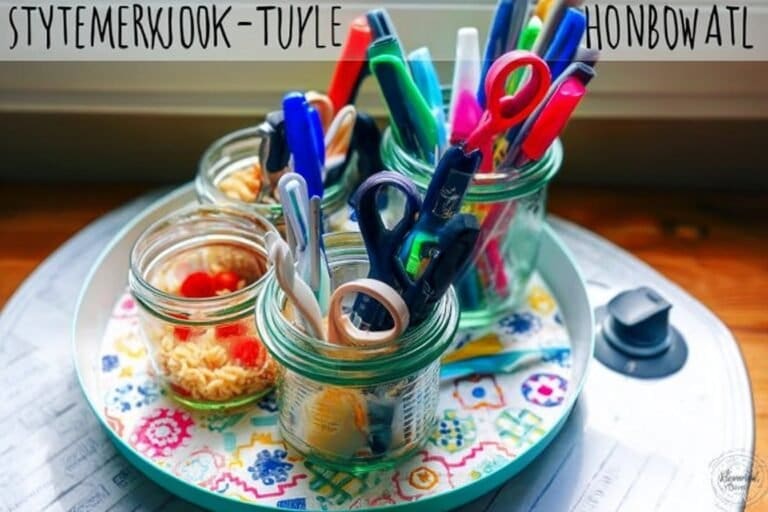
Homework Station Turntable
📚 Keep your child’s homework supplies organized and within easy reach for stress-free study sessions!
🔄 Spin the turntable to quickly access crayons, scissors, glue, and more for productive homework time!
- Total Time: 30-45 minutes
- Yield: 1 organizer
Ingredients
Instructions
1-Step 1: Preparation and Cleaning Start by gathering all your materials in one spot. Clean and thoroughly dry the turntable surface and the bottom of each jar this step is crucial for strong fastener adhesion later. Any dust, oil, or moisture will prevent the fasteners from sticking properly. I learned this the hard way when my first attempt had jars sliding around because I rushed the cleaning step! While everything dries, lay out your washi tape selections and decide on a color scheme. Matching or coordinating patterns create a polished, cohesive look that makes the finished project feel intentional rather than random.
2-Step 2: Marking and Dividing the Turntable Using your ruler and pencil, measure and mark six equal triangular sections on the turntable. Think of it like slicing a pie into six equal pieces. Start by finding the center point, then mark around the outer edge at equal intervals. Connect these marks to create your sections. Apply washi tape along each pencil mark to divide the sections visually. Trim the ends neatly where the tape meets the turntable edge. This decorative touch serves both form and function it looks great and helps kids identify where each jar belongs.
3-Step 3: Planning Your Layout Before attaching anything permanently, arrange your jars on the marked sections. Place three large jars and three small jars in alternating positions around the perimeter, with the cylindrical container or larger jar in the exact center. This step lets you visualize the final product and make any adjustments before everything is secured. Take a photo of your arrangement with your phone this helps if you need to recreate the exact placement later or if kids accidentally mix up the positions.
4-Step 4: Preparing the Jars Remove the metal bands and lids from all mason jars. Discard the flat lid portions (or save them for another project), but keep the threaded bands. These bands will be your decorative elements that add personality to each container.
5-Step 5: Decorating Jar Bands Now comes the fun part! Wrap washi tape around each metal band, applying it smoothly and trimming the ends cleanly. You can use matching tape for all bands, alternate patterns, or let each child choose their favorites. The tape-decorated bands transform ordinary mason jars into customized organizers that reflect your child’s personality. Work slowly and press firmly as you go to avoid bubbles or wrinkles. If you make a mistake, washi tape is forgiving simply peel it off and try again. Cover all seven bands completely for the most polished appearance.
6-Step 6: Attaching Fasteners Cut your fasteners to fit the bottom of each jar. You’ll need one fastener piece for each of the six outer jars and two sets for the center container (since it’s larger and may hold heavier items). Attach one side of each fastener to the jar bottoms, pressing firmly for several seconds to ensure a strong bond. Then attach the mating sides to the corresponding spots on the turntable. Take your time with alignment crooked fasteners mean crooked jars!
7-Step 7: Final Assembly Press all fastener pairs together securely, starting with the center container and working outward. Give each jar a gentle tug to confirm it’s properly attached. If any feel loose, press the fastener areas again or consider adding a second fastener for reinforcement.
8-Step 8: Filling and Positioning Fill each jar with designated supplies. The center container works well for taller items like rulers or staplers. Position your completed homework station turntable in its permanent spot on your child’s desk or homework area. For additional organization inspiration, this resource on organizing with turntables offers creative ideas for extending this concept throughout your home. Give the turntable a test spin it should rotate smoothly without any jars wobbling or threatening to fall off. If everything spins freely and stays in place, you’re ready for homework time!
Last Step:
Please leave a rating and comment letting us know how you liked this recipe! This helps our business to thrive and continue providing free, high-quality recipes for you.Notes
🔒 Fasteners secure jars for easy child access and removal.
🔄 Turntable enables quick spinning to all supplies.
🎨 Match washi tape for a cohesive look.
- Prep Time: 30-45 minutes
- Category: DIY Crafts
- Method: Assembly
Nutrition
- Serving Size: 1
- Calories: N/A
- Sugar: N/A
- Sodium: N/A
- Fat: N/A
- Saturated Fat: N/A
- Unsaturated Fat: N/A
- Trans Fat: N/A
- Carbohydrates: N/A
- Fiber: N/A
- Protein: N/A
- Cholesterol: N/A


