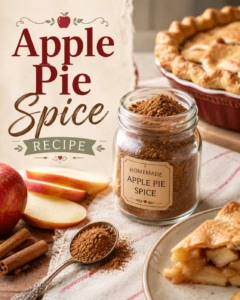
A homemade apple pie spice blend takes about five minutes and uses warm pantry spices you likely already have. The mix is unsweetened, cinnamon forward, and gentle enough for apple pie, crisp, oatmeal, pancakes, cider, and baked apples.

Quick Answer: What Spices Are in Apple Pie Spice?
Apple pie spice is a dry blend of warm ground spices, usually cinnamon, nutmeg, and allspice, with ginger in many homemade versions. Cardamom and cloves are optional accents, not requirements. The ratio to remember is 12 parts cinnamon, 2 parts nutmeg, 1 part allspice, and 1 part ginger.
If you need 1 teaspoon right now, use 3/4 teaspoon cinnamon, a scant 1/4 teaspoon nutmeg, and a small pinch of allspice. The blend has no sugar, so it works in pie filling, oatmeal, drinks, toppings, muffins, and baking.
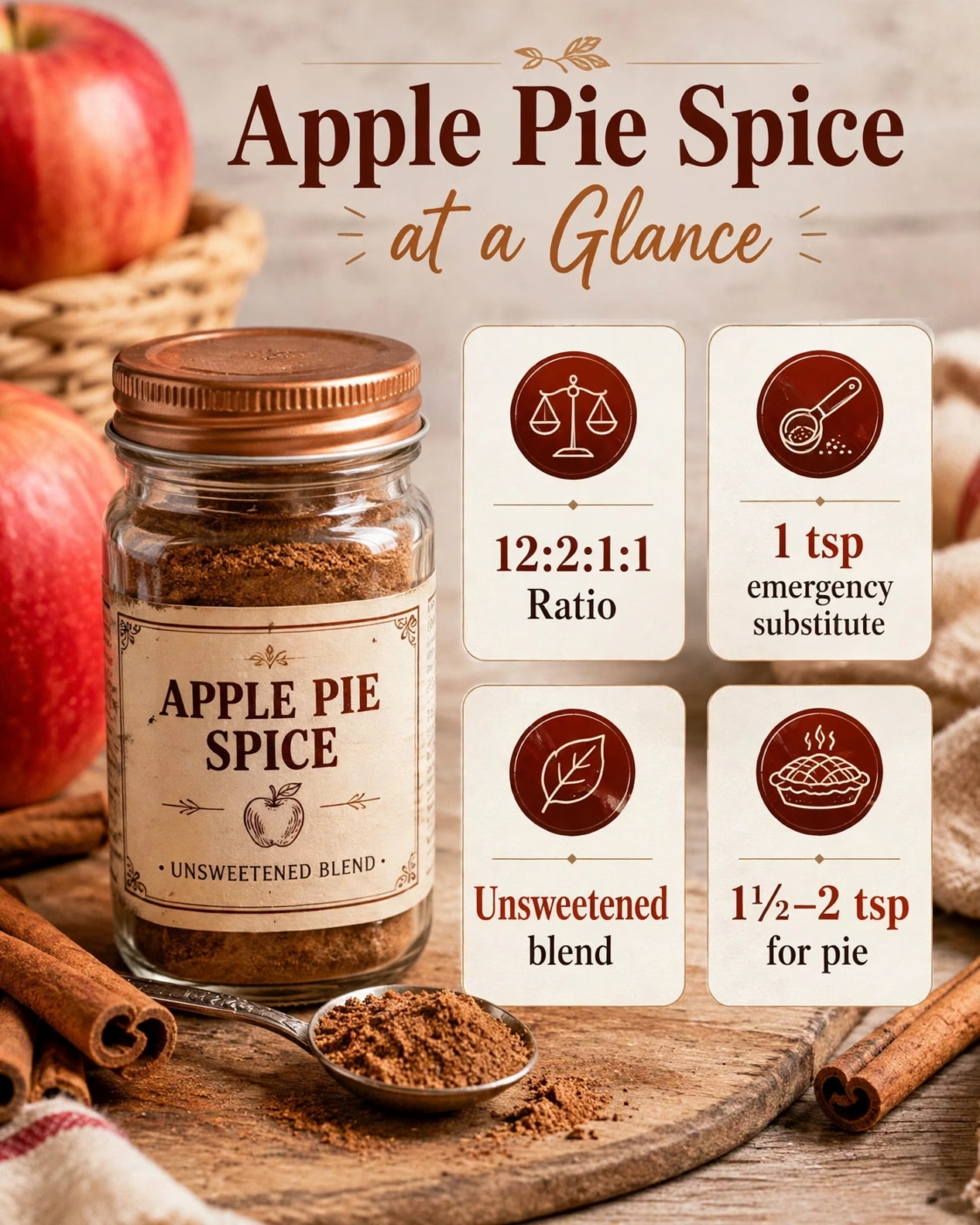
A full pie starts with 1 1/2 to 2 teaspoons in the filling. Apple pie seasoning and apple pie spice mix usually mean the same blend.
Base Blend
For the full batch, measure the base spices exactly:
- 4 tablespoons ground cinnamon
- 2 teaspoons ground nutmeg
- 1 teaspoon ground allspice
- 1 teaspoon ground ginger
Optional Add-Ins for the Full Batch
For a deeper, more aromatic blend, add:
- 1/2 teaspoon ground cardamom
- 1/4 teaspoon ground cloves
The base blend makes about 16 teaspoons. With both optional spices, it makes about 16 3/4 teaspoons, about 80 to 85 ml, or roughly 36 to 43 g, 1.3 to 1.5 oz, by weight. Use spoon measurements first because gram amounts are estimates and ground spices vary by brand, grind, and age.
Equipment
- Measuring spoons
- Small mixing bowl
- Mini whisk, fork, or spoon
- Clean airtight 4 fl oz spice jar for the full batch
Method
- Measure the cinnamon, nutmeg, allspice, and ginger into a small mixing bowl.
- Add cardamom or cloves if you want a deeper, more aromatic blend.
- Whisk until the color looks even, breaking up clumps with the back of a spoon. If the spices are very clumpy, sift them first.
- Transfer the finished apple pie spice to a clean, dry, airtight spice jar. Close and shake briefly if needed.
- Label the jar with the month you mixed it and store it in a cool, dark, dry pantry away from the stove, oven, sunlight, and steam.
Jump To
- 1. Quick Answer: What Spices Are in Apple Pie Spice?
- 2. Why This Ratio Works
- 3. Small Batch for 1-2 Pies
- 4. How to Adjust the Flavor
- 5. 3 Ways to Make It
- 6. How Much to Use
- 7. Substitutions When You Are Missing a Spice
- 8. Apple Pie Spice vs Pumpkin Pie Spice
- 9. Where This Blend Works Best
- 10. How to Store It So It Stays Fragrant
- 11. Common Mistakes to Avoid
- 12. FAQs
- 13. Final Thoughts
- 14. Apple Pie Spice Recipe
Why This Ratio Works
Cinnamon stays in charge, while nutmeg and allspice give enough pie flavor without burying the fruit. Sharper spices stay optional so the apples stay bright. That balance is why the blend works as a default for pies, crisps, muffins, oatmeal, and drinks.
Apple Pie Spice Ratio Guide
Each spice has a job. Cinnamon carries the familiar apple pie aroma. Nutmeg adds classic bakery warmth and a slightly sweet, nutty note. Allspice rounds out the middle, and despite its name it is one spice, not a spice mix. Ginger keeps the blend from tasting flat with brightness and gentle heat.
A good blend should disappear into the filling, with apple first and warmth second. Before you store it, smell the mix. A balanced blend should smell mostly like cinnamon with a warm, rounded finish. Sharp, clove heavy, or dusty notes are signs to adjust before jarring.
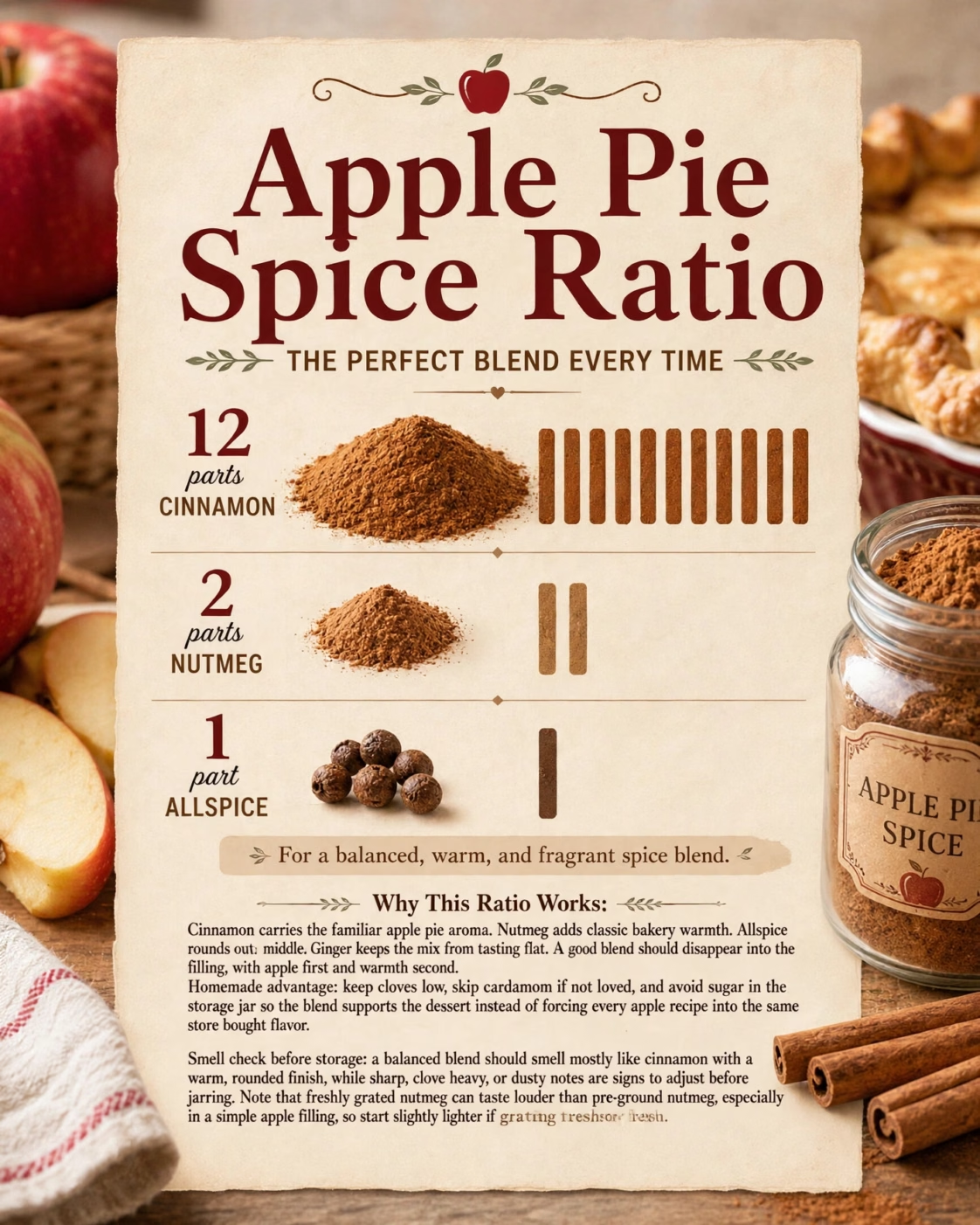
The homemade advantage is control. Keep cloves low, skip cardamom if you do not love it, and avoid sugar in the storage jar, so the blend supports the dessert instead of forcing every apple recipe into the same store bought flavor.
Freshly grated nutmeg can taste louder than pre ground nutmeg, especially in a simple apple filling, so start slightly lighter if grating fresh.
Small Batch for 1-2 Pies
When you do not want a full pantry jar, make the small batch. It gives about 4 teaspoons, enough for two standard pies, or one pie plus extra for cider, oatmeal, or a cinnamon sugar topping. For one 9 inch pie, start with 1 1/2 to 2 teaspoons in the filling.
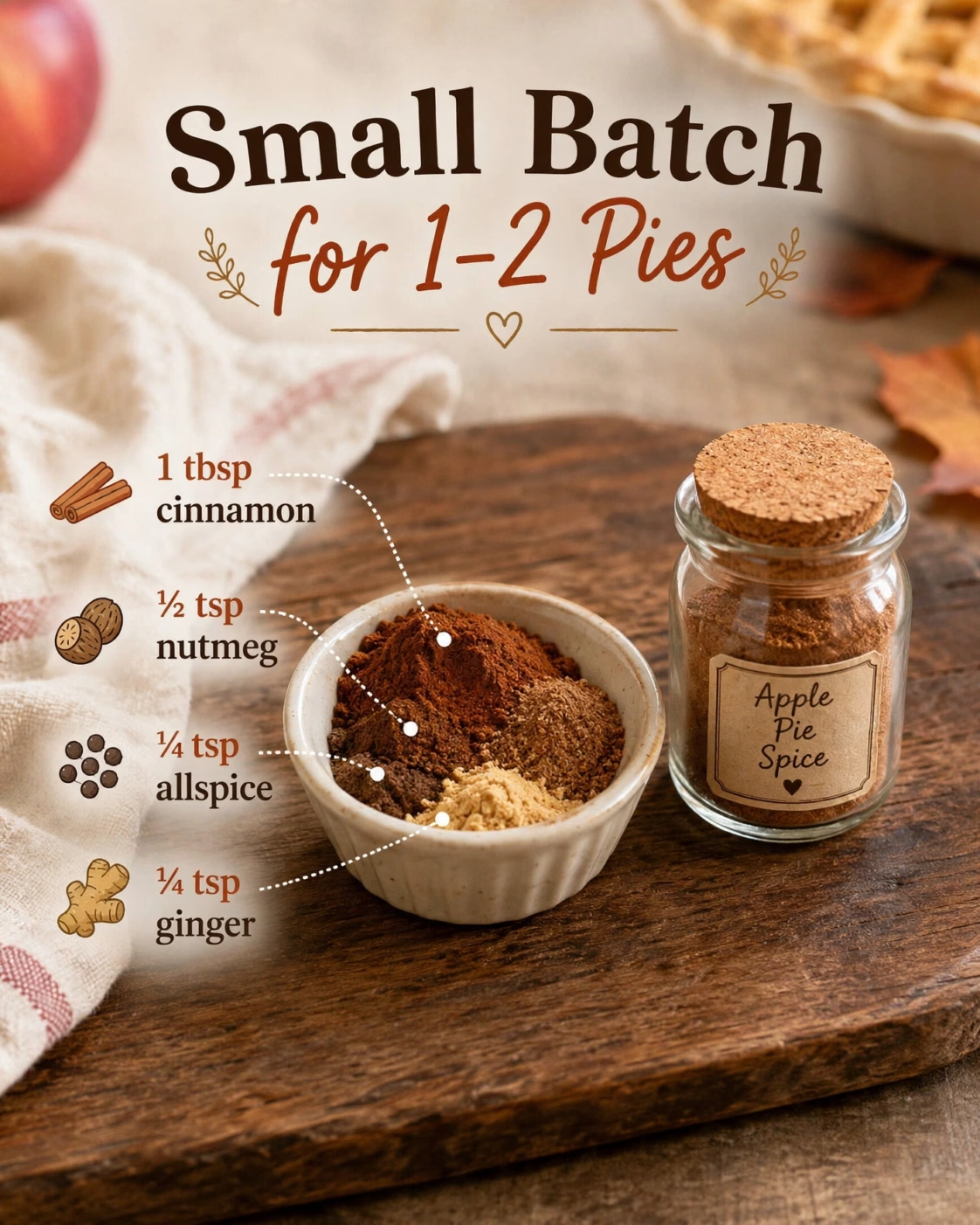
- 1 tablespoon ground cinnamon
- 1/2 teaspoon ground nutmeg
- 1/4 teaspoon ground allspice
- 1/4 teaspoon ground ginger
- Optional: a tiny pinch of cardamom or cloves
The small batch follows the same base ratio as the full recipe and is a good way to test flavor before making more. If it smells too sharp, skip the cloves next time. If it tastes flat in a cooked filling, add a little more ginger or allspice.
Small Batch Apple Pie Spice Guide
The smaller blend is a low risk way to test whether you prefer a softer, brighter, or deeper apple spice flavor. A half batch of the full pantry blend can be made by cutting the main recipe in half and storing it in a 2 fl oz spice jar.
How to Adjust the Flavor
Once you understand the role of each spice, you can adjust the mix without fear of ruining it. Keep cinnamon in charge, then use the other spices to make the flavor rounder, brighter, or deeper.
How Each Spice Changes the Blend
Cinnamon is the backbone and main apple pie flavor. Nutmeg gives classic pie shop warmth and a slightly sweet, nutty aroma. Allspice gives rounded depth and is one spice rather than a spice mix. Ginger gives brightness and gentle heat. Cardamom gives a fragrant bakery note in small amounts. Cloves give deep, sharp warmth.
Use these cues. For casual recipes, use a little more cinnamon if the blend smells weak, and make a fresh batch for an important pie. Use less nutmeg with freshly grated nutmeg or very delicate apple desserts.
Use a little more allspice if the blend tastes flat and less if it tastes heavy. Use more ginger for lift and skip it for a softer, simpler flavor.
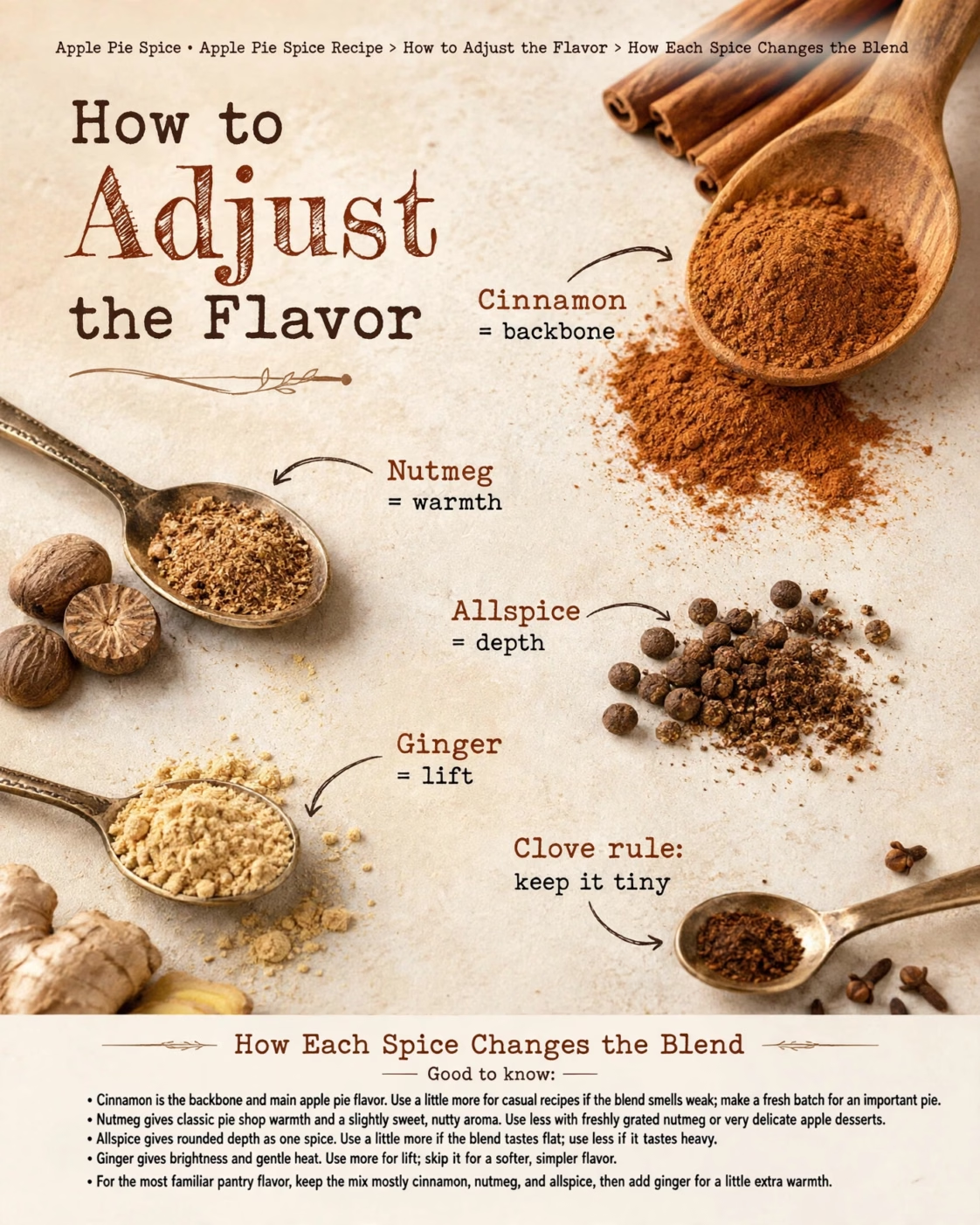
Use cardamom only as an accent because too much can pull the blend away from classic apple pie. Keep cloves very low because if you can identify clove before baking, you probably used too much.
Not every warm spice in the cabinet is needed. For the most familiar pantry flavor, keep the mix mostly cinnamon, nutmeg, and allspice, then add ginger for a little extra warmth.
3 Ways to Make It
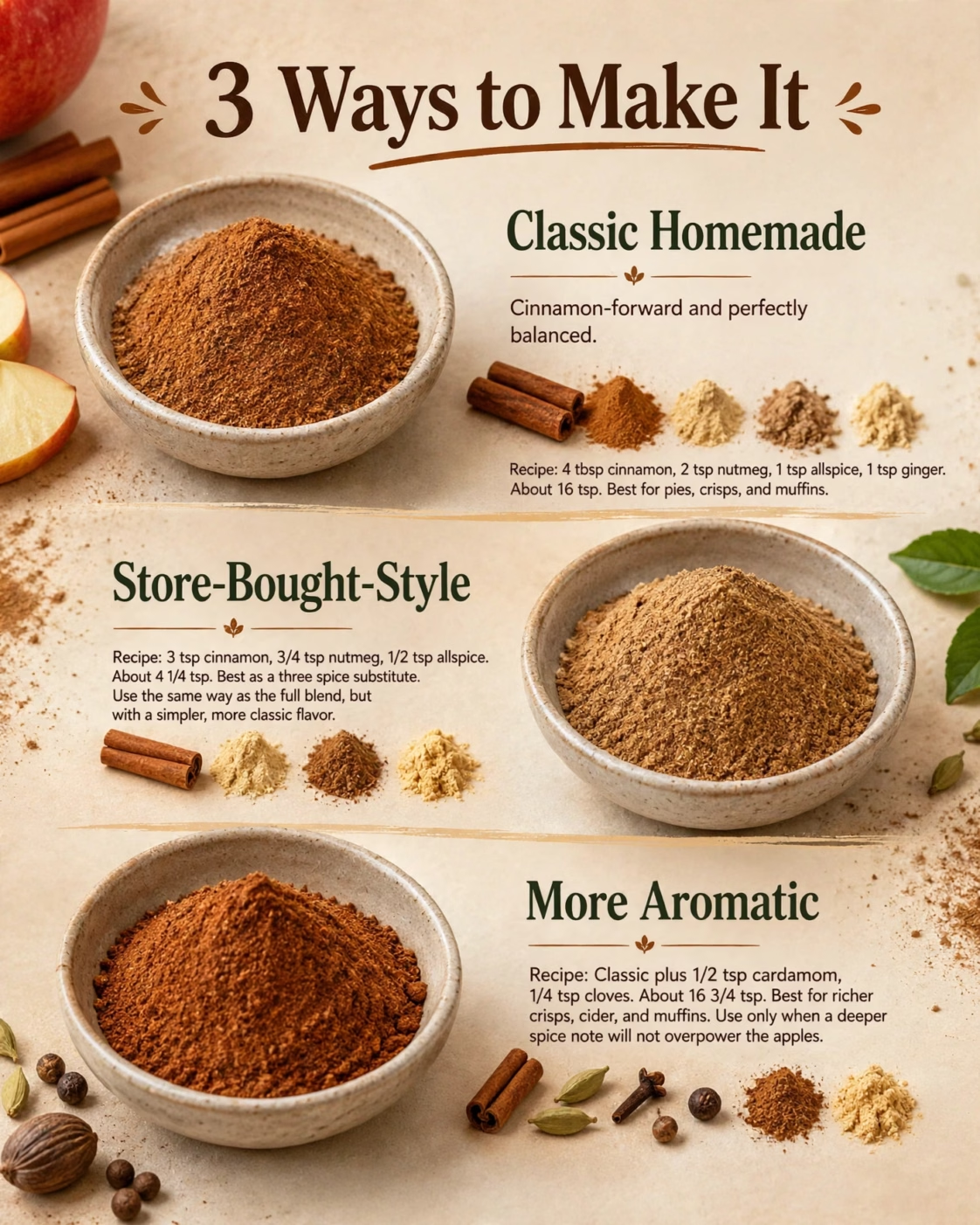
Choose by what the apples should do: classic and familiar, simple and store bought style, or deeper and more bakery like. There is no single official version, so the version should fit your pantry and the dessert in front of you.
Three Apple Pie Spice Versions
| Version | What goes in | Yield | Best for |
|---|---|---|---|
| Classic homemade | 4 tablespoons cinnamon, 2 teaspoons nutmeg, 1 teaspoon allspice, 1 teaspoon ginger | About 16 teaspoons | Pies, crisps, muffins |
| Store bought style | 3 teaspoons cinnamon, 3/4 teaspoon nutmeg, 1/2 teaspoon allspice | About 4 1/4 teaspoons | Three spice substitute |
| More aromatic | Classic homemade blend plus 1/2 teaspoon cardamom and 1/4 teaspoon cloves | About 16 3/4 teaspoons | Richer crisps, cider, muffins |
Use the store bought style version the same way as the full blend, but expect a simpler, more classic flavor. Use the aromatic version only when a deeper spice note will not overpower the apples.
How Much to Use
The easiest mistake is not making the blend, but adding too much of a good blend. Start lower than instinct suggests, because once apples warm up with sugar, lemon, and butter, the spices bloom. A mix that seemed quiet in the bowl can suddenly taste much louder.
Start Low, Then Taste After Heating
For cooked apple pie filling, cider, or a stovetop apple topping, let the mixture heat for a few minutes before deciding whether to add more. Heat changes the flavor quickly. Cinnamon becomes rounder, nutmeg gets warmer, and clove or ginger can become more noticeable.
Older spice blends may need a slightly larger pinch in casual recipes like oatmeal, pancakes, or cider. For a pie that matters, a fresh batch is better than trying to rescue tired spices with a heavier hand.
Quick Usage Amounts
Use these amounts as starting points, then taste after heating when the recipe allows.
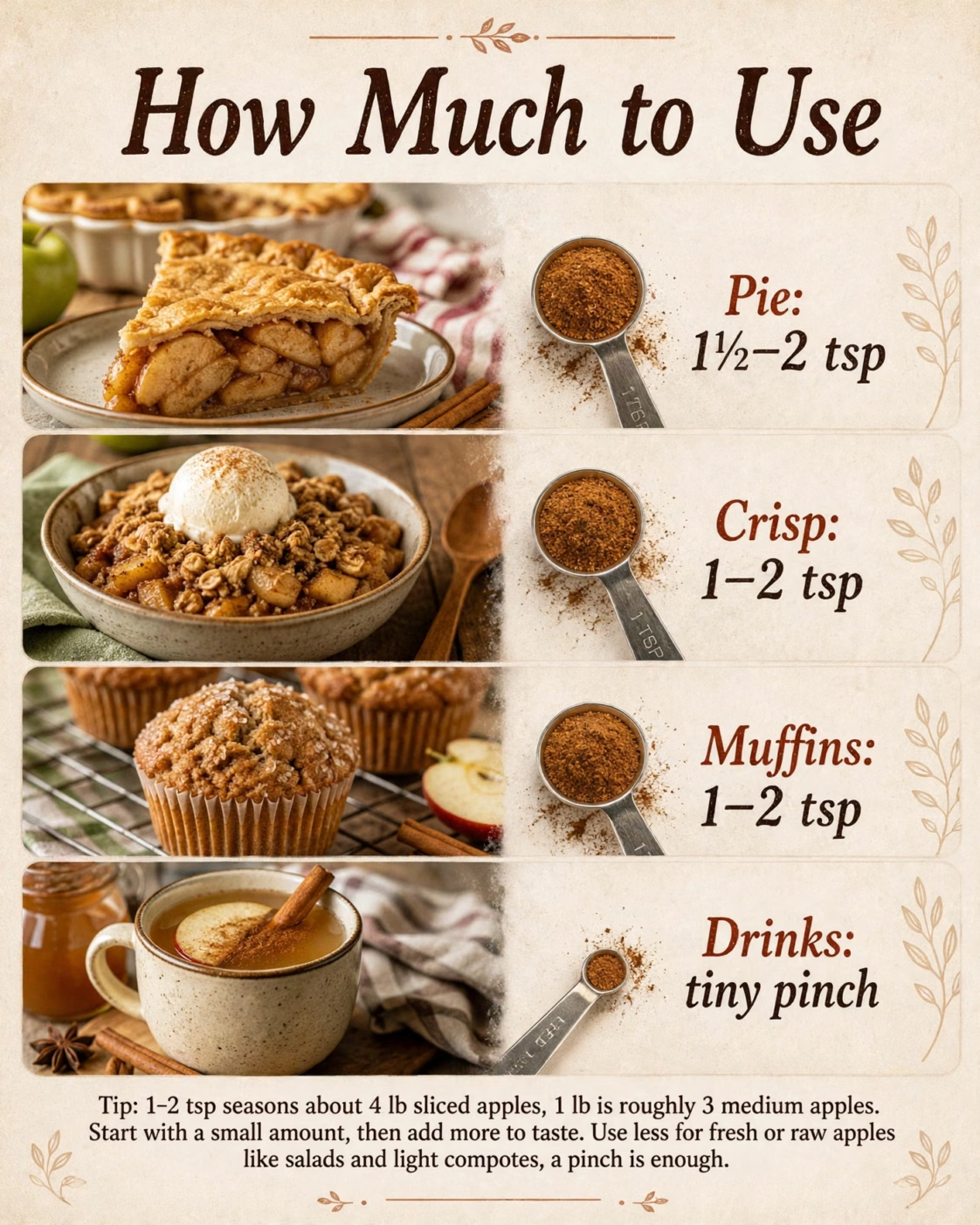
| Use | Starting amount |
|---|---|
| 9 inch apple pie | 1 1/2 to 2 teaspoons, lower end for brighter apple flavor |
| 6 medium apples | About 1 1/2 teaspoons |
| 5 to 6 cups apple pie filling | 1 1/2 to 2 teaspoons |
| Apple crisp or crumble | 1 to 2 teaspoons, some in the fruit and a pinch in the topping |
| Apple muffins or quick bread | 1 to 2 teaspoons per batch |
| Pancakes or waffles | 1/2 to 1 teaspoon per batch |
| Oatmeal, yogurt, or smoothie bowls | 1/8 to 1/4 teaspoon per serving |
| Hot apple cider | 1/4 to 1/2 teaspoon per mug |
| Coffee, latte, or cocoa | A tiny pinch to 1/8 teaspoon |
| Baked apples | About 1/4 teaspoon per apple |
| Cinnamon sugar topping | 1/4 teaspoon per 1 tablespoon sugar |
Typically, 1 to 2 teaspoons of apple pie spice will season about 4 pounds of sliced apples, with one pound about three medium sized apples. Start with a small amount so you can add more later. Use less, just a pinch, for simple raw apple salads or lightly sweetened compotes where the apples should taste very fresh, tart, or floral.
A Useful Pie Benchmark
A common store bought benchmark, the McCormick easy apple pie recipe, uses 1 1/2 teaspoons apple pie spice for a full pie with about 8 cups of sliced apples. That makes 1 1/2 teaspoons a safe starting point for many full pies, with 2 teaspoons useful when the filling is richer or the apple volume is higher.
Adjust for the Apples and Crust
The amount for a full apple pie also depends on the apples. Sweet apples often need lemon and a balanced hand with warm spices, while very tart apples can handle more depth. For a deeper apple by apple breakdown, use a guide to the best apples for apple pie.
With homemade pastry, keep the filling warmly spiced but not overpowering. A buttery apple pie crust makes heavy spice taste even heavier, so the filling should still finish like apples.
Substitutions When You Are Missing a Spice
Most missing spice problems are smaller than they feel. Apple pie spice is a support flavor, not the whole recipe, so one missing spice should not stop the dessert. The safest emergency substitute is cinnamon plus a smaller amount of nutmeg and allspice, then adjust based on what is available.
Need 1 Teaspoon Apple Pie Spice Right Now?
When the jar is missing and you need enough spice to keep baking today, use this quick fix.
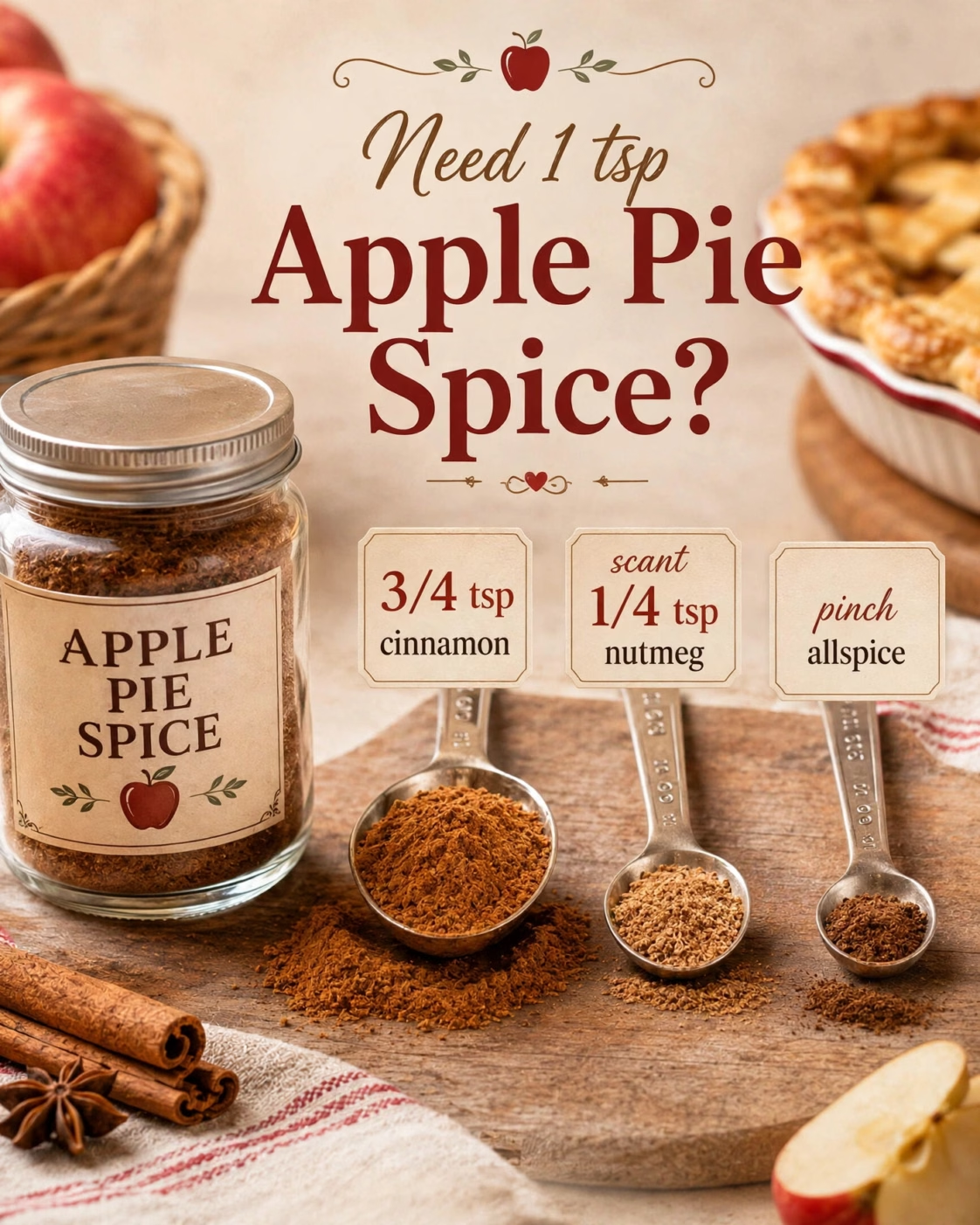
It will not taste as layered as the full blend, but it gives cinnamon and nutmeg a rounder pie spice finish. Use 3/4 teaspoon cinnamon, a scant 1/4 teaspoon nutmeg, and a pinch of allspice.
Missing-Spice Fixes
Use this table when you are short one spice. Close enough is usually enough when baking today because the apples, sugar, lemon, and butter will carry the dessert. Apple pie seasoning can be used the same way as apple pie spice.
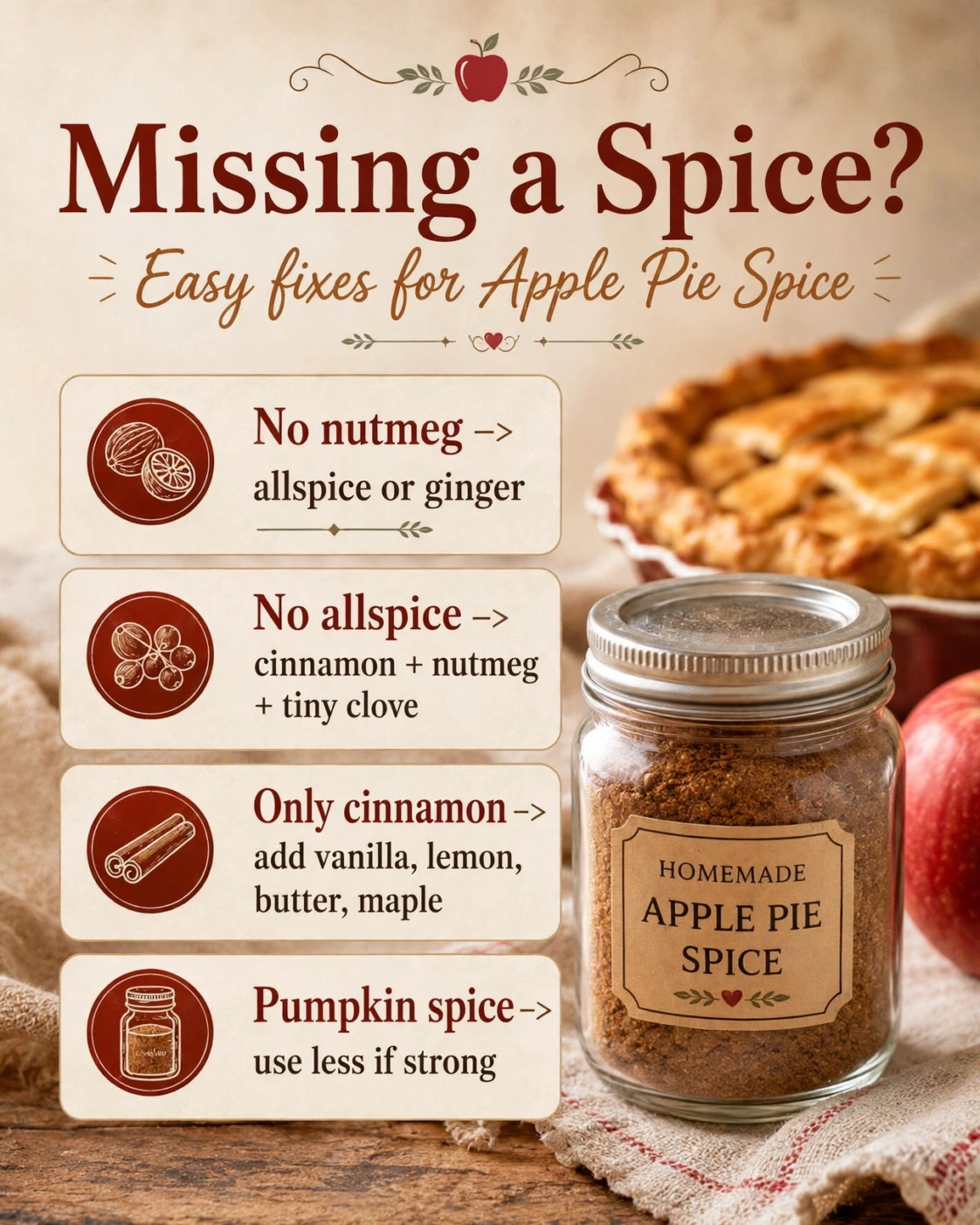
| Missing | Fix |
|---|---|
| 1 teaspoon apple pie spice | 3/4 teaspoon cinnamon, a scant 1/4 teaspoon nutmeg, and a pinch of allspice |
| No nutmeg | A little extra allspice or ginger, and mace in a tiny amount |
| No allspice | Cinnamon plus nutmeg plus a tiny pinch of cloves |
| No ginger | Skip it, the mix will still taste familiar |
| No cardamom | Skip it, it is only an accent |
| No cloves | Skip them, cloves are easy to overdo |
| Only cinnamon | Use cinnamon, then add vanilla, lemon, brown sugar, maple, or butter |
| Pumpkin pie spice | Use 1:1, or about 3/4 amount if it smells heavy on clove or ginger |
| Chai spice | Use carefully, it may taste stronger, more cardamom forward, or slightly peppery |
The tiny emergency pinch of allspice matters because it gives cinnamon and nutmeg a rounder pie spice flavor without a trip to the store. Chai spice can work in some apple desserts, but use it carefully because it may taste stronger, more cardamom forward, or slightly peppery.
Can You Use Cinnamon Instead?
Yes, but the flavor will be simpler. Cinnamon gives the main apple pie aroma, so it is the best single spice backup. If cinnamon is all you have, use it, then add vanilla, lemon, brown sugar, maple syrup, or butter in the dessert to make the flavor feel fuller.
Can You Make It Without Cinnamon?
You can make a warm apple seasoning without cinnamon, but it will not taste like classic apple pie spice because cinnamon is the defining flavor in most versions.
For one pie, use 1/2 teaspoon allspice, 1/4 teaspoon ginger, 1/8 teaspoon nutmeg, and a tiny pinch of cardamom. Use it carefully and treat it as a cinnamon free apple spice blend, not an exact flavor match.
Can You Make It Without Nutmeg?
Yes. Use cinnamon, allspice, and ginger. If you have mace, use a tiny pinch because mace is related to nutmeg and has a similar warm, aromatic quality. The flavor will be slightly less classic, but it will still work in apple pie filling, apple crisp, muffins, oatmeal, pancakes, and baked apples.
Apple Pie Spice vs Pumpkin Pie Spice
Apple pie spice and pumpkin pie spice are similar warm blends and can often replace each other in everyday baking. The difference is usually the flavor direction.
Apple pie spice tends to be softer and more cinnamon forward so the apple flavor stays bright and fruit forward. Pumpkin pie spice is often deeper, warmer, and more ginger or clove forward because pumpkin needs stronger spice support.
Apple Pie Spice vs Pumpkin Pie Spice Comparison
Apple pie spice usually tastes softer, cinnamon forward, and apple focused. It is best for apple pie, filling, crisp, oatmeal, and cider. Pumpkin pie spice is deeper, often ginger or clove forward, and is best for pumpkin pie, pumpkin bread, lattes, and cookies.
Substitution usually works 1:1, but use about 3/4 of the amount if the pumpkin spice smells strong. Choose apple pie spice when the apple should stay the star, and pumpkin pie spice when you want a deeper, heavier spice flavor.
When pumpkin pie spice smells strongly of clove or ginger, start with about 3/4 of the amount called for, then add more after smelling the mixed filling or tasting a cooked filling, cider, or topping.
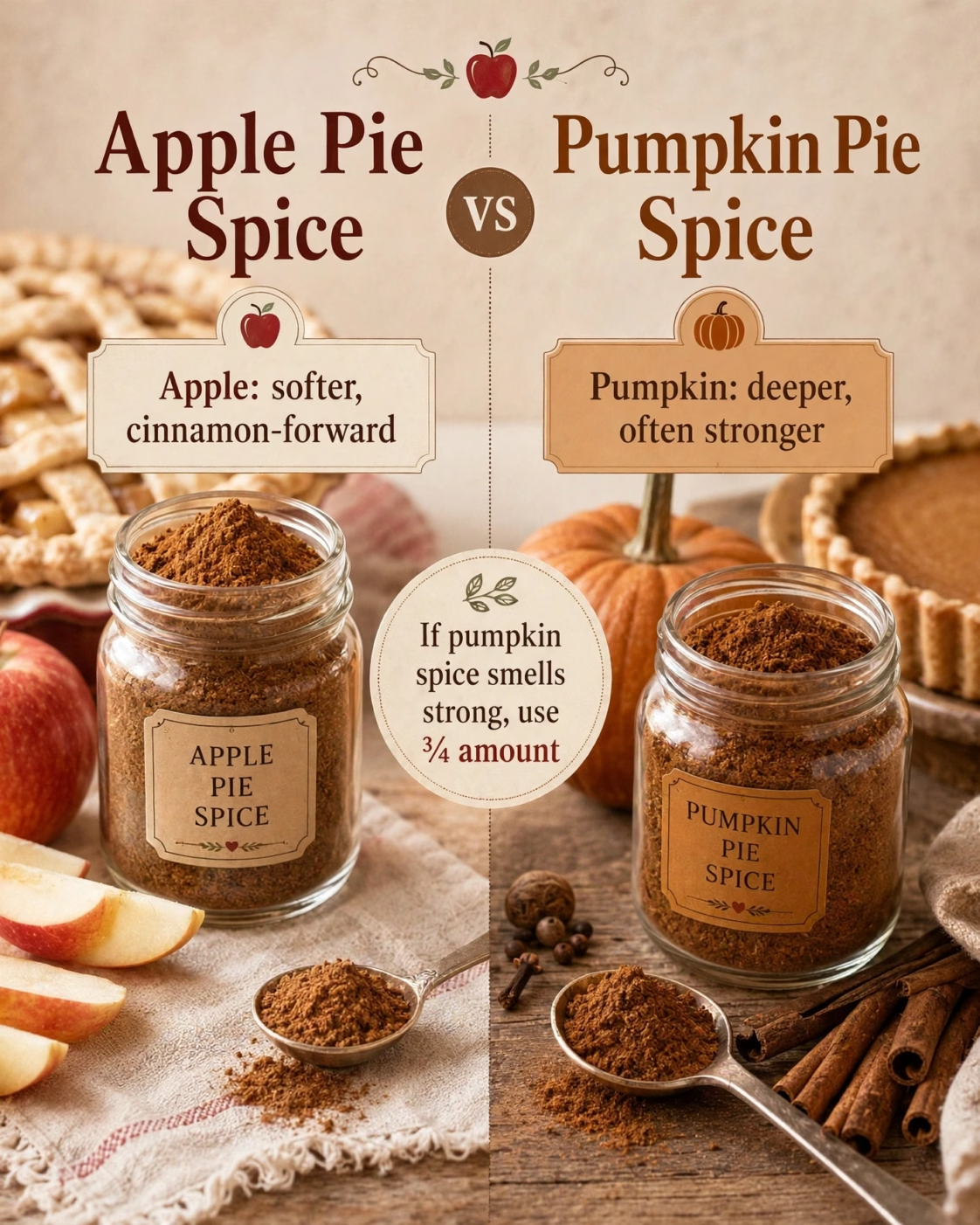
Apple pie spice and pumpkin pie spice are quite similar, and one can usually be used in place of the other with a 1:1 swap. Pumpkin spice always features cloves, while apple pie spice usually does not, and apple pie spice generally includes fewer ingredients.
Keeping a pumpkin pie spice blend recipe in the pantry does not remove the value of this apple version, because it gives a gentler mix for apple pie filling, apple crisp, oatmeal, and everyday baking.
Where This Blend Works Best
The blend is a warm base note for apples that need a little roundness. The amount changes depending on whether the spice is baked, simmered, sprinkled, or stirred into a drink.
Apple Desserts
Cooked apples can handle more spice because heat softens the edges and lets cinnamon, nutmeg, and allspice settle into the filling.
Apple Pie Filling
Apple pie filling is the clearest test because the spices bloom as the apples cook. Start with the usage amounts above, warm the filling, and then decide whether it needs more spice.
For apple pie filling, use 1 1/2 to 2 teaspoons for 5 to 6 cups of filling. For a shortcut apple pie, add a small pinch if prepared filling tastes flat, especially in a shortcut pie made with ready made or homemade filling.
If you keep a pre cooked apple pie filling recipe on hand, taste it first and season lightly.
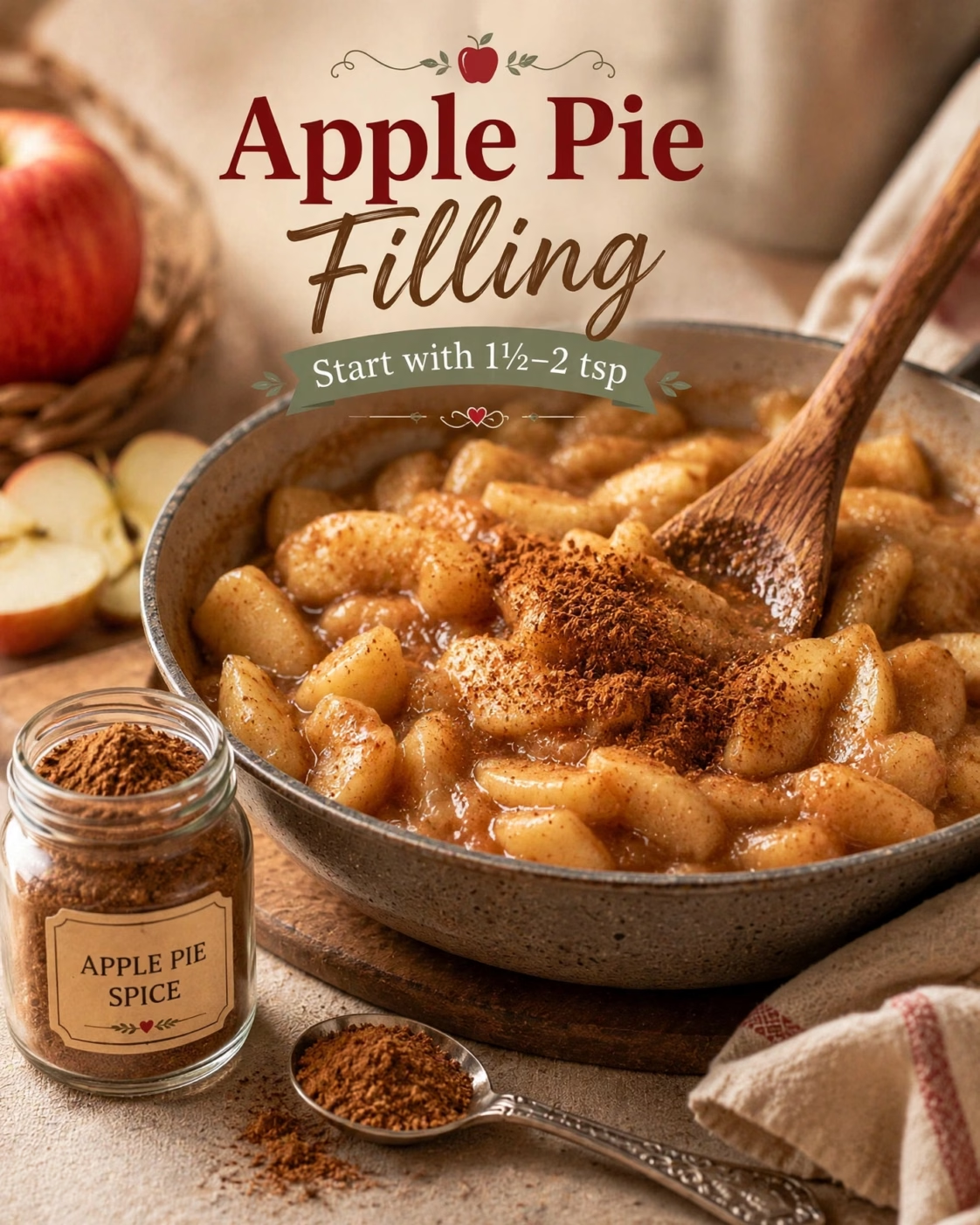
For classic apple pie, use it in the filling with firm apples, lemon, sugar, and a buttery crust. For Dutch apple pie, season the apples, not the crumb topping heavily, because the topping already brings butter and brown sugar.
Too much spice in both layers can make the pie taste dull. For an apple tart, use a lighter hand than in pie filling, with a small pinch enough for a thin easy puff pastry apple tart where the apples and pastry should still taste bright.
For apple crisp or crumble, season the fruit more than the topping. For baked apples, mix the spice with butter, brown sugar, oats, or chopped nuts before stuffing the apples.
Breakfast and Snacks
For pancakes with apples, stir a small pinch into warm apple topping, especially when breakfast should taste a little like dessert. For oatmeal, stir in a small pinch with apples, maple syrup, and nuts.
For muffins and quick bread, whisk the spice into the dry ingredients so it spreads evenly through the batter. For apple cinnamon roll bakes, add a small amount to apple pie filling before layering it with cinnamon rolls.
Apple Crisp, Muffins, and Quick Breads
Apple crisp and crumble taste better when most of the spice goes into the fruit, where it can bloom as the apples bake.
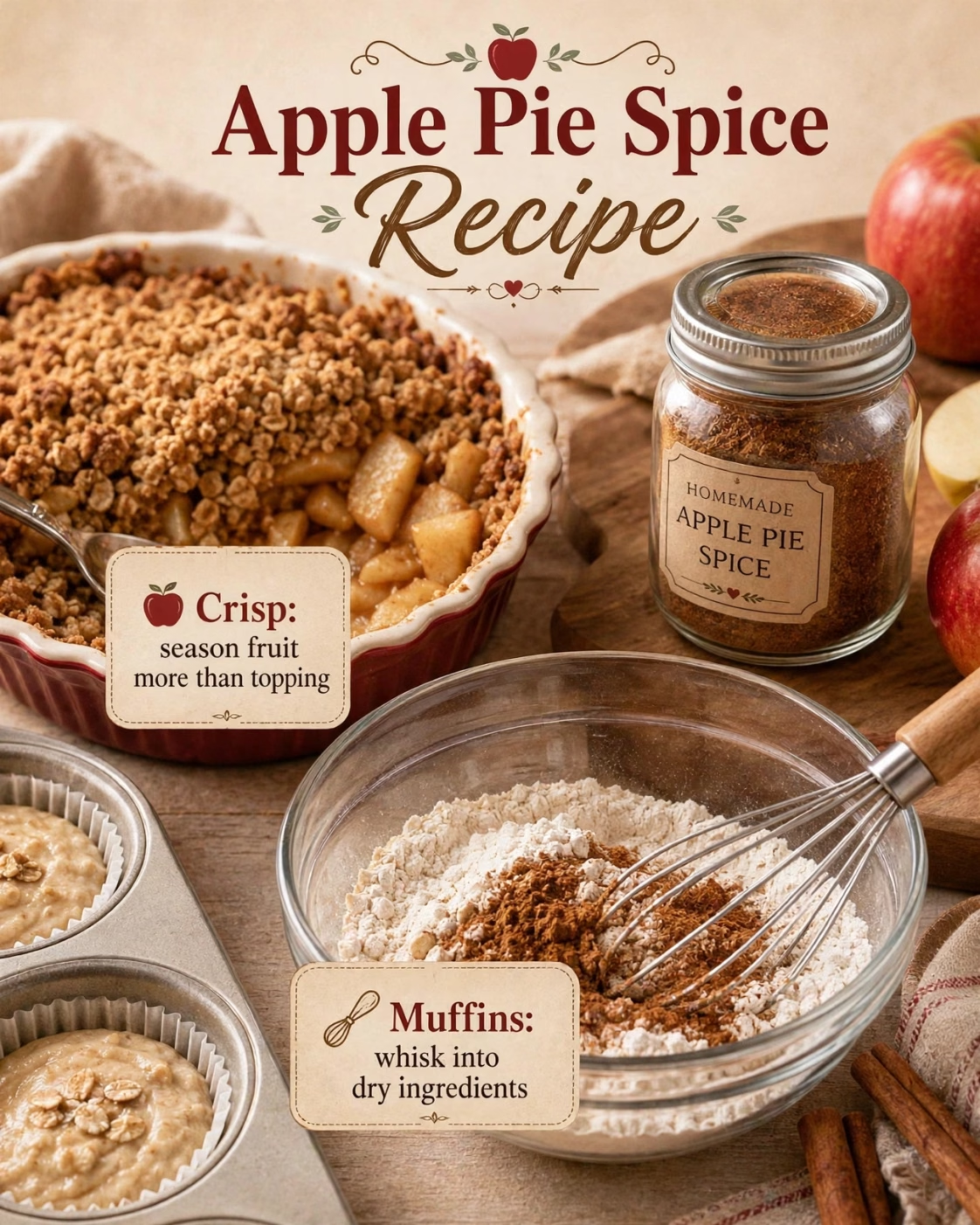
Muffins and quick breads work best when the blend is whisked into the dry ingredients before the wet ingredients go in.
Drinks and Toppings
Start tiny in drinks because ground spices do not dissolve the way syrup does, so they need heat, fat, sugar, or blending to taste smooth.
For hot apple cider, simmer gently with apple juice or cider, orange peel, and a little sweetener if needed, and strain before serving for a smoother mug.
For coffee, latte, or cocoa, use a tiny pinch with milk, cream, or maple syrup so the spice has something to cling to.
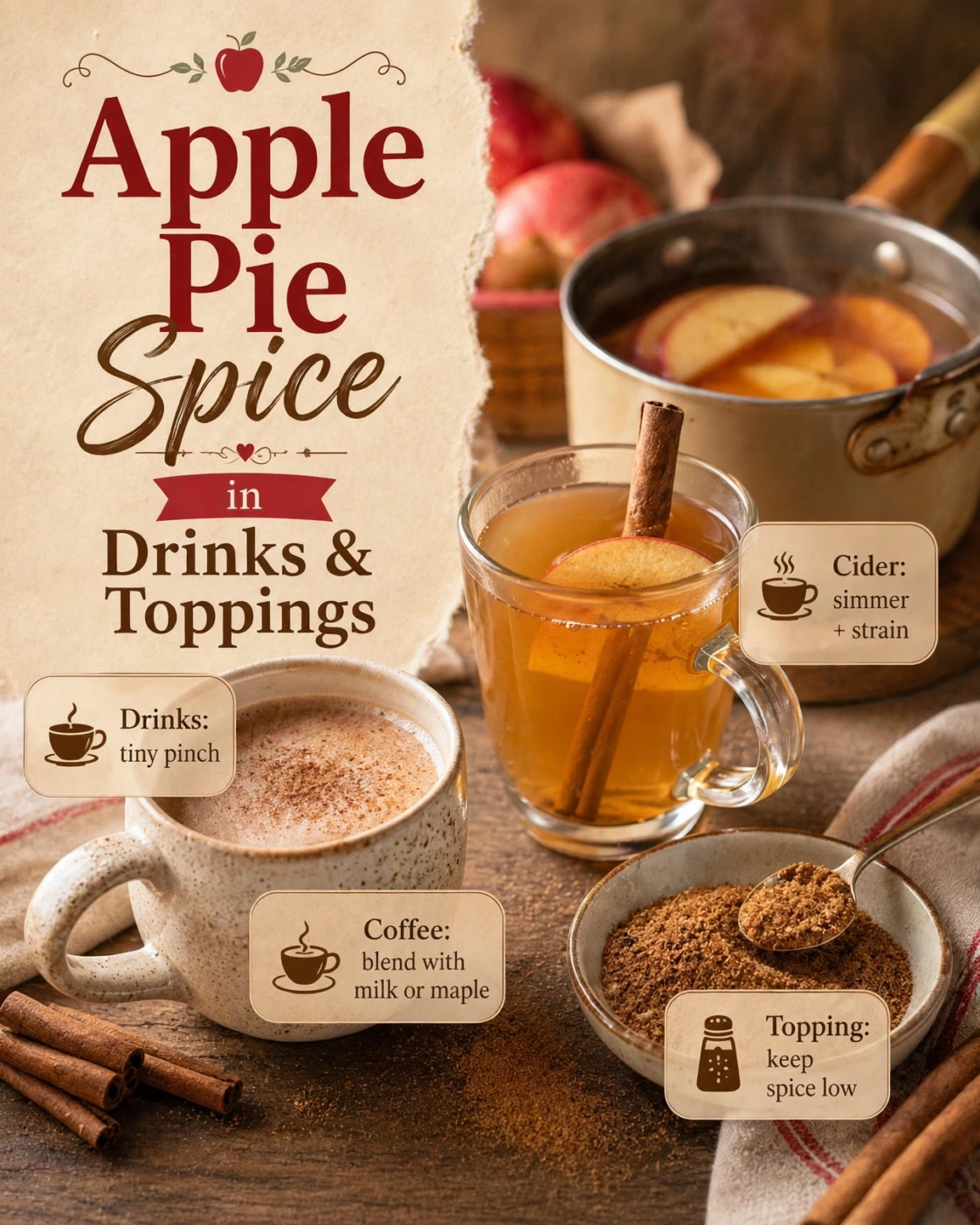
For cinnamon sugar topping, mix 1/4 teaspoon apple pie spice with 1 tablespoon sugar. Keep the spice low because this topping is direct, not baked into a filling.
A tiny pinch goes further in drinks and toppings because the spice is not hidden inside a filling or batter. Ground spices may settle in coffee unless blended with milk, cream, sugar, or maple syrup first.
How to Store It So It Stays Fragrant
Ground spices do not fail loudly. They fade quietly, and once the mix is made, storage decides whether it stays fragrant.
Keep the finished seasoning in a clean, dry, airtight spice jar or container in a cool, dark pantry or cabinet, ideally below 70 degrees Fahrenheit, away from the stove, oven, dishwasher, sunny windows, and any place where steam or heat can reach it.
Do not shake the jar directly over a steaming pot, because steam is one of the fastest ways to make ground spices clump and fade. For best flavor, use it within 6 to 12 months.
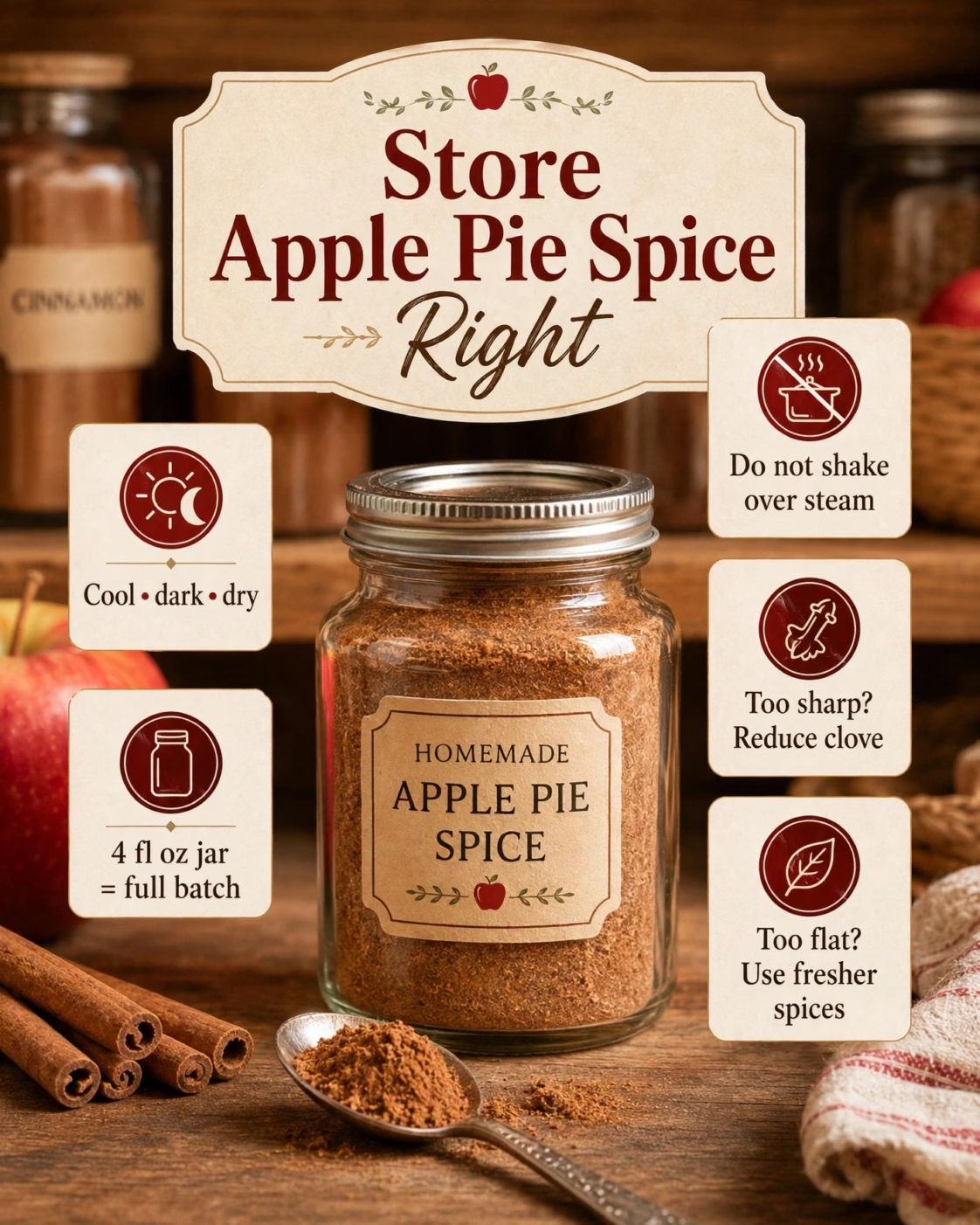
It may remain usable longer if stored dry, but the aroma and flavor will fade over time. If the blend smells flat when opened, it will probably taste flat in pie or crisp too.
Do not add brown sugar to the stored mix if you want a pure spice blend. Brown sugar is useful in pie filling, crisp topping, and cinnamon sugar, but it can clump during storage and turns the blend into a sweetened topping rather than a flexible seasoning.
Best jar size
This recipe makes about 80 to 85 ml, so use a 4 fl oz spice jar for the full batch. A 2 fl oz spice jar is better for a half batch, not the full recipe.
Freshness test
Open the jar and smell the blend. It should smell warm, sweet, and clearly spiced. If you have to work hard to smell anything, use a little more in casual recipes like oatmeal or pancakes, but consider making a fresh batch before using it in a holiday pie.
Storage and Troubleshooting Cues
Use the smell test before important baking. Flat spices need replacing, while sharp blends usually need softer cinnamon or fewer strong accents next time.
Common Mistakes to Avoid
Most problems come from a small handful of habits. Fix them before they reach the pie.
- Using too much clove: If the blend smells sharp before baking, it will taste even stronger in a warm filling. Keep cloves to a pinch or skip them.
- Treating cardamom as required: Cardamom is beautiful, but it is not the test of whether this recipe works. A no cardamom version is completely normal.
- Adding sugar to the spice mix: Keep the stored blend unsweetened so it can be used in pies, drinks, oatmeal, toppings, and baking without locking it into one sweetness level.
- Using tired or poorly stored spices: Heat, steam, and age weaken spice blends. Smell the cinnamon and nutmeg before making the full batch.
- Over spicing mild apple desserts: If the filling smells more like clove or nutmeg than apple, use less spice next time and add a little extra lemon or apple to rebalance the batch.
- Bitter or sharp flavor: Too much clove, too much nutmeg, or old spices that have turned dusty can make the blend taste bitter or sharp. Add more cinnamon to soften it, or make a fresh batch with the sharper spices kept very low.
When in doubt, make the mix softer rather than sharper. A pinch more can always be added, but harsh clove or heavy nutmeg is much harder to pull back out of a pie filling.
FAQs
What spices are in apple pie spice?
Apple pie spice is an unsweetened, cinnamon forward blend of 4 tablespoons ground cinnamon, 2 teaspoons ground nutmeg, 1 teaspoon ground allspice, and 1 teaspoon ground ginger. The optional additions are 1/2 teaspoon ground cardamom and 1/4 teaspoon ground cloves. The ratio is 12 parts cinnamon, 2 parts nutmeg, 1 part allspice, and 1 part ginger, and the full batch yields about 1/3 cup.
How much apple pie spice should I use in a 9 inch apple pie?
Use 1 1/2 to 2 teaspoons in the filling for a 9 inch apple pie, using the lower amount for a brighter apple flavor. The same amount suits 5 to 6 cups of apple pie filling, and about 1 1/2 teaspoons suits 6 medium apples. Start low because the spices bloom as the apples warm with sugar, lemon, and butter, and let the filling heat for a few minutes before adding more.
What can I use instead of apple pie spice?
For 1 teaspoon of apple pie spice, mix 3/4 teaspoon cinnamon, a scant 1/4 teaspoon nutmeg, and a small pinch of allspice. Pumpkin pie spice can usually replace it 1 to 1, but use about 3/4 of the amount if it smells clove or ginger heavy. If only cinnamon is available, use it and add vanilla, lemon, brown sugar, maple, or butter to make the dessert taste fuller.
How long does homemade apple pie spice last and how should I store it?
Homemade apple pie spice is best within 6 to 12 months, although it may remain usable longer if it stays dry. Store it in a clean, dry, airtight jar in a cool, dark, dry pantry, away from the stove, oven, sunlight, and steam, and do not shake the jar directly over a steaming pot. Label the jar with the month it was mixed, and use a 4 fl oz jar for the full batch.
Final Thoughts
A good apple pie spice recipe should feel like a shortcut, not another project. It should make the pie feel easier before the apples are even peeled. Keep cinnamon as the base, let nutmeg and allspice round it out, and use the stronger spices only as accents.
The best version is the one that makes the apples taste more like themselves. The blend should smell warm when opened, taste rounded in the filling, and melt into the dessert rather than announce itself. After one batch, you will probably know your house version: brighter with ginger, softer without cloves, or deeper with cardamom.
Use 1 1/2 to 2 teaspoons for a pie, keep the rest dry and dark, and let the jar make apples taste warmer without stealing the show.
Print
Apple Pie Spice Recipe
A homemade apple pie spice blend takes about five minutes and uses warm pantry spices you likely already have. The mix is unsweetened, cinnamon forward, and gentle enough for apple pie, crisp, oatmeal, pancakes, cider, and baked apples.
- Total Time: 5 min
- Yield: About 1/3 cup, roughly 16 teaspoons base blend or 16 3/4 teaspoons with optional spices 1x
Ingredients
Base Blend
4 tablespoons ground cinnamon, ground
2 teaspoons ground nutmeg, ground
1 teaspoon ground allspice, ground
1 teaspoon ground ginger, ground
Optional Add-Ins for the Full Batch
1/2 teaspoon ground cardamom, ground
1/4 teaspoon ground cloves, ground
Instructions
Method
1-Measure the cinnamon, nutmeg, allspice, and ginger: Measure the cinnamon, nutmeg, allspice, and ginger into a small mixing bowl.
2-Add cardamom or cloves if you want: Add cardamom or cloves if you want a deeper, more aromatic blend.
3-Whisk until the color looks even, breaking: Whisk until the color looks even, breaking up clumps with the back of a spoon. If the spices are very clumpy, sift them first.
4-Transfer the finished apple pie spice to: Transfer the finished apple pie spice to a clean, dry, airtight spice jar. Close and shake briefly if needed.
5-Label the jar with the month you: Label the jar with the month you mixed it and store it in a cool, dark, dry pantry away from the stove, oven, sunlight, and steam.
Last Step:
Please leave a rating and comment letting us know how you liked this recipe! This helps our business to thrive and continue providing free, high-quality recipes for you.- Prep Time: 5 min
- Cook Time: 0 min
- Method: Mixing and storing