

One simple batter turns into a warm, fudgy butterscotch puding cake with a rich butterscotch sauce hiding underneath. It is a quick, cozy dessert for 6, and the sauce appears as if by magic once the puding bakes.

What Self Saucing Butterscotch Pudding Is
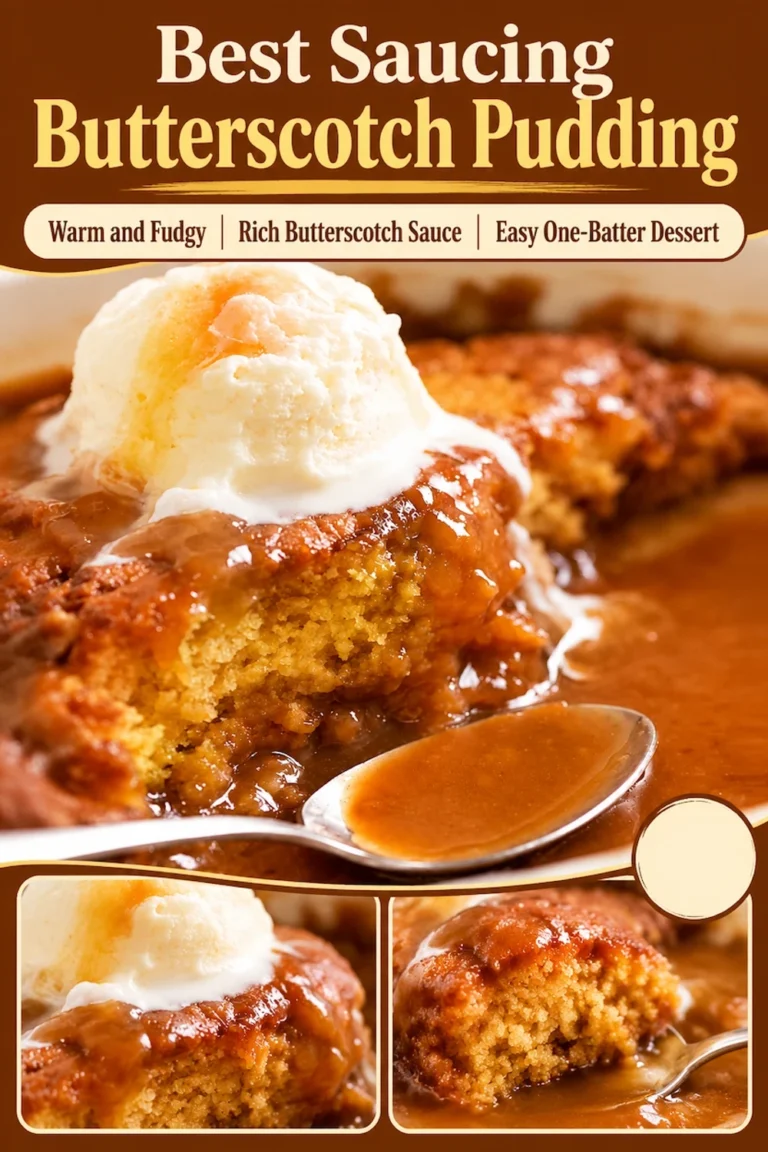
A self saucing puding is a clever little dessert that separates in the oven. The top becomes a fluffy, moist sponge with a lightly crusty surface, while a buttery, salty sweet butterscotch sauce gathers underneath. Serve it warm and scoop from the bottom so every bowl gets soft cake, a tender middle, and a glossy river of sauce.
This is comfort food at its best. It feels rustic and cozy, and it is far less formal than a layered cake or a plated restaurant dessert. The joy is simple: one batter goes into the dish, and it gives you both puding and sauce. That is the kind of kitchen magic that makes a chilly evening feel special.
Butterscotch has a deep toffee character because it is built on brown sugar. Caramel is usually made with white sugar, so the taste here is rounder and more mellow. If you have ever loved a warm butterscotch dessert, this puding delivers that same cozy taste in spoonable form.
Think of it as a puding cake, not a sliceable cake. It is soft enough to spoon, with a top that has just a little bite and a middle that stays tender. The sauce is not a thin syrup either.
It has enough body to coat the back of a spoon, and its salty edge keeps the sweetness from feeling heavy. That contrast of soft cake and silky sauce is the whole charm.
Jump To
How the Self Saucing Method Works
The method is easier than it sounds. Make one smooth puding batter, spread it in the dish, then sprinkle a mix of dark brown sugar and cornstarch over the top. Next, pour boiling water gently over the surface. At that point it looks like a watery mess, but that is exactly how the magic starts.
As the puding bakes, the sugar and cornstarch mixture sinks toward the bottom. The cornstarch helps the liquid settle into a separate layer and gives the finished sauce its silky thickness. The batter rises above it into a soft sponge. The boiling water also sends steam through the oven, which helps keep the cake moist.
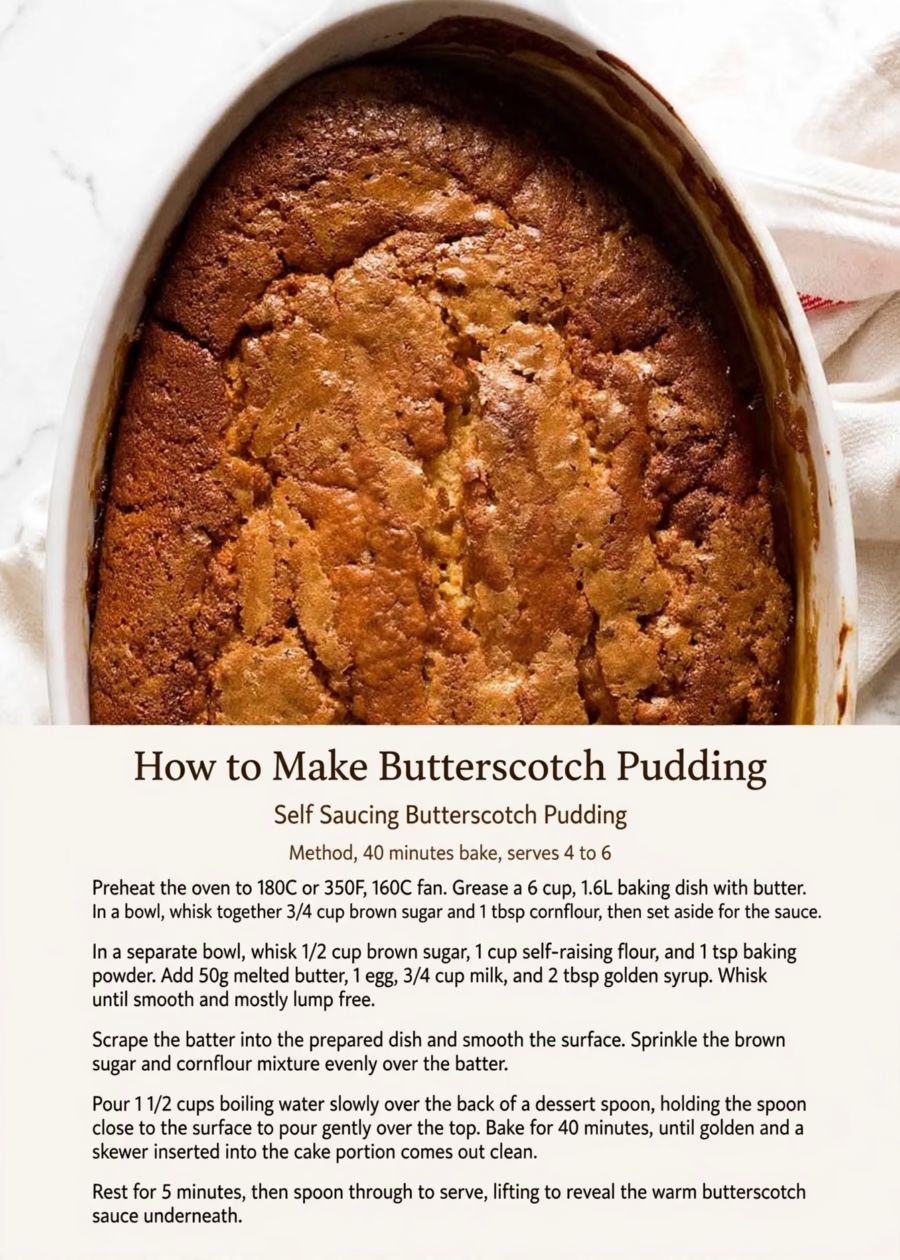
When you pull the dish out, the top looks plain and innocent. There is no obvious sign of the sauce waiting below. Cut through the center with a serving spoon, and the butterscotch sauce wells up from underneath. This method follows the original closely, and it is a good one to trust.
Do not stir after adding the water. The water needs to stay on top so it can sink and form the sauce. If you mix it into the batter, you will have a wet cake batter and no hidden sauce. Trust the odd looking dish, close the oven door, and let the heat do its quiet work.
What Goes in Butterscotch Pudding
The ingredient list is short and split into two useful parts: the puding batter and the butterscotch sauce. Use a 6 cup baking dish, about 1.6L, and set out everything before you start. This is a simple recipe, so small choices like the sugar and the cornstarch matter.
For the puding batter:
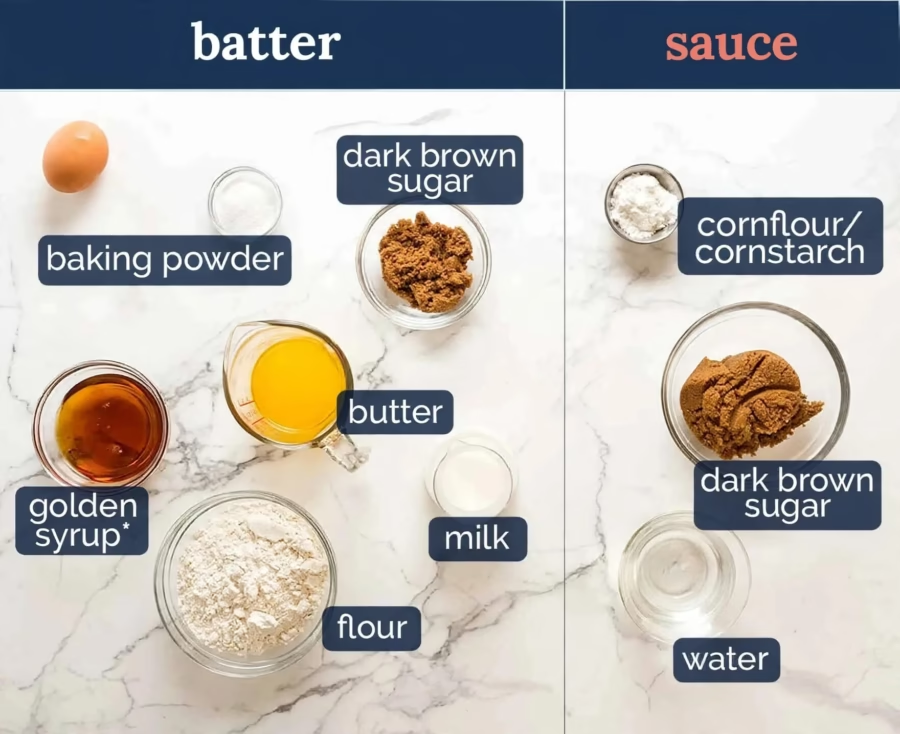
- 1/4 cup packed dark brown sugar
- 1 1/4 cups plain flours, also sold as all purpose flours
- 2 1/2 tsp baking powder, not baking soda
- 100g or 7 tbsp unsalted butter, melted
- 1 large egg
- 1/2 cup milk, full or low fat
- 4 tbsp or 90g golden syrup
For the butterscotch sauce:
- 3/4 cup packed dark brown sugar
- 2 tbsp cornstarch, using 15 ml tablespoons
- 2 cups boiling water
For serving, have vanilla ice cream ready. Dark brown sugar gives a deeper butterscotch note than regular brown sugar, though regular brown sugar will still work if that is what you keep.
Golden syrup is an Australian and UK baking syrup with a carame like taste and a toffee note. It adds butterscotch character without asking you to make a traditional carame from butter and sugar.
If you cannot find it, dark corn syrup, honey, or maple syrup can stand in. Most of the butterscotch character comes from the sauce anyway, so do not worry too much.
Use baking powder, not baking soda. The recipe needs baking powder for lift, and soda is not a swap here. Also check the size of your tablespoons before measuring the cornstarch for the sauce. A small measuring difference can change how thick the sauce turns out, so it is worth a quick look.
How to Make Butterscotch Pudding
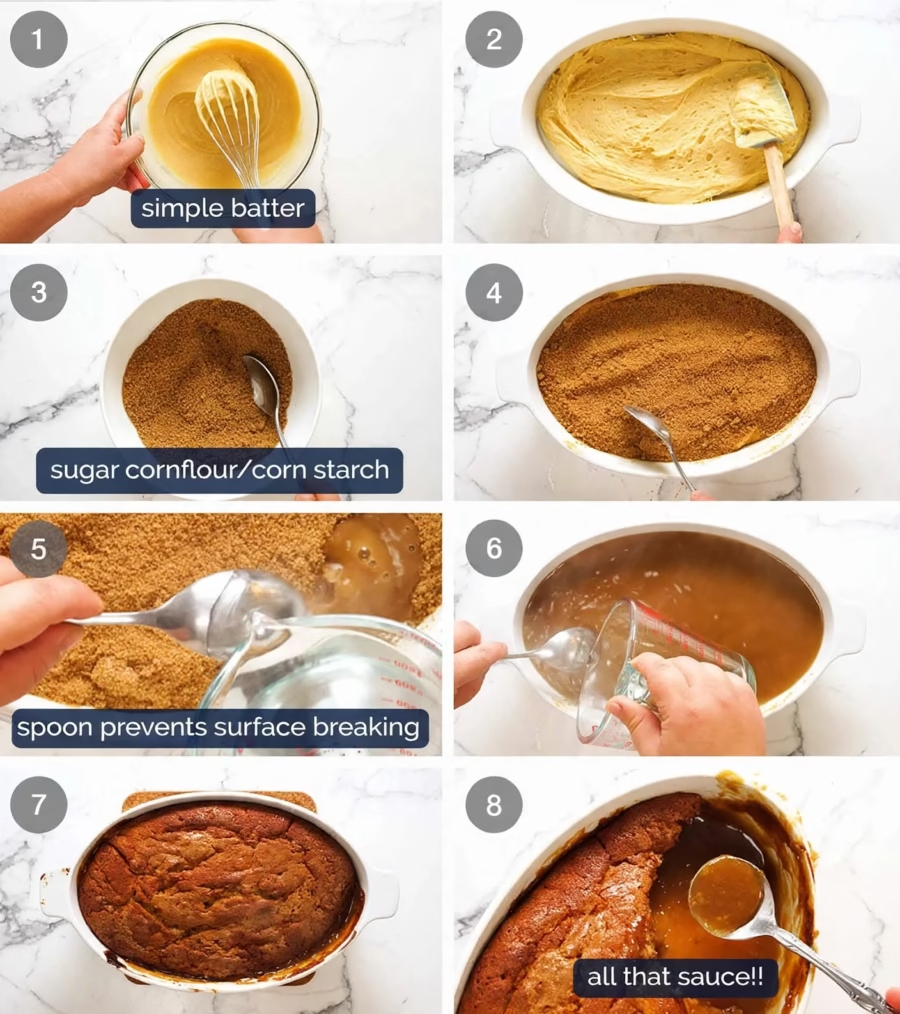
Heat the oven to 350F, which is 180C or 160C fan. Rub a 6 cup baking dish, about 1.6L, with butter. Set out a mixing spoon and two bowls, and the whole puding comes together quickly.
- Mix the sauce sugar and cornstarch in a bowl. Set it aside.
- In a separate bowl, mix the puding sugar, flours, and baking powder until combined.
- Add the melted butter, egg, milk, and golden syrup. Mix until the batter is mostly lump free.
- Scrape the batter into the buttery dish and smooth the surface.
- Sprinkle the sauce sugar mixture evenly all over the batter.
- Pour the boiling water over the surface over the back of a dessert spoon held as close to the batter as you can. This softens the pour so the water does not break the surface.
- Bake for 40 minutes, or until a thin taster inserted into the cake part comes out clean.
- Cut through the puding to reveal the butterscotch sauce underneath.
Key tip: Do not stir the water into the batter. It should sit on top, and the oven does the rest. The puding may look wet or uneven before it bakes, and that is normal.
Use the 6 cup dish size as a guide. If the dish is much wider and shallower, the puding can bake faster and the sauce may reduce more. If it is deeper and narrower, the center may need a little more time. Stick with the tested size when you can, and check with a thin taster near the end.
Plenty of Butterscotch Sauce and Serving
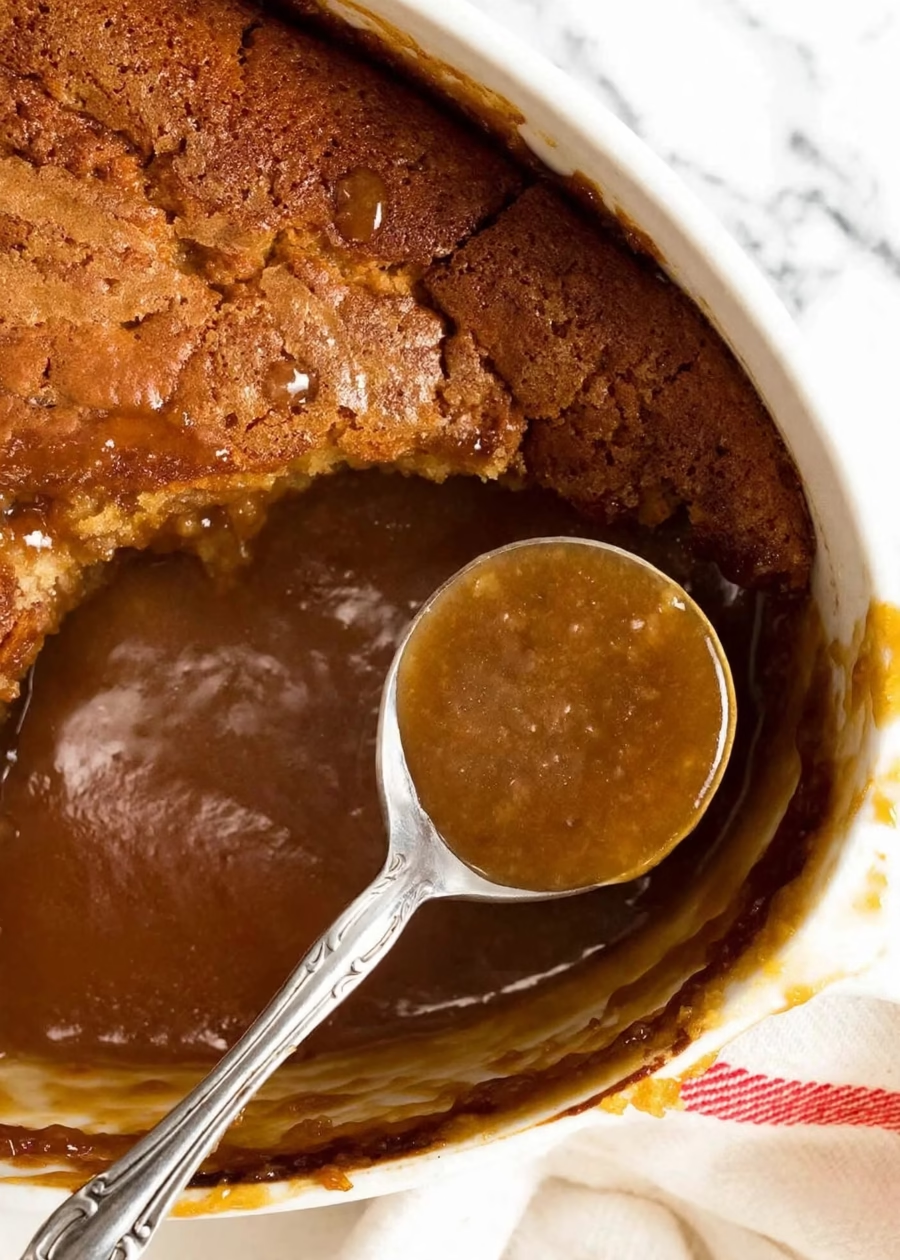
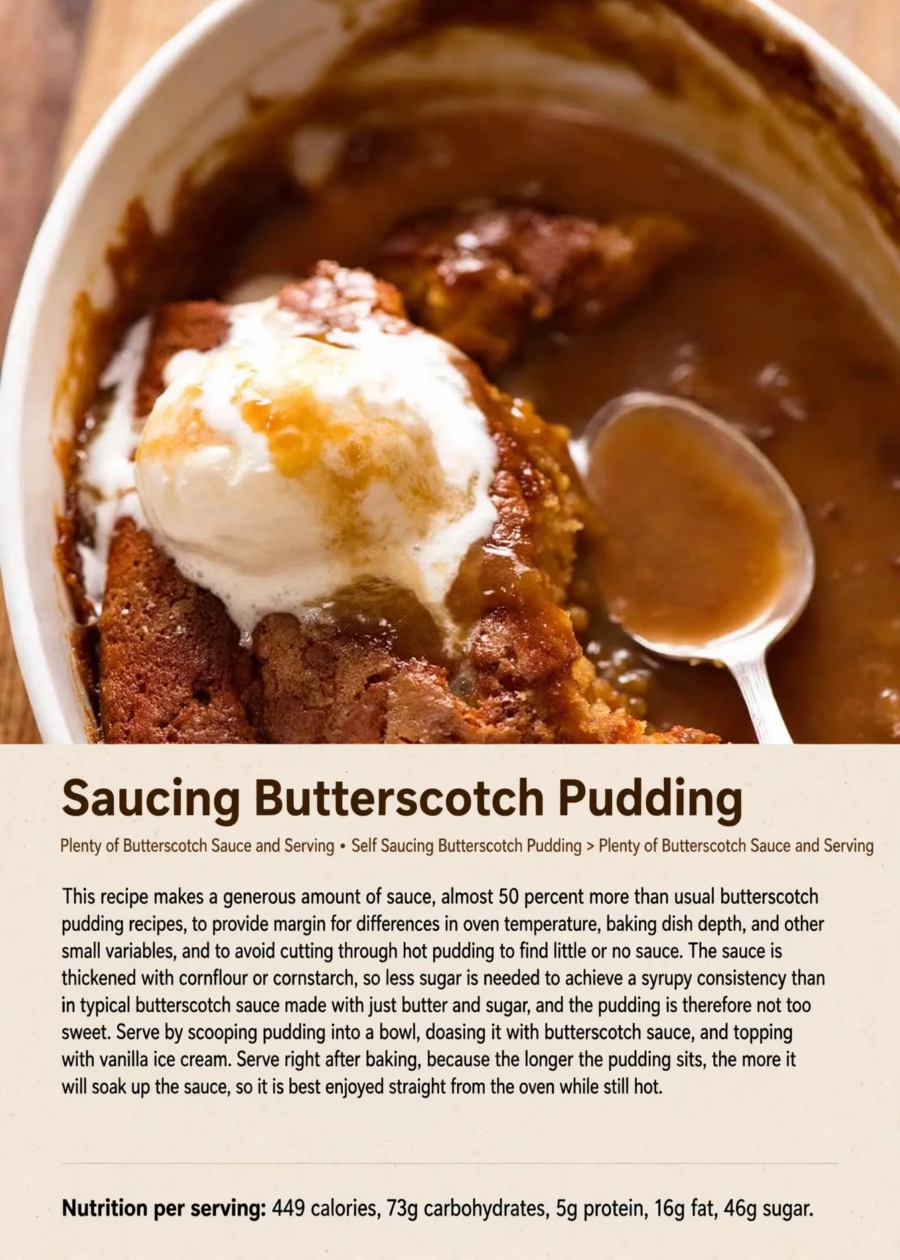
This recipe makes almost 50 percent more sauce than many butterscotch puding recipes. That is on purpose. The extra sauce gives you a margin for small differences in oven temperature, dish depth, and batter rise. It also means you will not cut into a hot puding and find only a sad little patch of sauce.
The sauce gets its body from cornstarch, so it needs less sugar than a simple butterscotch sauce made only with butter and sugar. The result is rich and syrupy without being too sweet.
Serve the warm puding into bowls, spoon the sauce from the bottom over each serving, and finish with vanilla ice cream. The cold cream against the warm sauce is the classic contrast.
Serve it soon after baking. The longer the puding sits, the more the sponge drinks up the sauce, and that hidden river slowly disappears. If you love butterscotch desserts, you might also enjoy this salted butterscotch popcorn cheescake or this butterscotch cheescake for another cozy treat.
Per serving, based on 6 servings: 449 calories, 73g carbohydrates, 5g protein, 16g fat, and 46g sugar.
Have the ice cream ready before the dish comes out. By the time you serve, the puding will still be hot, and the cold scoop will start to melt around the edges. That little pool of vanilla and butterscotch sauce at the bottom of the bowl is not a problem. It is the best part.
Baking Notes, Tablespoon Measure and Storage
The recipe uses 15 ml tablespoons. If your tablespoons are 20 ml, use 6 tsp of cornstarch instead of 2 tbsp. Teaspons are 5 ml each, so 6 tsp equals 2 x 15 ml tablespoons. Without that change, the sauce will be too thick. Only the cornstarch amount is affected by this difference.
This puding is best eaten fresh because the sauce gets absorbed by the sponge. If you expect leftovers, remove the sponge from the sauce as quickly as you can. Store the sponge and sauce separately. If they are already separated, both can be frozen.
Make it easy on yourself: Set the dish on a heat safe surface when it comes out of the oven, and let everyone serve right away. Warm puding waits for no one.
If you plan to freeze leftovers, freeze the sauce in one container and the sponge in another. Reheat them gently and serve right away. The sponge will not be exactly like fresh from the oven, but keeping the parts apart gives you a much better result than freezing them together.
FAQs
What is a self saucing butterscotch pudding?
A self saucing butterscotch pudding is a warm dessert made from a single batter that bakes into a fluffy, moist sponge cake with a rich butterscotch sauce that forms underneath. The sauce is created during baking as a sugar and cornstarch mixture sinks to the bottom of the dish. It is served warm, often with vanilla ice cream.
How does a self saucing pudding work?
A self saucing pudding works by layering a simple batter with a sugar and cornstarch mixture, then pouring boiling water over the top. As it bakes, the sugar and cornstarch sink to the bottom and thicken into a sauce, while the batter rises into a fluffy cake. The boiling water also creates steam, which helps keep the cake moist.
Can I substitute golden syrup in butterscotch pudding?
Yes, you can substitute golden syrup with dark corn syrup, honey, or maple syrup. Golden syrup adds a toffee-like flavor, but most of the butterscotch taste comes from the dark brown sugar in the sauce. Use an equal amount of your chosen substitute.
How do you store self saucing butterscotch pudding?
Self saucing butterscotch pudding is best eaten fresh because the sponge absorbs the sauce over time. If you have leftovers, remove the sponge from the sauce as soon as possible and store them separately in the refrigerator. If separated, both the sponge and sauce can be frozen.
Self Saucing Butterscotch Pudding
One simple batter turns into a warm, fudgy butterscotch puding cake with a rich butterscotch sauce hiding underneath. It is a quick, cozy dessert for 6, and the sauce appears as if by magic once the puding bakes.
- Total Time: 55 minutes
- Yield: 6 1x
Ingredients
Butterscotch Pudding
1/4 cup dark brown sugar, packed
1 1/4 cups plain flour, all purpose flour
2 1/2 tsp baking powder, NOT baking soda (bi-carbonate)
100g / 7 tbsp unsalted butter, melted
1 large egg, ~50-55g/2 oz in shell
1/2 cup milk, full or low fat
4 tbsp golden syrup, 90 g
Butterscotch Sauce
3/4 cup dark brown sugar, packed
2 tbsp cornflour / corn starch, I use 15 ml tbsp, if yours is 20 ml, use 6 tsp instead
2 cups boiling water
Serving
Vanilla ice cream
Instructions
1-Preheat oven to 180°C/350°F (160°C fan): Preheat oven to 180°C/350°F (160°C fan).
2-Grease a 6 cup baking dish (1: Grease a 6 cup baking dish (1.6L/1.6Q) with butter.
3-Butterscotch Sauce: Butterscotch Sauce: Whisk sugar and cornflour in bowl. Set aside.
4-Pudding batter: Pudding batter: Place sugar, flour and baking powder in a separate bowl. Whisk to combine.
5-Add butter, egg, milk and golden syrup: Add butter, egg, milk and golden syrup. Whisk until mostly lump free.
6-Scrape into baking dish and smooth surface: Scrape into baking dish and smooth surface.
7-Sprinkle Butterscotch Sauce sugar mixture all over: Sprinkle Butterscotch Sauce sugar mixture all over surface.
8-Pour boiling water over the surface over: Pour boiling water over the surface over the back of a dessert spoon held as close to the batter as you can (to soften the pour so it doesn’t break the surface of the batter).
9-Transfer to oven, bake 40 minutes or: Transfer to oven, bake 40 minutes or until skewer inserted into the cake part comes out clean.
10-Cut through pudding to reveal butterscotch sauce: Cut through pudding to reveal butterscotch sauce underneath.
11-To serve, scoop pudding into a bowl: To serve, scoop pudding into a bowl then douse with butterscotch sauce. Top with ice cream!
Last Step:
Please leave a rating and comment letting us know how you liked this recipe! This helps our business to thrive and continue providing free, high-quality recipes for you.- Prep Time: 15 min
- Cook Time: 40 min
- Method: bake
Nutrition
- Serving Size: 1 serving
- Calories: 449 kcal
- Sugar: 46 g
- Sodium: 29 mg
- Fat: 16 g
- Saturated Fat: 10 g
- Carbohydrates: 73 g
- Fiber: 1 g
- Protein: 5 g
- Cholesterol: 67 mg


