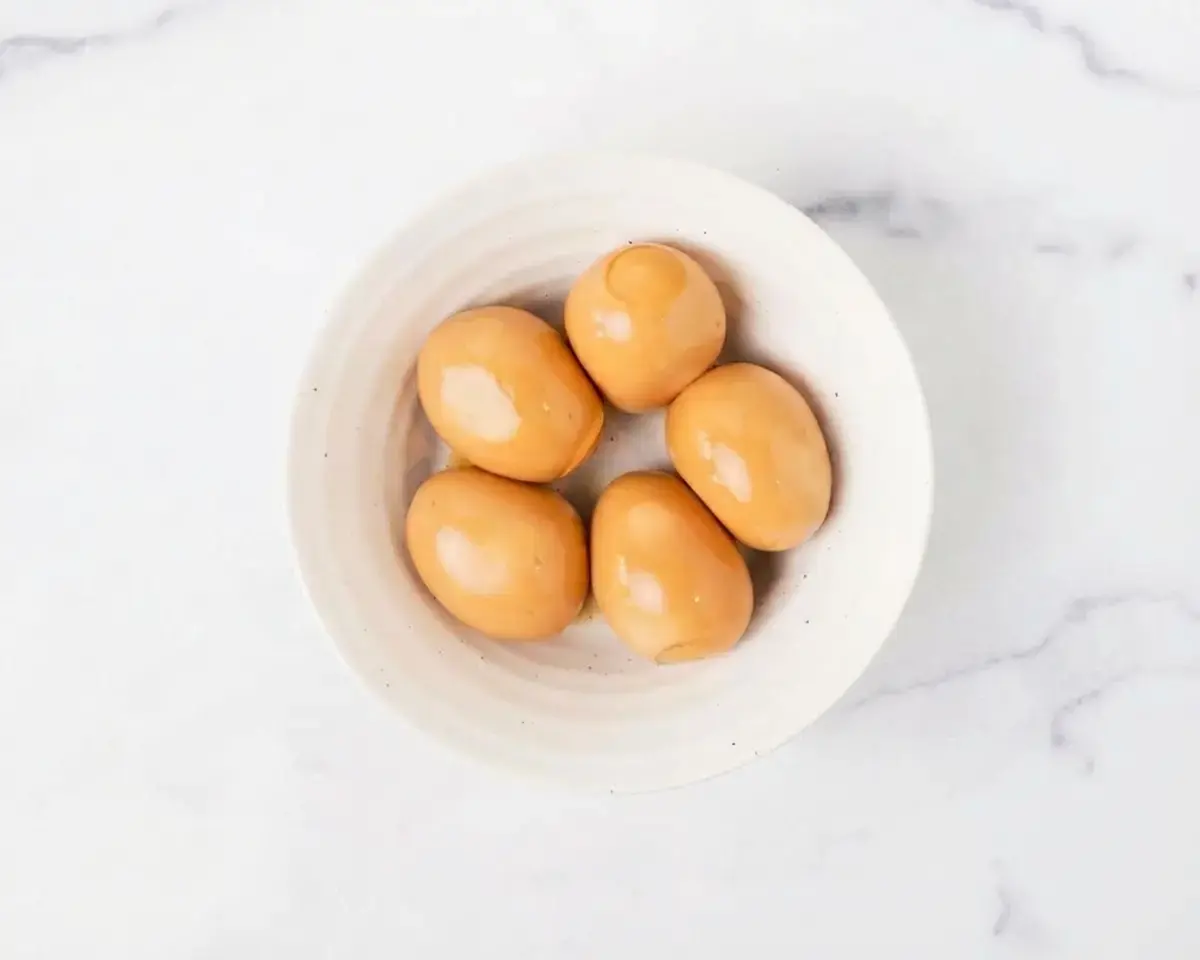
Ramen eggs, known in Japan as ajitama, short for ajitsuke tamago, are soft boiled eggs that soak in a sweetened soy marinade until every bite is deeply savory. You will also see them called shoyu eggs or Japanese soy marinated eggs.
Whatever name you use, the result is the same: a glossy amber egg with a soft, jammy, umami packed yolk that turns a simple bowl of noodles into something you look forward to all week.
The first time I made a batch, I pulled one straight from the marinade and ate it standing at the counter, still cold from the refrigerator. That is still my favorite way to taste test.
Ramen Eggs Ajitama: A Complete Guide To Soft Boiled Perfection 30
They are a classic ramen topping, but they hold their own as a side dish, a snack, or a protein boost on a bowl of rice.
Because the marinade does most of the work, this is a recipe where patience matters more than skill. You boil the eggs for a few minutes, chill them, and then let the refrigerator handle the rest. Overnight, the soy sauce, mirin, and sugar work their way into the whites and gently season the yolks.
If you enjoy soy marinated eggs, mayak eggs are a similar Korean dish worth exploring. They follow the same idea with a slightly different marinade, and they are a lovely way to keep the habit going once your first batch disappears.
Once you have a jar of ajitama in the refrigerator, you will find plenty of ways to use them. Here are our favorite ways to serve them.
Ramen Eggs Ajitama: A Complete Guide To Soft Boiled Perfection 31
In a bento box. A ramen egg tucked into a bento box makes lunch feel planned and generous. Add miso soup alongside if you want a warmer, more complete meal.
In a light breakfast spread. Serve plain congee with ramen eggs, kimchi, and seasoned tofu for a gentle, savory start to the day.
On avocado toast. Swap your usual plain egg for a marinated one. The salty, sweet glaze plays beautifully with creamy avocado.
On tonkotsu ramen. This style of ramen has a thick, rich bone broth, and a jammy soy egg cuts right through that richness.
On shoyu ramen. A lighter ramen built on a soy sauce based broth is a natural match, since the egg echoes the seasoning in the soup.
Any of these ideas work for a quick lunch or a late night bowl, and a single batch of six eggs covers several meals.
Ingredient notes
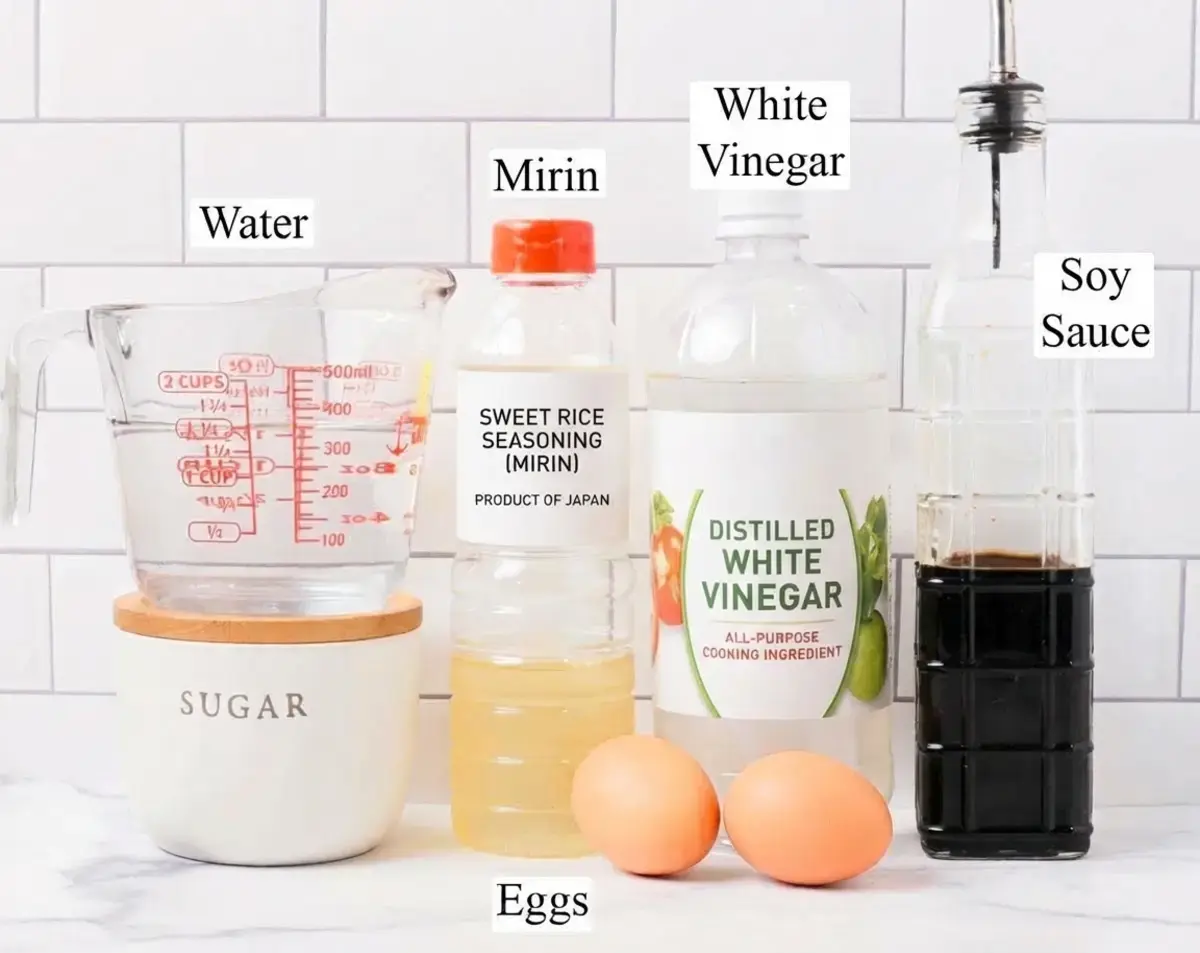
You only need a handful of ingredients, and the full quantities live in the recipe card below. Here is what each one does and how to choose well.
Ingredient
Amount
What it does
Large eggs
6
The base of the recipe
Vinegar
Optional
Added to the boiling water to help the shells release
Low sodium soy sauce
1/2 cup
The salty, savory backbone of the marinade
Water
1/4 cup
Dilutes the marinade so it is not overpowering
Mirin
1/4 cup
Adds gentle sweetness and rounds off any eggy flavor
Granulated sugar
2 tablespoons
Sweetness and another layer of flavor
Eggs. The recipe is built on large eggs, so the timing is dialed in for that size. If you use smaller or larger eggs, expect to adjust the cook time. Keep that in mind before you plan your perfect jammy yolk.
Vinegar. Plain white vinegar in the boiling water is optional, but we recommend it. It makes the shells noticeably easier to peel, which matters when you are peeling six eggs in a row.
Soy sauce. Use low sodium soy sauce, because the ratio here is based on it. If regular soy sauce is what you have, reduce the amount by a couple of tablespoons so the eggs do not turn out too salty.
Water. The water lightly dilutes the marinade. Without it, the soy sauce would be far too aggressive for eggs that sit overnight.
Ramen Eggs Ajitama: A Complete Guide To Soft Boiled Perfection 32
Mirin. Mirin is highly recommended. It helps remove that unwanted eggy flavor and adds a mellow sweetness. If you avoid alcohol, an alcohol free mirin is a fine substitute. Another option is 1 tablespoon of sake plus 1 teaspoon of sugar for every tablespoon of mirin.
Sugar. Granulated sugar brings sweetness and another layer of flavor, balancing the salt in the soy sauce.
A note on saltiness. These eggs get saltier the longer they stay in the marinade, so taste one at the 12 hour mark if you are unsure. Pulling them out on time is the easiest way to keep the flavor balanced.
Per egg, the recipe card lists about 98.5 calories, 5.4 grams of carbohydrates, 8.3 grams of protein, 4.8 grams of fat, 1.6 grams of saturated fat, 0.2 grams of fiber, 4.5 grams of sugar, 1151 milligrams of sodium, and 186 milligrams of cholesterol.
The sodium is high because of the soy marinade, so plan accordingly if you are watching your salt intake.
How to make ramen eggs
Prep takes about 5 minutes, the eggs cook for 6 minutes, and then the marinade does its work in the refrigerator, ideally overnight. Here is the full method, step by step.
Ramen Eggs Ajitama: A Complete Guide To Soft Boiled Perfection 33
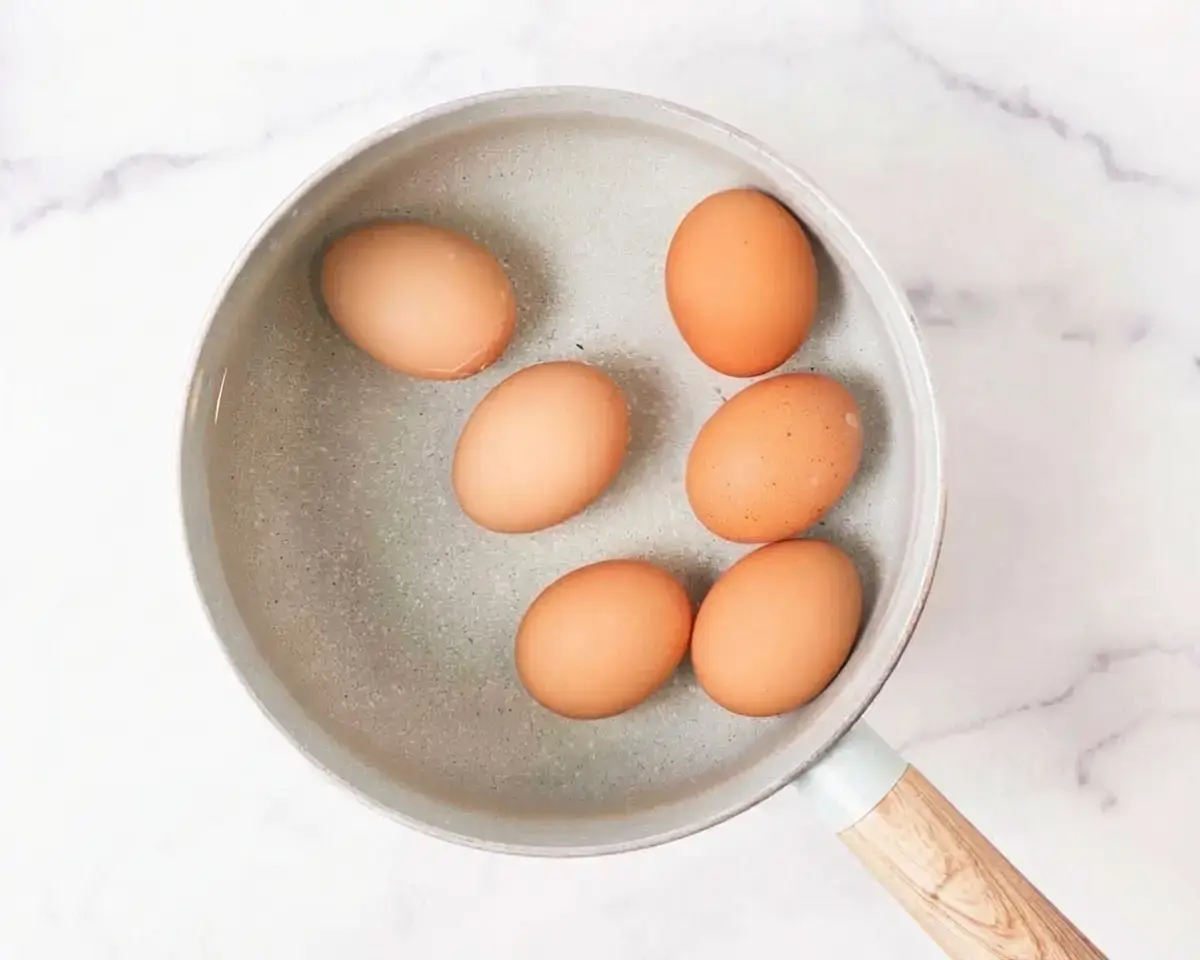
Boil the eggs. Bring a pot of water to a boil and gently place the eggs into the boiling water. Let them boil for 6 minutes for perfect soft boiled eggs. Gently really means gently, so lower them in with a spoon and keep the shells intact.
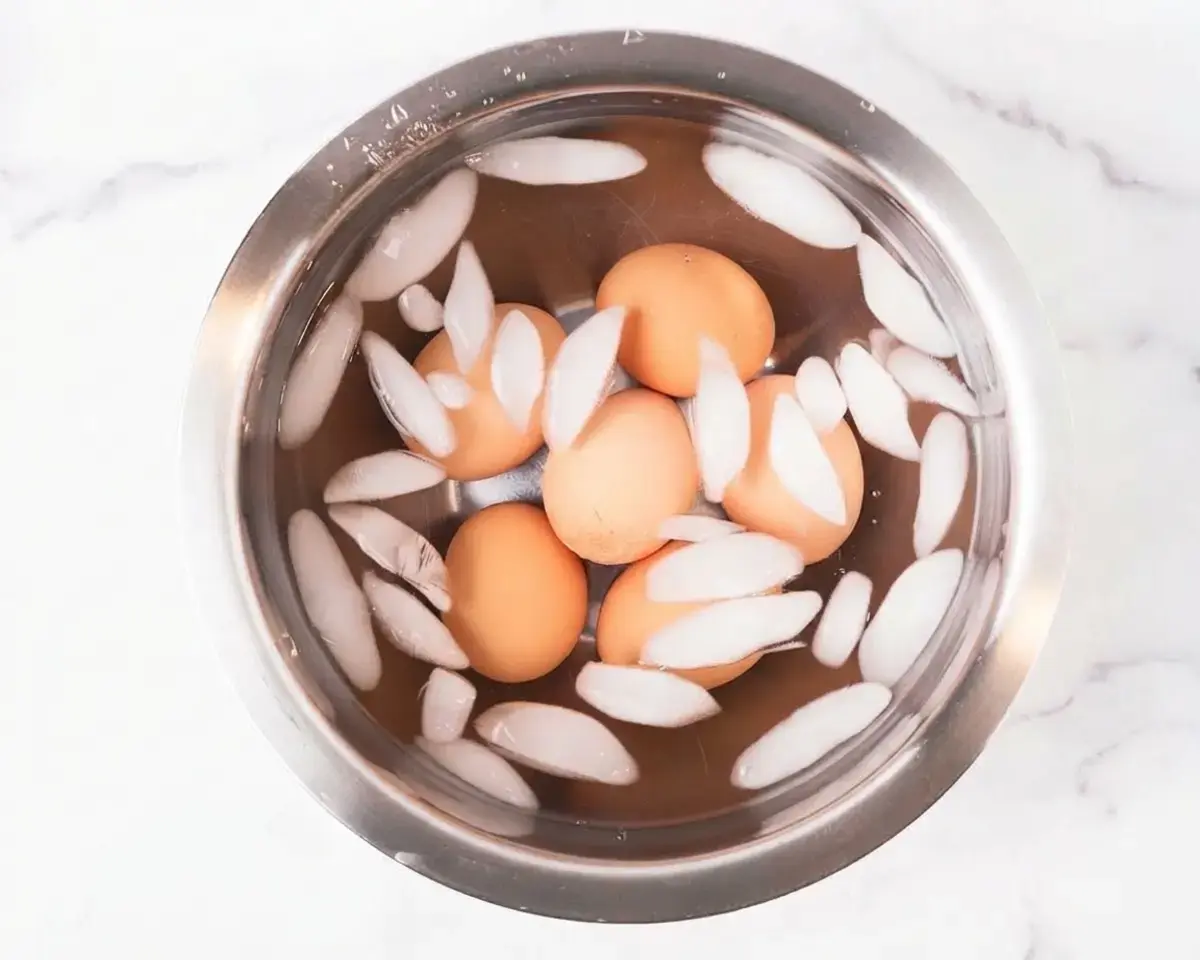
Shock them in ice water. After 6 minutes, remove the eggs from the boiling water and transfer them to ice water. Let the eggs cool completely.
Make the marinade. While the eggs are cooling, combine the soy sauce, water, mirin, and sugar in the container you plan to marinate in, or in a bowl. Stir until the sugar has dissolved. If you mixed it in a bowl, pour it into your marinating container.
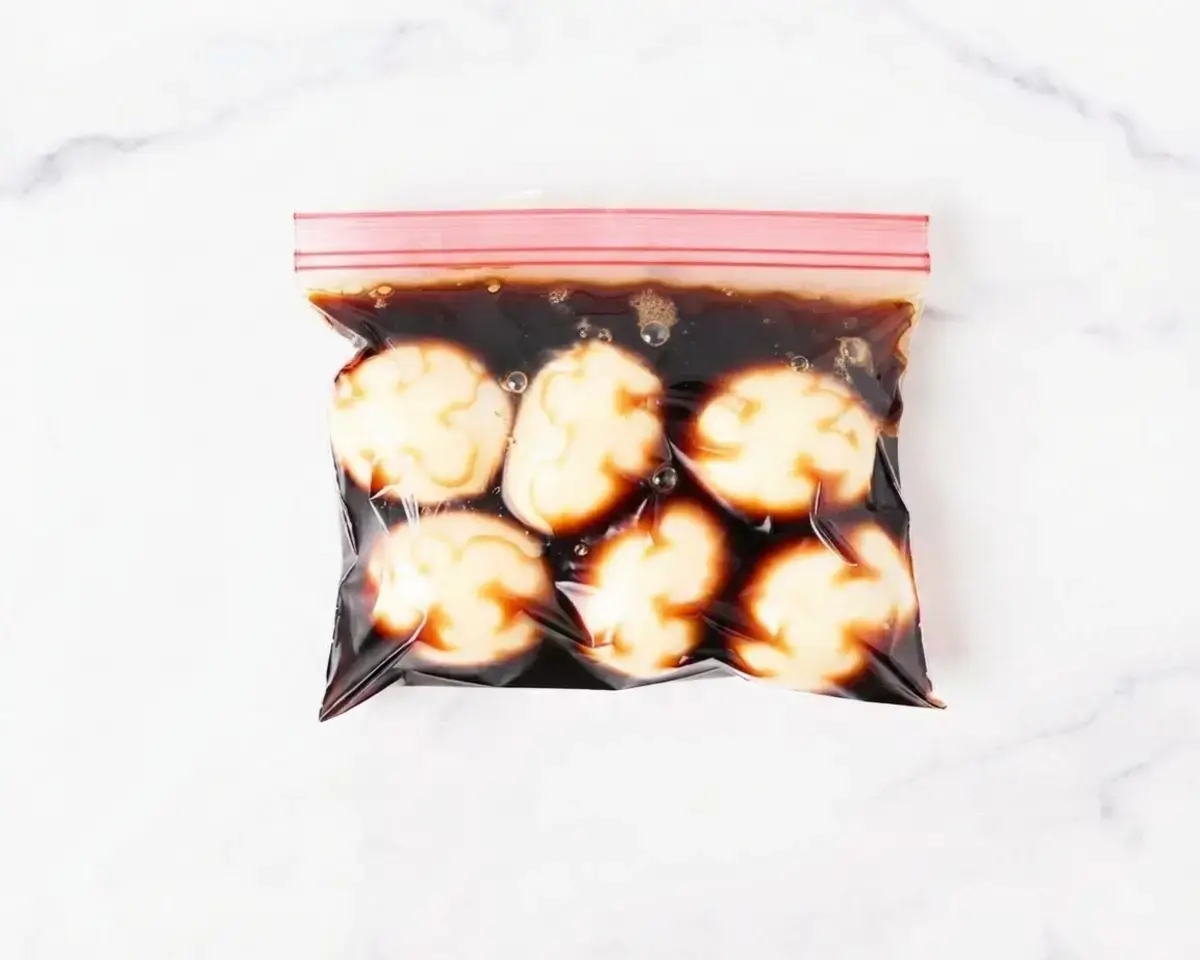
Peel and marinate. Once the eggs are cool, crack and peel them, rinsing with water if you need to remove stray shell fragments. Place the peeled eggs into the marinade and let them soak for at least 8 hours in the refrigerator, best overnight.
Enjoy or store. Eat the eggs in ramen, as a side, or as a snack. Leftover ramen eggs should be removed from the marinade after 12 to 36 hours, depending on how seasoned you want them.
Six eggs fit comfortably in a small container, so one batch covers several bowls of ramen through the week.
Ramen Eggs Ajitama: A Complete Guide To Soft Boiled Perfection 34
Pro tip for the boiling water. Add about 2 tablespoons of white vinegar per 5 to 6 cups of water in the pot. It does not change the flavor of the eggs, but it helps the shells come away cleanly.
Pro tip for the ice bath. Let the eggs sit in the ice bath for at least 15 minutes. The cold water stops the cooking, and the longer soak makes the eggs much easier to peel.
Ramen Eggs Ajitama: A Complete Guide To Soft Boiled Perfection 35
Pro tip for keeping the eggs submerged. In a container, a sheet of plastic wrap pressed directly onto the eggs helps keep them under the marinade. A resealable bag works too. If the eggs are not fully submerged, rotate them occasionally so every side gets seasoned.
Ramen Eggs Ajitama: A Complete Guide To Soft Boiled Perfection 36
If you are short on time, an 8 hour marinade is the minimum. Overnight is where the flavor really lands, and anything past 12 hours starts pushing toward a saltier egg.
Ramen Eggs Ajitama: A Complete Guide To Soft Boiled Perfection 37
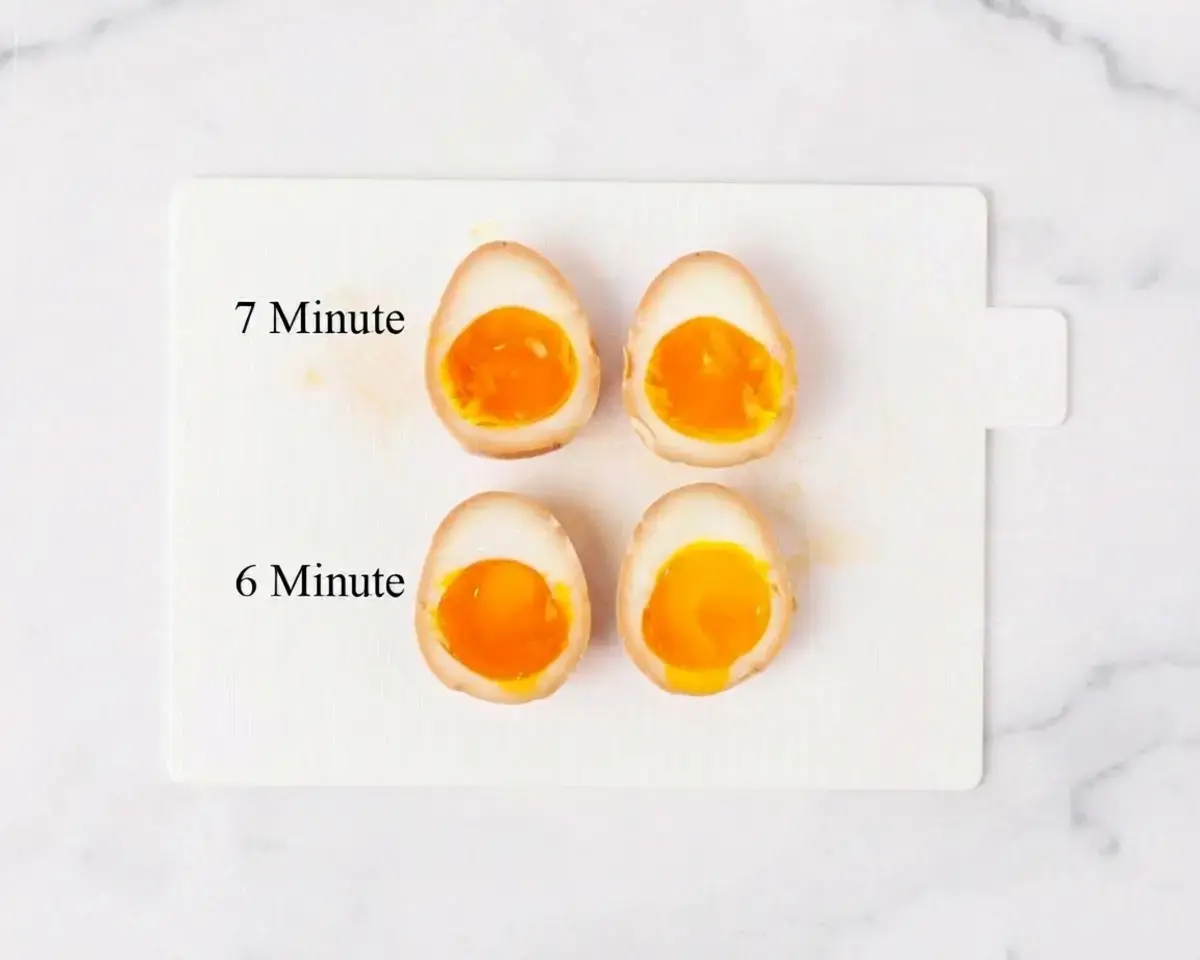
Different cook times give you different yolks. Six minutes from the refrigerator yields a runny, jammy center. Seven minutes gives a more cooked yolk. If you prefer a firmer egg, a hard boiled version needs about 12 minutes in the boiling water. Just remember that a firmer egg will also feel firmer after marinating.
Tips for peeling eggs
Peeling is where most people get frustrated, so here are the two habits that make the biggest difference.
Add about 2 tablespoons of vinegar per 5 to 6 cups of boiling water. It softens the grip of the shell on the egg white.
Soak the boiled eggs in an ice bath for at least 15 minutes. The cold water stops the cooking process so the eggs do not overcook, and it also helps them peel more easily.
Give the eggs a good 15 minutes in the ice bath. It makes peeling them so much easier, and it protects the soft yolk you worked for. Peel under a thin stream of cool water if a stubborn shell fragment clings to the white.
Storage
Ramen eggs need at least 8 hours of marinating and can stay in the marinade for up to 36 hours, depending on how seasoned you want them. Once they reach your preferred level, take them out of the marinade and enjoy them.
Any remaining ramen eggs should be stored separately from the marinade and will keep for up to 3 days if they are soft boiled. As they sit, the yolks become jammier and less runny, which many of us consider a bonus. Keep them in a covered container in the refrigerator.
If you made hard boiled eggs instead, they can be stored a little longer, about 5 to 7 days.
Leftover marinade is best used in cooking, such as stir fries, within 1 week of making it. It is a great way to add instant depth to a quick weeknight pan of vegetables or rice.
Ramen Eggs Ajitama: A Complete Guide To Soft Boiled Perfection 38
Reusing the marinade for another batch of eggs is not recommended for food safety reasons, and the flavor gets diluted with each use. If you do reuse it, use it within 5 days of making it and only once more.
Keep the eggs in a labelled container so you know exactly how long they have been soaking, and check one at the 12 hour mark.
Bottom line: marinate overnight, store the eggs away from the liquid, and let the leftover marinade move on to a stir fry instead of a second batch of eggs.
FAQs
How long should you boil ramen eggs for a soft, jammy yolk?
For perfectly soft, jammy yolks, boil large eggs straight from the refrigerator for exactly 6 minutes. Immediately transfer the eggs to an ice water bath and let them cool for at least 15 minutes to stop the cooking process and make peeling easier.
What is the best marinade for authentic ajitama ramen eggs?
The classic ajitama marinade is a mixture of 1/2 cup low-sodium soy sauce, 1/4 cup water, 1/4 cup mirin, and 2 tablespoons of granulated sugar, stirred until the sugar dissolves. This sweet and savory blend creates the signature umami-packed flavor of Japanese ramen eggs.
How long should you marinate ramen eggs, and how should you store them?
Marinate the peeled eggs in the soy mixture for at least 8 hours, preferably overnight. For the best texture and flavor, remove the eggs from the marinade after 12 to 36 hours, then store them separately in the refrigerator, where soft-boiled eggs will keep for up to 3 days.
What is a good substitute for mirin in ramen egg marinade?
If you don't have mirin, you can substitute each tablespoon with 1 tablespoon of sake mixed with 1 teaspoon of sugar. Alcohol-free mirin is also an excellent alternative that provides the same sweetness and helps reduce any unwanted eggy flavor without using alcohol.
Ramen Eggs (Ajitama) Ramen eggs, known in Japan as ajitama, short for ajitsuke tamago, are soft boiled eggs that soak in a sweetened soy marinade until every bite is deeply savory. You will also see them called shoyu eggs or Japanese soy marinated eggs.
Total Time:731 min
Yield:6 marinated eggs 1x
Ingredients
Scale
6 large egg Vinegar 1/2 cup soy sauce, light sodium 1/4 cup water 1/4 cup mirin 2 tablespoons granulated sugar
Instructions
1-Bring a pot of water to a: Bring a pot of water to a boil and gently place the eggs in the boiling water. Let the eggs boil for 6 minutes for the perfect soft boiled eggs. 2-After 6 minutes, remove the eggs from: After 6 minutes, remove the eggs from the boiling water and shock them in ice water. Let the eggs cool completely. 3-While the eggs are cooling, make the: While the eggs are cooling, make the soy marinade. In the marinating container or a bowl, combine the soy sauce, water, mirin, and sugar. Stir until the sugar has dissolved. If the marinade was made in a bowl, transfer to the container that you’ll be marinating in. 4-After the cooling process, crack and peel: After the cooling process, crack and peel the eggs. Rinse with water if needed to remove any stray egg shells. Place the peeled eggs into the prepared marinade and allow the eggs to soak for at least 8 hours in the fridge, best overnight. 5-Enjoy the eggs in ramen, as a: Enjoy the eggs in ramen, as a side, or as a snack. Leftover ramen eggs should be removed from the marinade after 12 to 36 hours, depending on how seasoned you’d like the eggs.
Last Step:
Please leave a rating and comment letting us know how you liked this recipe! This helps our business to thrive and continue providing free, high-quality recipes for you.