Why You’ll Love This French Baguette
French baguette is a timeless classic that brings a touch of elegance to any meal, and you’ll find this recipe both simple and rewarding to make at home. This version focuses on achieving that ideal balance of a crispy crust and soft interior, making it perfect for busy parents or baking enthusiasts looking to impress without spending all day in the kitchen. Beyond its ease, this baguette offers health benefits like being made from basic, wholesome ingredients that provide energy-packed carbohydrates while staying low in fat.
One of the standout features is its versatility, allowing adaptations for various dietary needs, which makes it a hit with students, diet-conscious individuals, and even seniors. French baguette shines with its authentic flavor, featuring a traditional crusty exterior and airy inside that elevates everyday dishes. Whether you’re a weekend grill master incorporating it into your outdoor cooking or a food enthusiast experimenting with flavors, this recipe integrates naturally with your lifestyle.
The simplicity and nutritional advantages of French baguette make it an ideal choice for home cooks and travelers alike. You can enjoy it fresh from the oven or use it in sandwiches for newlyweds planning romantic meals. Its baguette bread charm lies in how it supports a balanced diet while delivering that distinctive taste everyone craves.
Health and Practical Benefits
For working professions, the straightforward steps mean you can prepare the dough ahead and bake it later, fitting into tight schedules. Baking enthusiasts will appreciate how this recipe for French baguette with crispy crust and soft interior encourages creativity without overwhelming complexity. Overall, it’s a go-to option that combines ease of preparation, health benefits, and versatility in one delightful loaf.
Jump To
- 1. Why You’ll Love This French Baguette
- 2. Essential Ingredients for French Baguette
- 3. How to Prepare the Perfect French Baguette: Step-by-Step Guide
- 4. Dietary Substitutions to Customize Your French Baguette
- 5. Mastering French Baguette: Advanced Tips and Variations
- 6. How to Store French Baguette: Best Practices
- 7. FAQs: Frequently Asked Questions About French Baguette
- 8. French Baguette
Essential Ingredients for French Baguette
Gathering the right ingredients is the first step to mastering French baguette, and using precise measurements ensures consistent results every time. Below is a comprehensive list of all the ingredients needed for this recipe, formatted for clear understanding. Each item includes its exact quantity to help you measure accurately and achieve that perfect crispy crust and soft interior.
- 500 grams all-purpose flour (about 3 1/2 cups, measured by scoop and swipe method)
- 360 grams water (about 1 1/2 cups plus 1 tablespoon)
- 10 grams salt (about 2 teaspoons)
- 3 grams instant yeast (about 1 teaspoon; also known as Quick Rise or Rapid Rise yeast)
- 25 grams honey (about 1 tablespoon; optional for slight sweetness)
These main ingredients form the foundation of your French baguette, providing structure, hydration, and flavor. For special dietary options, you can make tweaks like using a gluten-free flour blend for those with restrictions, or opting for plant-based alternatives if needed. Using high-quality items, such as fresh flour and yeast, helps enhance the baguette bread’s texture and taste while keeping things simple for beginners.
Special Dietary Options
If you’re adapting for vegan needs, stick with the listed ingredients as they are naturally plant-based. For a low-calorie twist, consider reducing or omitting the honey to cut down on sugar. Remember, synonyms like French bread can remind you of its cultural roots, but focus on how these elements work together for that signature recipe for French baguette with crispy crust and soft interior.
How to Prepare the Perfect French Baguette: Step-by-Step Guide
Creating the perfect French baguette starts with mixing your ingredients to form a solid base, and this guide walks you through each step with ease. Begin by combining 500 grams of all-purpose flour, 360 grams of water, 10 grams of salt, 3 grams of instant yeast, and 25 grams of honey if desired, in a large bowl until everything is well mixed; then cover and let it rest for 15 minutes. This initial rest helps the dough develop, setting the stage for that soft interior we’re aiming for.
Over the next 1 1/2 hours, perform three sets of stretch and folds, spacing them about 30 minutes apart, and turn the dough upside down after each one to build strength without mechanical kneading. Once done, cover the bowl and refrigerate for cold retarding, ideally 12-14 hours, until the dough roughly doubles in volume this step is key for enhancing flavors and texture in your French baguette. After refrigeration, turn the dough onto a lightly floured surface, divide it into three equal portions, shape them into rectangles, and let them rest for 45-60 minutes to relax the gluten.
Next, stretch each rectangle slightly and roll it into a cylinder, sealing the seams as you go, then gently extend each to about 14-15 inches for that classic shape. Place the shaped baguettes seam side up on a well-floured couche or alternative, cover them, and proof at room temperature for 30-60 minutes; check readiness by gently poking if the dent springs back slowly, they’re ready. Preheat your oven to 500°F with a thick baking stone in the upper half and a pan of hot water with a rolled kitchen towel on the lower rack to create steam, which is essential for oven spring.
Baking and Finishing Steps
Transfer the proofed baguettes seam side down onto parchment paper, dust off excess flour, and score each with three swift, firm cuts using a bread lame, razor blade, or serrated knife to promote even expansion. Carefully slide them onto the El hot baking stone and immediately reduce the temperature to 475°F. Bake for 15 minutes with the steam, then remove the water pan, rotate the baguettes 180 degrees, lower the temperature to 450°F, and continue baking for another 15 minutes or until they turn deep golden brown.
Allow the baguettes to cool completely on a wire rack before slicing and serving. This process, including mixing and initial rest at 30 minutes, cold retarding for 12-14 hours, proofing for 30-60 minutes, and baking for about 30 minutes, ensures a crispy crust and soft interior. For more on adapting techniques check our grilling techniques guide, as similar principles apply to outdoor cooking on your blog.

Dietary Substitutions to Customize Your French Baguette
Making French baguette adaptable means exploring substitutions that fit various lifestyles, like swapping all-purpose flour for gluten-free blends to accommodate dietary needs. For protein alternatives, use bread flour or high-protein options to get a chewier texture, while keeping the 500 grams measurement for consistency. If you’re aiming for vegan versions, the recipe already uses plant-based ingredients, so no major changes are needed beyond ensuring your yeast is free from animal additives.
For vegetable and seasoning modifications, add herbs like rosemary or thyme to enhance flavor, or incorporate olives and sun-dried tomatoes for a twist on the traditional baguette bread. You can also switch regular salt for sea salt options to vary the taste without altering the core 10 grams quantity. These changes help maintain the essence of the recipe for French baguette with crispy crust and soft interior while making it accessible for everyone from busy parents to food enthusiasts.
Mastering French Baguette: Advanced Tips and Variations
To take your French baguette to the next level, focus on pro cooking techniques like using a thick baking stone for even heat and better crust formation, which mimics professional ovens. For advanced baking tips, consider incorporating specialty flours such as rye or whole wheat for a nutty flavor, but adjust hydration if needed to keep the dough manageable. Presentation tips include serving your baguettes with fresh herbs or a light dusting of flour for a rustic appeal that impresses at gatherings.
Make-ahead options are great for working professionals; prepare the dough and refrigerate it for up to 48 hours to develop more complex flavors, though this might slightly alter the texture. If you’re an outdoor cooking enthusiast, try brushing the baguettes with olive oil before baking to add a smoky hint that ties into grilling traditions. Remember, longer fermentation with sourdough requires hydration and yeast adjustments, ensuring your French baguette remains a versatile staple.
Flavor and Storage Variations
For non-traditional twists, small substitutions like adding honey can introduce subtle sweetness, but it’s optional and won’t affect the overall structure. At higher altitudes, shorten baking times and tweak yeast amounts for optimal results, building on the basic recipe. These tips help weave in elements of French bread while optimizing for home bakers seeking that perfect balance.
How to Store French Baguette: Best Practices
Proper storage keeps your French baguette fresh and maintains its crispy crust, starting with placing it in a paper bag in the fridge for short-term use to prevent sogginess. For longer preservation, wrap the baguettes tightly in plastic wrap and foil, then freeze them for up to three months, making it easy for busy parents or students to have fresh bread on hand. When reheating, warm them in an oven at 180°C (350°F) for about 10 minutes to restore that delightful crunch and soft interior.
Meal prep ideas include slicing the baguettes before freezing for quick portions, which aligns with the efficiency of outdoor cooking routines. Always cool the bread fully before storing to avoid moisture buildup, ensuring your French baguette retains its quality. These strategies help extend the life of your homemade loaves, integrating seamlessly with daily life for food enthusiasts and baking newcomers.
FAQs: Frequently Asked Questions About French Baguette
What ingredients do I need to make a traditional French baguette?
A classic French baguette requires four basic ingredients: flour, water, yeast, and salt. Some recipes add a small amount of honey to introduce subtle sweetness and soften the dough, but it’s optional. Using high-quality bread flour or all-purpose flour works best. The simplicity of these ingredients allows the bread’s flavor and texture to shine through when combined with proper fermentation and baking techniques.
How long should I refrigerate baguette dough and why?
Baguette dough benefits from cold fermentation, which typically lasts 12 to 14 hours in the refrigerator, though it can be extended up to 48 hours. Refrigeration slows yeast activity, allowing flavors to develop more fully and resulting in a more complex taste and better crumb structure. Be careful not to refrigerate longer than 48 hours, as the dough can start to weaken and lose its ideal texture.
What’s the best way to shape and proof baguettes for baking?
After dividing the dough into equal parts, shape each piece into a tight cylinder by stretching it into a rectangle and rolling it up while sealing the seam. Let the shaped baguettes rest for 45–60 minutes, then proof them seam side up on a floured baker’s couche or cloth to maintain shape. Proofing time at room temperature is usually 30 to 60 minutes—your dough is ready if a gentle poke springs back slowly.
How important is steam during baguette baking and how do I create it?
Steam is crucial in the first 15 minutes of baking because it prevents the crust from forming too quickly, allowing the bread to fully expand and develop a crisp, shiny exterior. To generate steam at home, place a pan of hot water or a kitchen towel soaked in water on the oven floor when preheating. Remove the steam source after the initial baking period to allow the crust to brown evenly.
Can I substitute active dry yeast for instant yeast in a baguette recipe?
Yes, you can use active dry yeast, but it requires activation by dissolving it in warm water (about 105–110°F) before mixing with other ingredients. This activation step lengthens the preparation time slightly. Instant yeast can be mixed directly into the flour and usually results in more consistent fermentation. Adjust your fermentation time accordingly when using active dry yeast to ensure proper rise and flavor.
French Baguette
🥖 Discover the joy of making authentic French baguettes with a satisfyingly crispy crust and soft, airy interior.
🍞 This recipe balances simple ingredients and time-tested techniques to deliver bakery-quality bread at home.
- Total Time: 13 hours
- Yield: 3 baguettes
Ingredients
– 500 grams all-purpose flour
– 360 grams water
– 10 grams salt
– 3 grams instant yeast
– 25 grams honey for slight sweetness
Instructions
1-Combining Ingredients: Begin by combining 500 grams of all-purpose flour, 360 grams of water, 10 grams of salt, 3 grams of instant yeast, and 25 grams of honey if desired, in a large bowl until everything is well mixed; then cover and let it rest for 15 minutes. This initial rest helps the dough develop, setting the stage for that soft interior we’re aiming for.
2-Stretch and Folds: Over the next 1 1/2 hours, perform three sets of stretch and folds, spacing them about 30 minutes apart, and turn the dough upside down after each one to build strength without mechanical kneading.
3-Cold Retarding: Once done, cover the bowl and refrigerate for cold retarding, ideally 12-14 hours, until the dough roughly doubles in volume this step is key for enhancing flavors and texture in your French baguette.
4-Shaping the Dough: After refrigeration, turn the dough onto a lightly floured surface, divide it into three equal portions, shape them into rectangles, and let them rest for 45-60 minutes to relax the gluten.
5-Rolling and Proofing: Next, stretch each rectangle slightly and roll it into a cylinder, sealing the seams as you go, then gently extend each to about 14-15 inches for that classic shape. Place the shaped baguettes seam side up on a well-floured couche or alternative, cover them, and proof at room temperature for 30-60 minutes; check readiness by gently poking if the dent springs back slowly, they’re ready. Preheat your oven to 500°F with a thick baking stone in the upper half and a pan of hot water with a rolled kitchen towel on the lower rack to create steam, which is essential for oven spring.
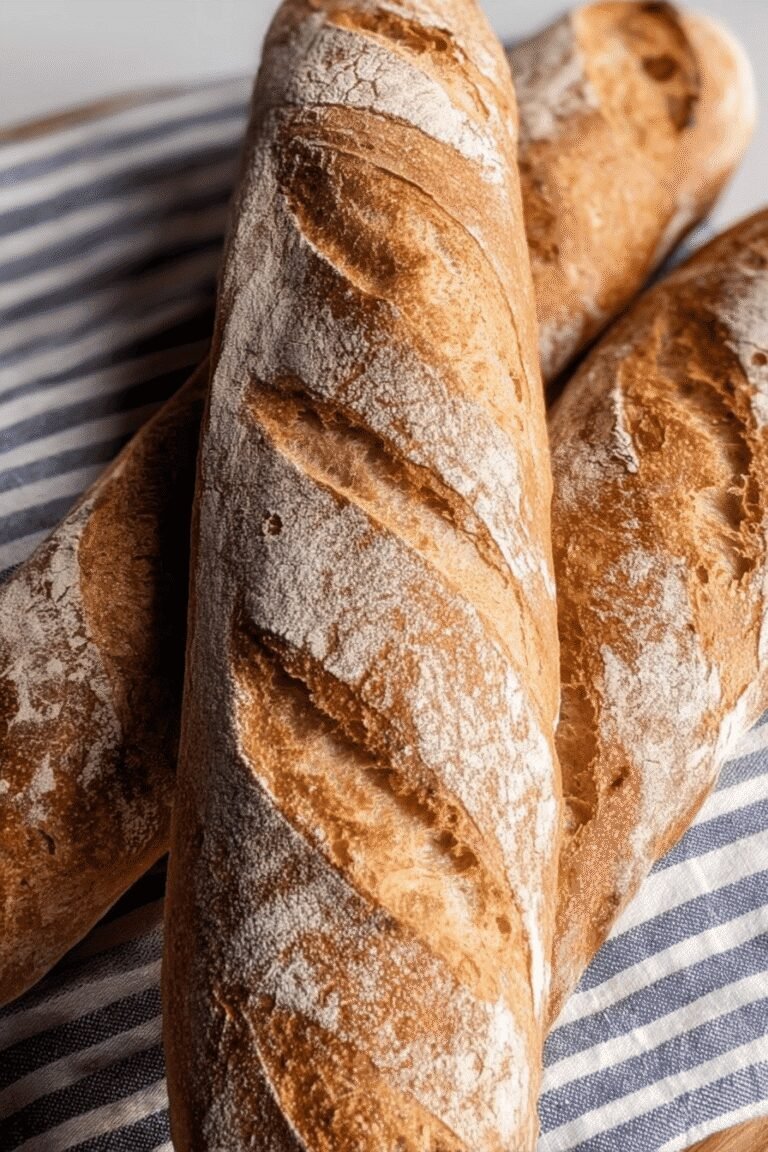
6-Baking and Scoring: Transfer the proofed baguettes seam side down onto parchment paper, dust off excess flour, and score each with three swift, firm cuts using a bread lame, razor blade, or serrated knife to promote even expansion. Carefully slide them onto the El hot baking stone and immediately reduce the temperature to 475°F. Bake for 15 minutes with the steam, then remove the water pan, rotate the baguettes 180 degrees, lower the temperature to 450°F, and continue baking for another 15 minutes or until they turn deep golden brown.
7-Cooling and Serving: Allow the baguettes to cool completely on a wire rack before slicing and serving. This process, including mixing and initial rest at 30 minutes, cold retarding for 12-14 hours, proofing for 30-60 minutes, and baking for about 30 minutes, ensures a crispy crust and soft interior.
Last Step:
Please leave a rating and comment letting us know how you liked this recipe! This helps our business to thrive and continue providing free, high-quality recipes for you.Notes
⚖️ Use a kitchen scale for precise measurements to ensure consistent dough texture.
🔥 Use a thick baking stone and create steam in the oven for ideal crust and oven spring.
💧 Proper scoring with a sharp blade is essential to allow expansion and avoid tears.
- Prep Time: 30 minutes
- Cold Fermentation: 12-14 hours
- Cook Time: 30 minutes
- Category: Bread
- Method: Baking
- Cuisine: French
Nutrition
- Serving Size: 1 baguette (approximate)
- Calories: 158
- Sugar: 2g
- Sodium: 326mg
- Fat: 1g
- Saturated Fat: 1g
- Carbohydrates: 33g
- Fiber: 1g
- Protein: 4g
- Cholesterol: 0mg