

Why this recipe works
I still remember the first full size cheesecake I ever brought to a family cookout. It cracked straight down the middle, and I spent the whole drive over apologizing to a dessert nobody had even tasted yet. Mini cheesecakes changed that for me.
They deliver the same rich, creamy bite as a New York style cheesecake, but their smaller size makes them faster to bake, easier to serve, and much less intimidating when you are just getting started.
The reason they work so well comes down to two simple things. Each cheesecake is small, and the oven stays at a gentle 320°F (160°C).
That combination lets the filling bake evenly and smoothly without a water bath, so you skip the foil wrapping and all the second guessing.

The result is silky and rich, with a lovely balance of firm and creamy, and the whole batch needs only 15 minutes in the oven before it heads to the fridge to chill.
There is also something to be said for the size itself. Because the filling sits in a shallow layer inside the liners, there is less distance for heat to travel and less chance of the middle staying wet while the outside dries out. The crust stays crisp, the filling stays even, and every portion is already divided for you.
The hands on work is short, the steps are straightforward, and the ingredient list is friendly. If you have ever felt nervous about cheesecake, this is the recipe I would hand you first.
Jump To
Ingredients you’ll need
You only need a handful of simple ingredients, and most of them are probably already in your kitchen. The recipe has two parts, a buttery crust and a creamy filling. Exact measurements live in the recipe card.
For the crust
- 1 ½ cup (150 g) biscuit crumbs
- ¼ cup (60 g) unsalted butter, melted
For the filling
- 10.5 oz (300 g) full fat cream cheese, at room temperature
- ½ cup (100 g) granulated sugar
- 2 large eggs, at room temperature
- 1 teaspoon vanilla extract
- 1 tablespoon lemon juice
- 1 ½ tablespoon (12 g) all purpose flour
- ¾ cup (185 g) full fat sour cream, at room temperature
Every ingredient has a job. Full fat block cream cheese gives you a smooth, lump free batter, which is why I always reach for the block rather than a spreadable tub.
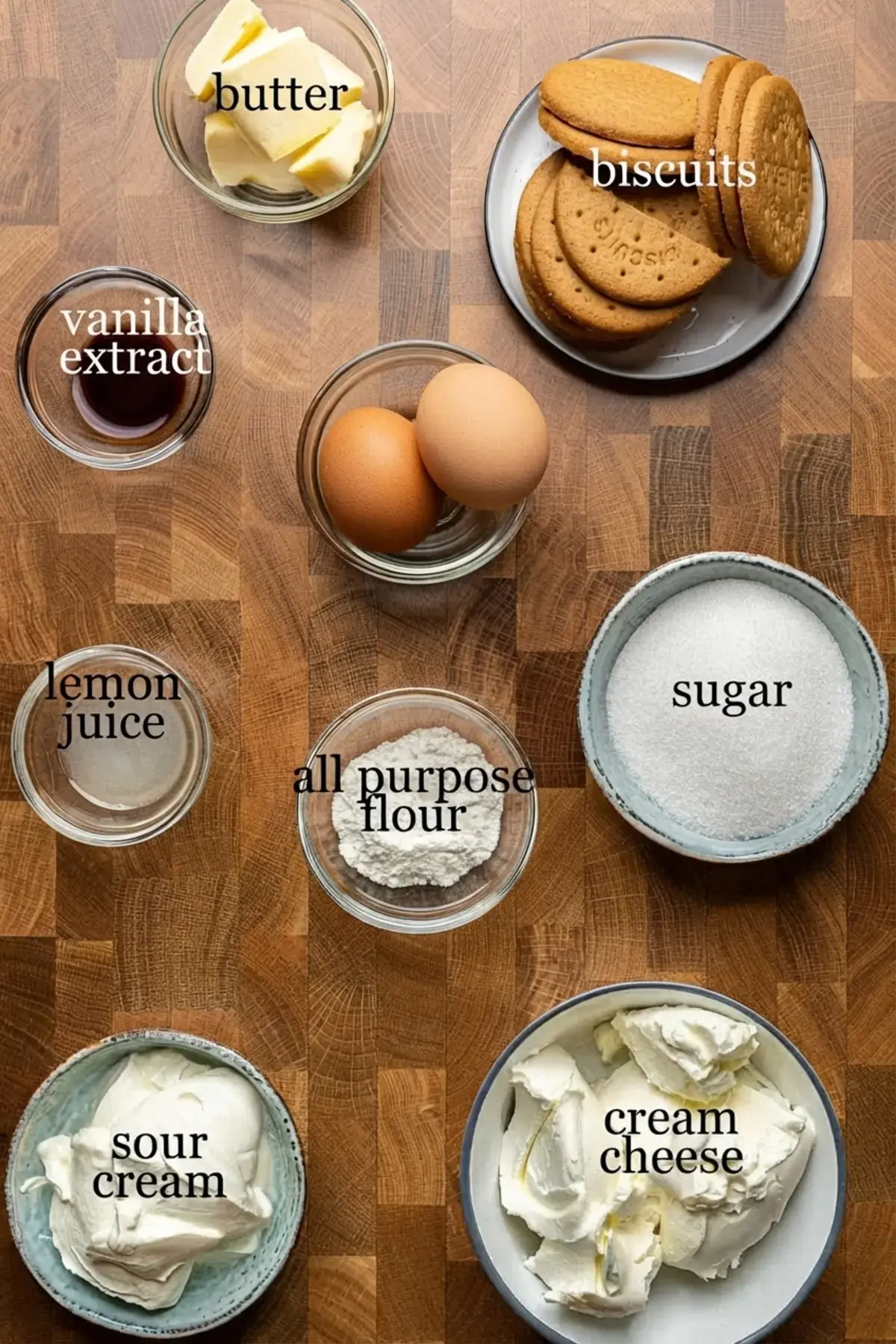
The eggs bind the filling and give the cheesecakes structure so they set while staying smooth and creamy. A small amount of all purpose flour stabilizes the filling so each one bakes neatly and holds its shape.
Sour cream adds a gentle tang and that creamy, silky texture we all want. Lemon juice brightens the flavor and balances the richness, so the finished bite never feels heavy.
Two small habits make these ingredients behave. Let the cream cheese, eggs, and sour cream sit out long enough to lose their chill, and measure the flour rather than eyeballing it, since it is doing quiet structural work in a small batch of filling.
Substitutions and variations
This is one of those recipes that bends nicely to whatever is already in your pantry, which is a big part of why it has stayed in my regular rotation.
- Crust: graham crackers, digestive biscuits, Biscoff cookies, or crushed Oreos all work in place of biscuit crumbs.
- Butter: unsalted is best, but salted butter works fine if that is what you have on hand.
- Sour cream: full fat Greek yogurt can step in, and it is the swap the source authors reach for most often now.
- Flour: use the same amount of cornstarch instead.
- Toppings: jam, fresh fruit, lemon curd, chocolate ganache, Nutella, Biscoff spread, caramel, dulce de leche, or whipped cream.
If you want something a little richer, a mini chocolate cheesecake version is a lovely next step once you have this one down. I usually keep a batch plain and set out three or four topping options, so everyone can finish their own plate the way they like it.
How to make easy mini cheesecakes
Photographs in the recipe card show you how the crust, the batter, and the baked cheesecakes should look at each stage, so you always know you are on track.
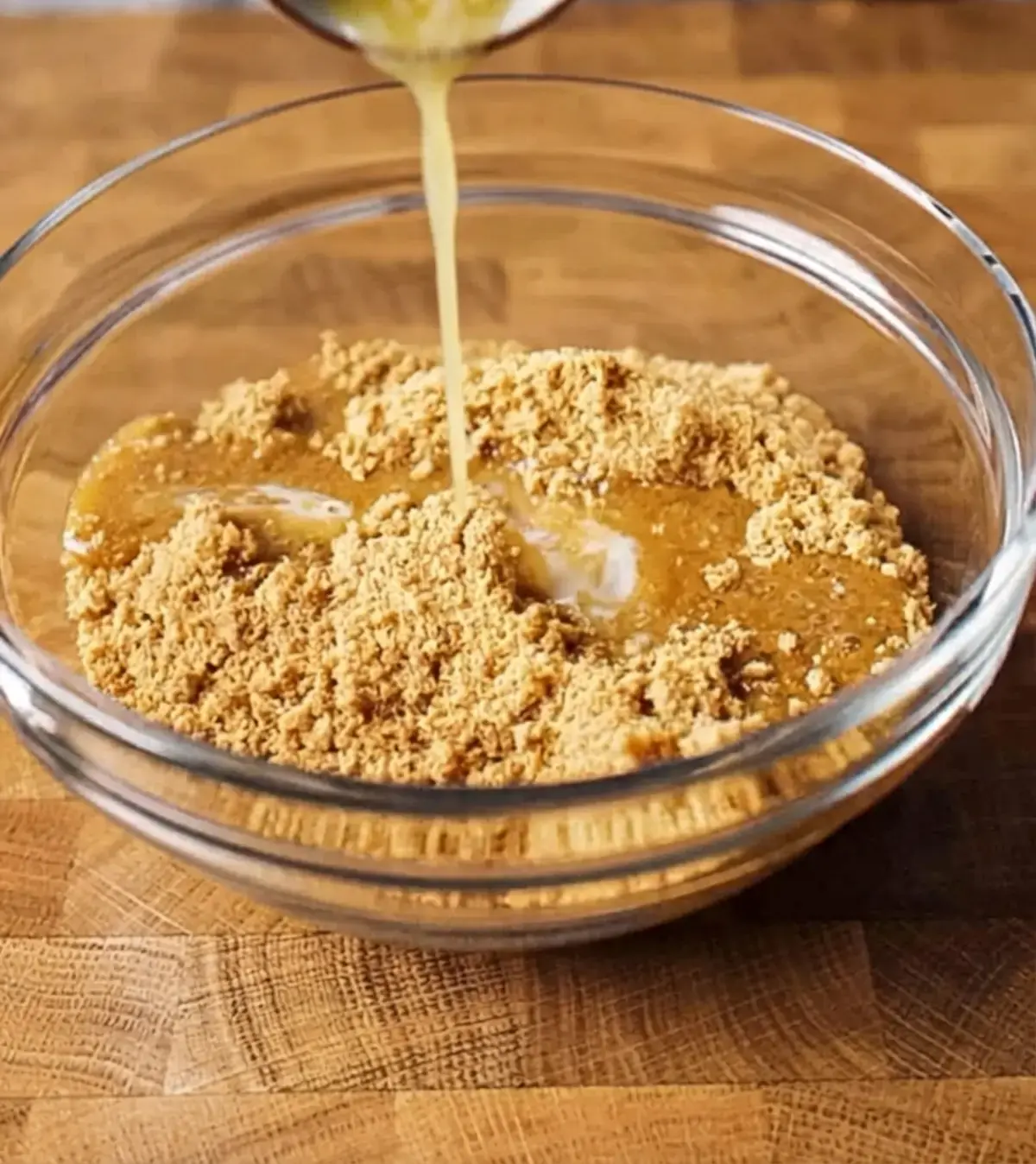
Here is the flow, step by step.
Make the crust
Position a rack in the lower third of the oven and preheat to 320°F (160°C).
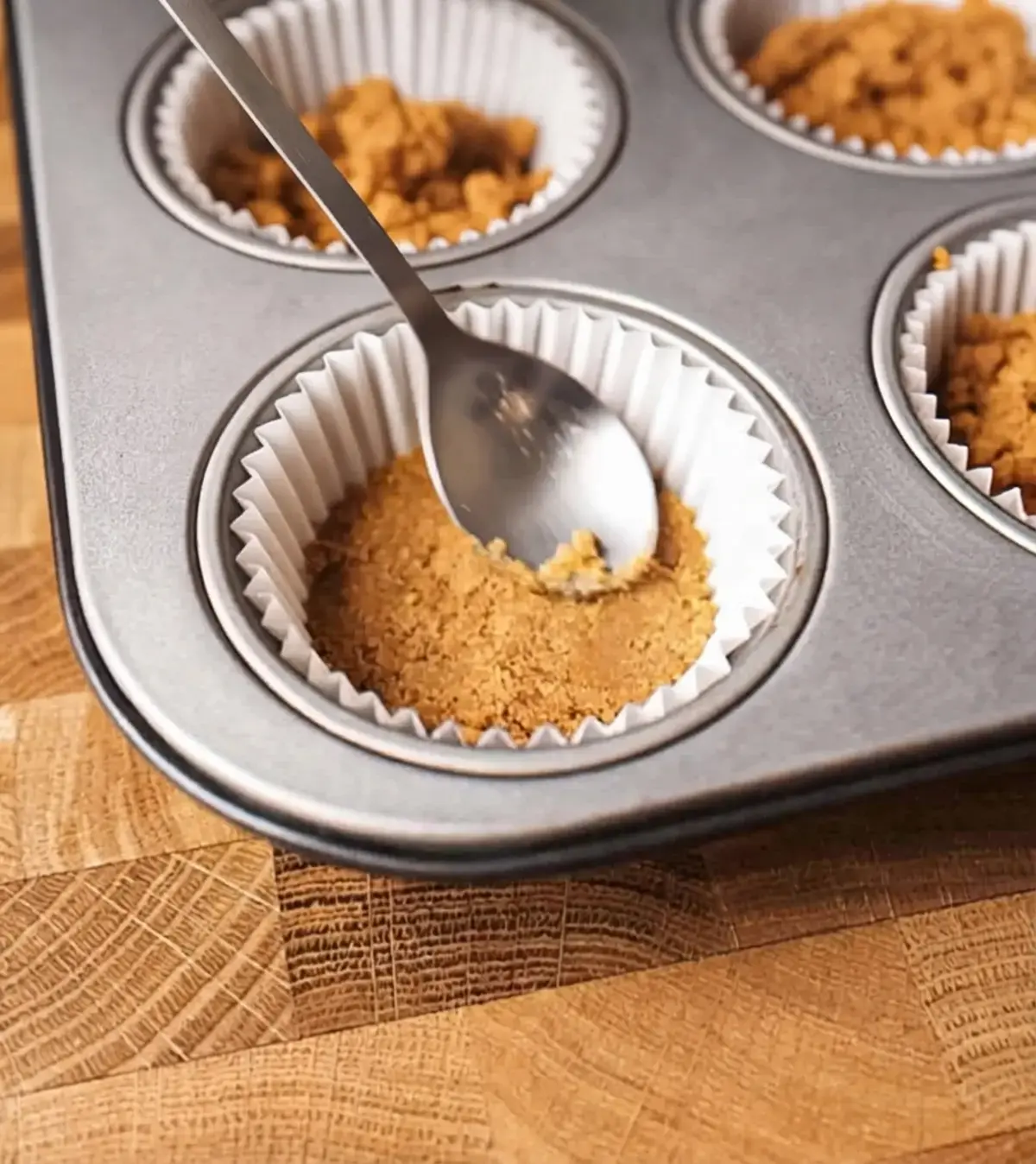
Line a standard muffin pan with 12 paper liners. Crush the biscuits or graham crackers into fine crumbs, then mix them with the melted butter until the crumbs are evenly moistened.
Fill the liners
Divide the crumb mixture among the paper liners and press it down firmly so each crust is even and compact.
Firm pressure here pays off later, when you want a clean crust underneath all that creamy filling.
Beat the cream cheese
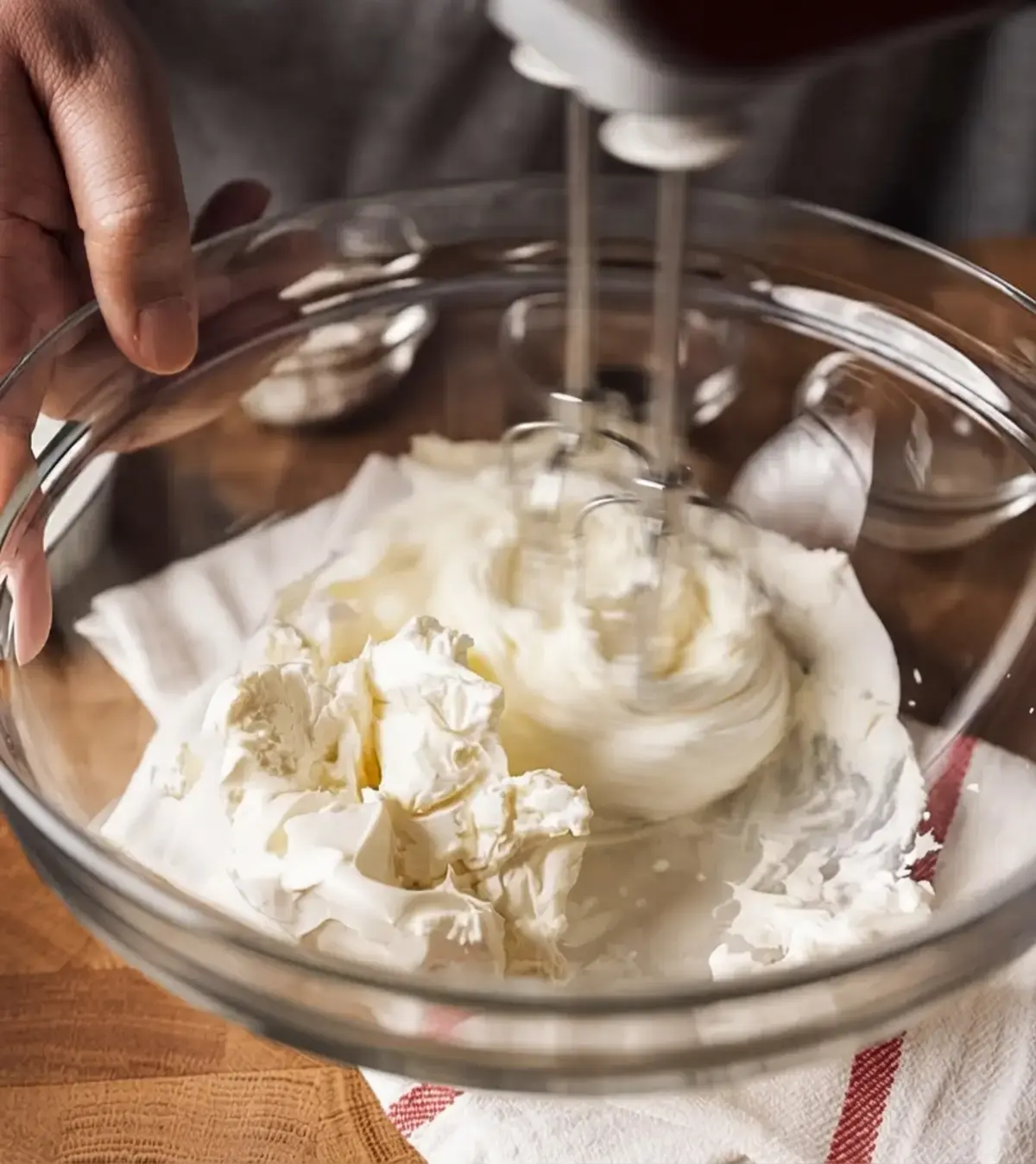
Beat the cream cheese just until it is smooth and creamy.
Then add the sugar gradually, mixing until it is fully incorporated. A handheld mixer on low speed works beautifully, and a quick scrape of the bowl now and then keeps everything even.
Add the eggs
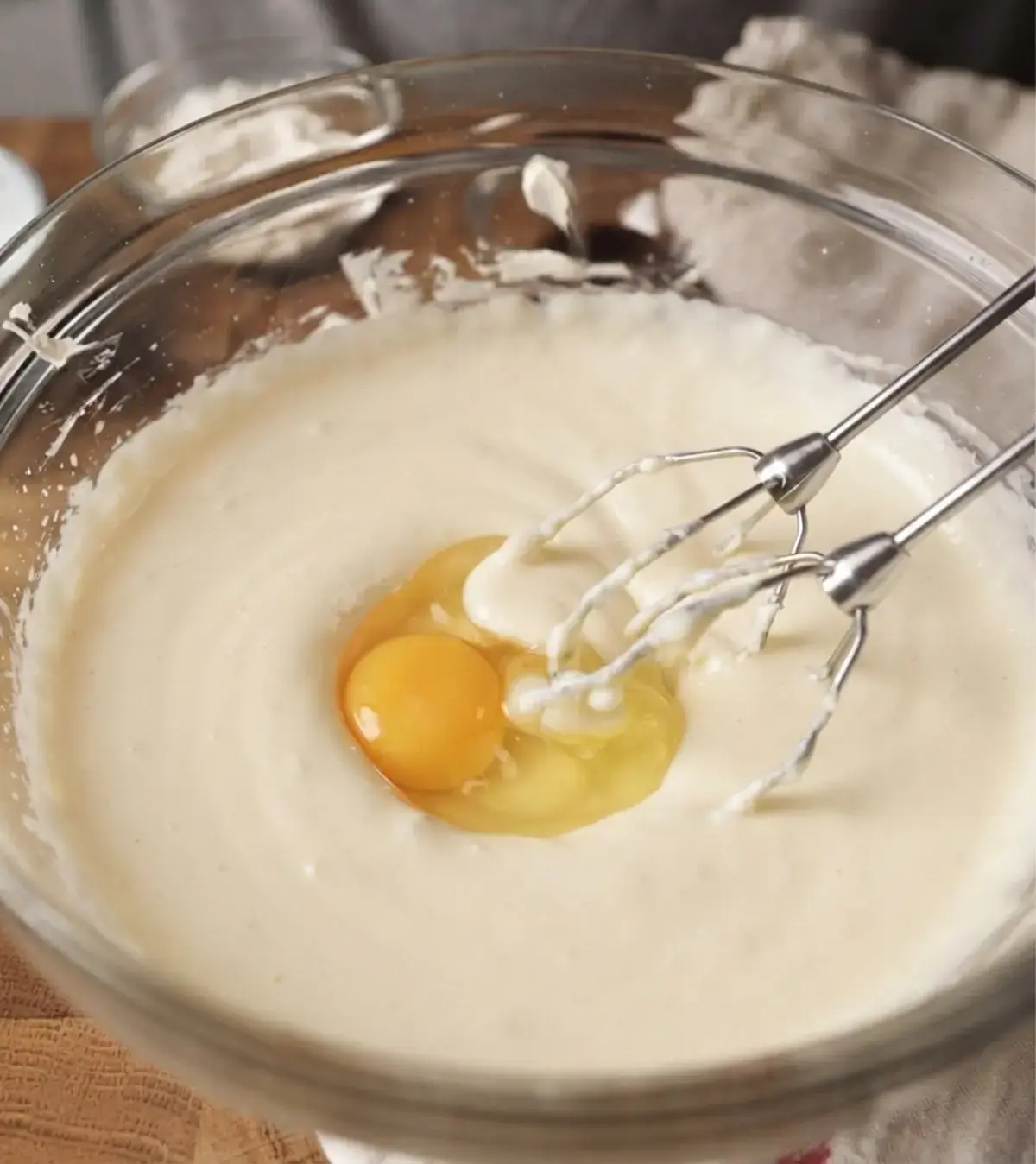
Add the eggs one at a time, mixing only until each one is incorporated.
Stop and scrape the sides and bottom of the bowl with a spatula as you go. This is the moment to hold back, because extra air is what causes cracks.
Finish the batter
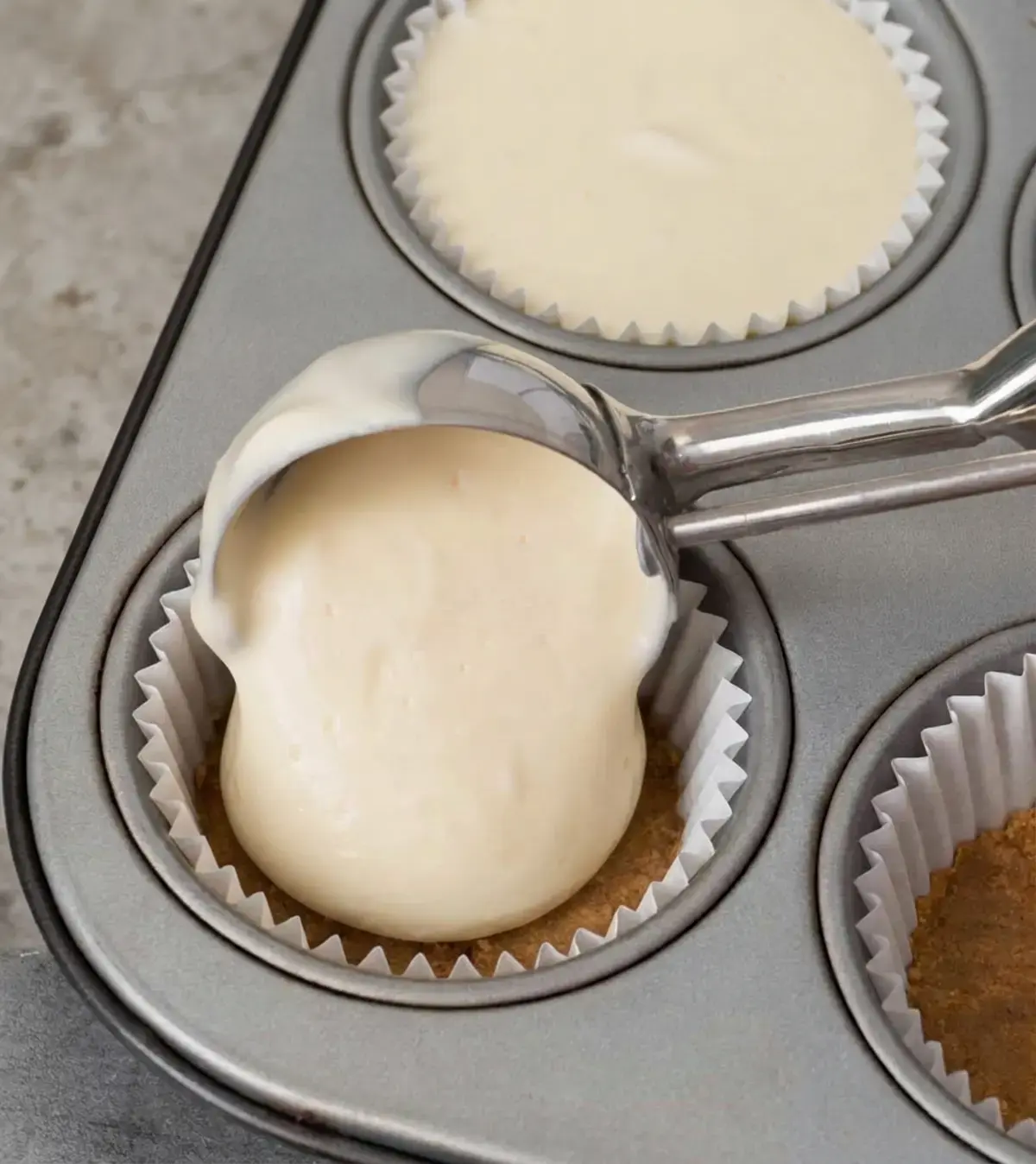
Mix in the vanilla extract, lemon juice, and flour until just combined, then add the sour cream and mix until smooth.
Divide the batter evenly among the muffin cups, and an ice cream scoop makes that quick and tidy with almost no drips.
Bake
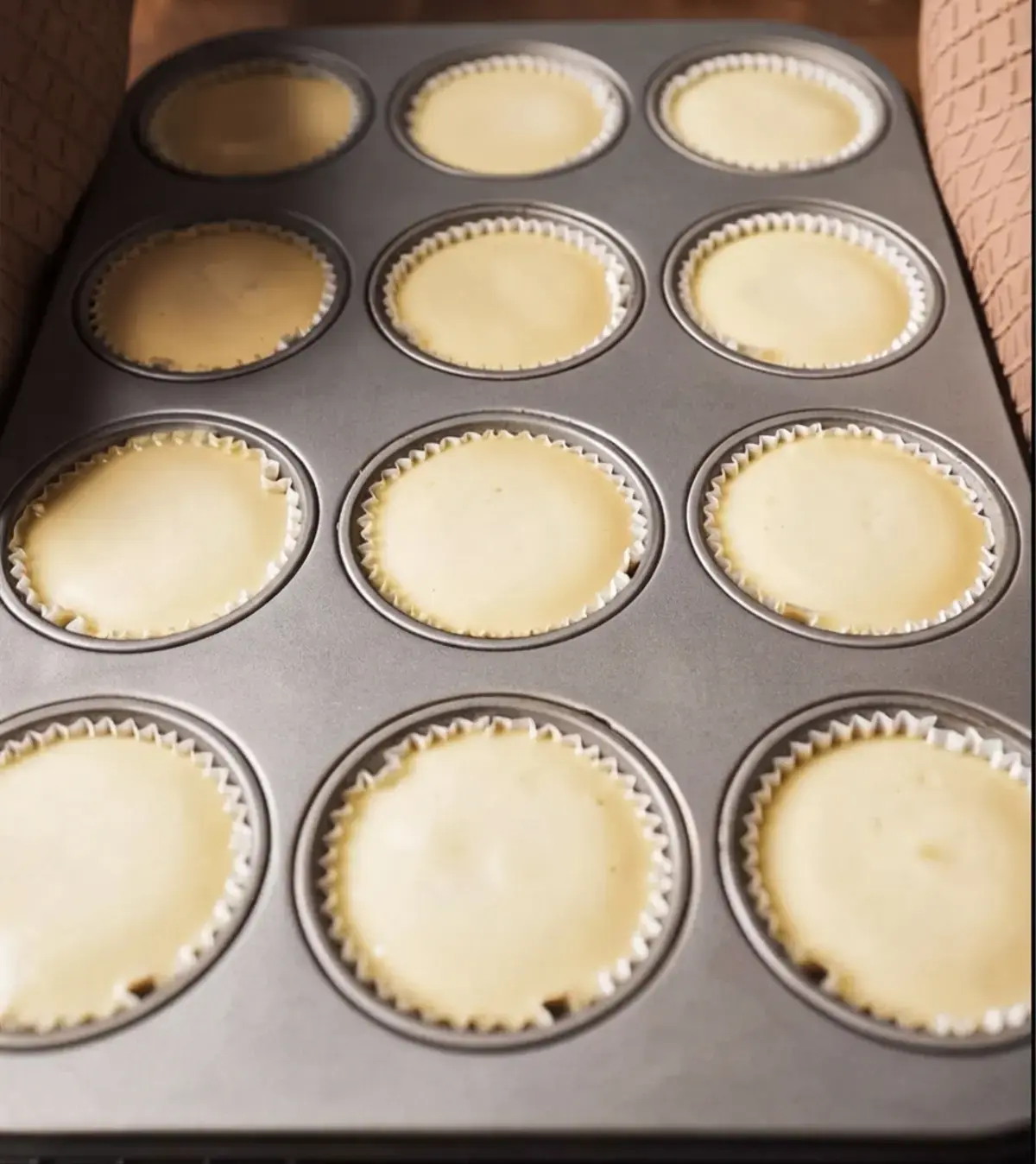
Bake for 15 minutes, until the edges look set and the centers still have a slight wobble when you gently shake the pan. Let the cheesecakes cool completely in the pan on a wire rack, then refrigerate for at least 4 hours, preferably overnight. Serve them chilled, and add any toppings just before serving.
How to know when mini cheesecakes are done
They are done when the edges look set but the centers still wobble slightly. Please do not wait for them to look completely firm. They keep setting as they cool, and waiting too long is the fastest way to overbake a batch.
Tips for making mini cheesecakes
These five habits are the difference between a smooth top and a cracked one.
- Start with room temperature cream cheese. Let it sit out for about 1 hour before you begin. Cold cream cheese does not blend smoothly and leaves lumps behind.
- Do not overmix after the eggs go in. Mix just until combined. Overmixing adds air, which can cause cracks and make the cheesecakes rise and then sink as they cool.
- Bake low at 320°F (160°C). The gentle heat helps them bake evenly and keeps the texture creamy.
- Do not overbake. The edges should look set while the centers still have a slight wobble.
- Cool gradually. Let them cool completely in the pan on a wire rack before chilling, which helps prevent cracks from a sudden change in temperature.
If your cheesecakes sink too much, the usual suspects are overbaking, overmixing, or an oven that runs hotter than it says.
For planning, the source lists about 248.9 calories per serving, along with 20.2 g carbohydrates, 3.7 g protein, and 17.4 g fat. That estimate is for one plain mini cheesecake, and it will shift with whichever toppings you choose.
How to serve, store, and freeze
These little cheesecakes are at their best well chilled, so plan on at least 4 hours in the fridge before serving. From start to finish, including that chill time, you are looking at roughly 4 hours 30 minutes.
Hold the toppings until the last minute. Fresh berries, berry sauce, caramel, a chocolate drizzle, or a swirl of whipped cream all look and taste better added just before they reach the table.
Storage
- Plain mini cheesecakes keep in an airtight container in the fridge for up to 5 days.
- Once they are topped, they are best enjoyed within 1 to 2 days.
Freezing
- Freeze plain cheesecakes in a single layer in an airtight, freezer safe container for up to 2 months.
- Thaw them overnight in the fridge, then add toppings just before serving.
On a warm afternoon I like to pull a tray straight from the fridge, set out a few topping options, and let everyone build their own. It keeps the dessert relaxed and simple, and the cheesecakes stay cold until the very last bite.
If you are bringing them somewhere, keep them in a cooler bag with an ice pack and add the finishing touches once you arrive.
FAQs
How long do you bake mini cheesecakes?
Bake mini cheesecakes at 320°F (160°C) for 15 minutes. The edges should be set while the centers still have a slight wobble when the pan is gently shaken. They will continue to set as they cool and chill, so it is important not to overbake them.
Do mini cheesecakes need a water bath?
No, mini cheesecakes do not need a water bath. Their small size and low baking temperature allow them to bake evenly and remain crack-free without one. Simply bake them in a standard 12-cup muffin pan lined with paper liners.
Can you freeze mini cheesecakes?
Yes, plain mini cheesecakes freeze very well. Place them in a single layer in an airtight, freezer-safe container and freeze for up to 2 months. Thaw them overnight in the refrigerator before adding any toppings and serving.
How do you prevent mini cheesecakes from cracking?
To prevent cracking, use room-temperature ingredients and mix on low speed only until each addition is incorporated to avoid incorporating excess air. Bake at a low temperature of 320°F (160°C) and cool the cheesecakes completely in the pan before refrigerating. A small amount of flour in the batter also helps stabilize the filling.

Easy Mini Cheesecakes
Why this recipe works I still remember the first full size cheesecake I ever brought to a family cookout. It cracked straight down the middle, and I spent the whole drive over apologizing to a dessert nobody had even tasted yet.
- Total Time: 270 min
- Yield: 12 mini cheesecakes 1x
Ingredients
Crust
1 ½ cup (150 g) biscuit crumbs
¼ cup (60 g) unsalted butter, melted
Filling
10.5 oz (300 g) full-fat cream cheese, room temperature
½ cup (100 g) granulated sugar
2 large eggs, room temperature
1 teaspoon vanilla extract
1 tablespoon lemon juice
1 ½ tablespoon (12 g) all-purpose flour
¾ cup (185 g) full-fat sour cream, room temperature
Instructions
Crust
1-Position a rack in the lower third: Position a rack in the lower third of the oven and preheat to 320°F (160°C). Line a standard 12-cup muffin pan with paper liners.
2-Crush the biscuits or graham crackers into: Crush the biscuits or graham crackers into fine crumbs and mix with the melted butter until evenly moistened. Divide the mixture among the paper liners and press firmly to form even crusts.
Filling
3-Beat the cream cheese just until smooth: Beat the cream cheese just until smooth and creamy. Gradually add the sugar and mix until fully incorporated.
4-Add the eggs one at a time,: Add the eggs one at a time, mixing just until each one is incorporated.
5-Add vanilla extract, lemon juice, and flour: Add vanilla extract, lemon juice, and flour; mix just until combined.
6-Add sour cream and mix just until: Add sour cream and mix just until smooth, then divide the batter evenly using an ice cream scoop among the muffin cups.
Bake and chill
7-Bake for 15 minutes, until the edges: Bake for 15 minutes, until the edges are set and the centers still have a slight wobble when the pan is gently shaken.
8-Let the cheesecakes cool completely in the: Let the cheesecakes cool completely in the pan on a wire rack, then refrigerate for at least 4 hours, preferably overnight. Serve chilled and add any toppings just before serving.
Last Step:
Please leave a rating and comment letting us know how you liked this recipe! This helps our business to thrive and continue providing free, high-quality recipes for you.- Prep Time: 15 min
- Cook Time: 15 min
- Method: bake
Nutrition
- Calories: 248.9
- Sugar: 12.9
- Sodium: 166.8
- Fat: 17.4
- Saturated Fat: 9.5
- Carbohydrates: 20.2
- Fiber: 0.4
- Protein: 3.7
- Cholesterol: 72


