

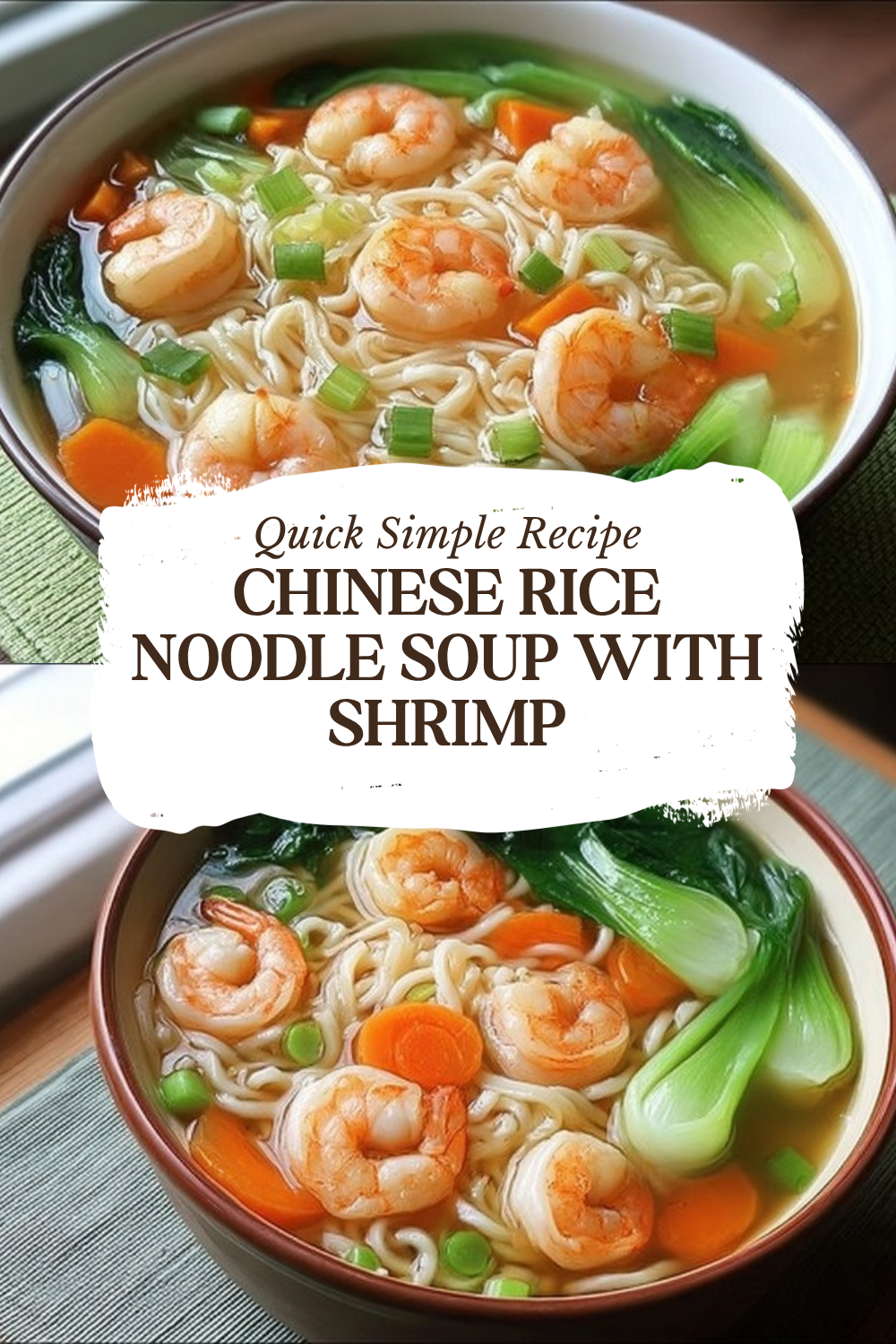
Why You’ll Love This Chinese Rice Noodle Soup With Shrimp
If you are craving a warm bowl of Chinese Rice Noodle Soup With Shrimp, this recipe is one of those easy wins that feels comforting without keeping you in the kitchen all night. It has the cozy feel of a homemade rice noodle soup, but it still cooks fast enough for a busy weeknight.
- Quick and easy: This rice noodle soup with shrimp recipe comes together in about 35 minutes, with only 10 minutes of prep and 25 minutes of cooking. That makes it a smart pick for busy parents, students, and working professionals who want dinner on the table fast.
- Healthy and filling: Shrimp adds lean protein, while bok choy, carrots, green onions, ginger, and garlic bring fiber, vitamins, and fresh flavor. If you want a lighter dinner that still feels satisfying, this Chinese shrimp rice noodle soup fits the bill.
- Flexible for different diets: You can use tamari for a gluten-free version, switch in chicken, or swap in spinach or mushrooms if bok choy is not in your fridge. That makes this shrimp noodle soup easy to adjust for different needs.
- Bright, savory flavor: The mix of sesame oil, soy sauce, fish sauce, ginger, and rice vinegar gives this Chinese noodle soup a bold broth that tastes rich without feeling heavy.
Tip: This is the kind of soup that tastes like it simmered all day, even though it is ready in a flash.
For readers who like quick comfort meals, this one lands right in the sweet spot. It is simple enough for a weeknight, but tasty enough to serve when you want something special.
For more cozy dinner ideas, you might also like our baked shrimp scampi or our garlic grilled shrimp.
According to WebMD’s shrimp health benefits guide, shrimp can be a smart protein choice when you want something flavorful and light.
Jump To
- 1. Why You’ll Love This Chinese Rice Noodle Soup With Shrimp
- 2. Essential Ingredients for Chinese Rice Noodle Soup With Shrimp
- 3. How to Prepare the Perfect Chinese Rice Noodle Soup With Shrimp: Step-by-Step Guide
- 4. Dietary Substitutions to Customize Your Chinese Rice Noodle Soup With Shrimp
- 5. Mastering Chinese Rice Noodle Soup With Shrimp: Advanced Tips and Variations
- 6. How to Store Chinese Rice Noodle Soup With Shrimp: Best Practices
- 7. Nutrition Notes for Chinese Rice Noodle Soup With Shrimp
- 8. FAQs: Frequently Asked Questions About Chinese Rice Noodle Soup With Shrimp
- 9. Chinese Rice Noodle Soup With Shrimp
Essential Ingredients for Chinese Rice Noodle Soup With Shrimp
Here is everything you need for this Chinese rice noodle soup with shrimp. The ingredients are simple, and each one plays an important role in building the broth, the texture, and the fresh finish.
Main ingredients
- 1 tablespoon sesame oil – Adds a toasty base flavor and helps soften the vegetables.
- 4 baby bok choy, chopped with white and green pieces separated – The white parts cook first for a tender bite, while the green parts stay bright and fresh near the end.
- 1 large carrot, peeled and sliced very thin – Brings color, mild sweetness, and a little crunch.
- 2 cloves garlic, minced or crushed – Adds sharp savory flavor that works well in any Chinese noodle soup.
- 1 tablespoon fresh ginger, minced – Gives the broth warmth and a fresh, lively taste.
- 4 cups vegetable or chicken broth – Forms the base of the soup and carries all the flavor.
- 2 cups water – Lays out the broth so the soup stays light.
- 2 tablespoons gluten-free soy sauce or tamari or regular soy sauce – Adds salty, umami depth.
- 2 tablespoons fish sauce – Brings a deeper savory note that makes the broth taste complete.
- 2 tablespoons rice vinegar – Stirred in at the end for brightness and balance.
- 4 ounces pad thai rice noodles, half a package – Gives the soup its soft, slurpable noodle texture.
- 1 pound small raw shrimp, peeled, 51 to 60 per pound – The main protein in this shrimp noodle soup, quick-cooking and tender.
- 1 bunch green onions, sliced – Adds a fresh onion bite and a pretty finish.
Special dietary options
- Vegan: Swap shrimp for tofu or mushrooms, use vegetable broth, and replace fish sauce with extra soy sauce or a vegan fish sauce alternative.
- Gluten-free: Use rice noodles and tamari instead of regular soy sauce.
- Low-calorie: Keep the broth-based format, use extra bok choy or spinach, and stick with shrimp for lean protein.
Rice noodles cook fast, so have everything ready before the pot goes on the stove.
| Ingredient | Why it matters | Easy swap |
|---|---|---|
| Sesame oil | Builds flavor fast | Avocado oil |
| Bok choy | Adds crunch and greens | Spinach or mushrooms |
| Shrimp | Quick protein | Chicken or tofu |
| Rice noodles | Light, tender base | Rice vermicelli |
If you enjoy simple seafood dishes, check out this shrimp kabobs recipe for another easy weeknight option.
How to Prepare the Perfect Chinese Rice Noodle Soup With Shrimp: Step-by-Step Guide
First step: prep everything before you start cooking
Before the heat goes on, chop the baby bok choy and separate the white pieces from the green pieces. Thinly slice the carrot, mince the garlic, and mince the fresh ginger. Slice the green onions and set them aside so they are ready for the end.
Rinse your rice noodles if needed and keep the shrimp peeled and ready to go. This recipe moves quickly once the pot starts heating, so a little prep at the start keeps things smooth. If you are cooking for dietary needs, this is also the best time to make your swaps, such as tamari for gluten-free eaters or mushrooms for anyone who does not want bok choy.
Second step: build the vegetable base
Heat 1 tablespoon sesame oil in a Dutch oven over medium-high heat. Add the white pieces of bok choy and the sliced carrots, then sauté for 5 minutes. You want the vegetables to soften a little but still keep some texture.
This first layer gives the Chinese rice noodle soup with shrimp a sweeter, deeper base. If you like a heartier soup, let the vegetables cook until they pick up a little color around the edges. That small bit of browning adds nice flavor without changing the light feel of the broth.
Third step: add the aromatics
Stir in the garlic and ginger and sauté for 1 minute. Keep stirring so the garlic does not burn. The goal here is to wake up the aromatics and release their fragrance into the oil.
This step is small, but it matters a lot. Garlic and ginger give this rice noodle soup that classic cozy, savory taste people expect from a good Chinese noodle soup. If you want extra depth, you can add a pinch of chili flakes here, though the recipe works beautifully without them.
Fourth step: pour in the broth and seasonings
Add 4 cups vegetable or chicken broth, 2 cups water, 2 tablespoons soy sauce or tamari, and 2 tablespoons fish sauce. Bring everything to a boil. Once the pot is bubbling, the broth should smell rich and savory with a little sweetness from the vegetables.
If you are cooking for someone who prefers a milder soup, use a little less fish sauce the first time and adjust after tasting. If you want to keep the soup more budget friendly, vegetable broth works fine. Chicken broth gives the soup a deeper flavor, while vegetable broth keeps it a bit lighter.
Fifth step: cook the noodles
Add the uncooked rice noodles to the boiling broth and cook for 2 minutes. Stir and separate them as they soften so they do not clump together. Rice noodles cook quickly, so stay close and check them early.
The noodles should be tender but not mushy. If you are using a different noodle shape or a thinner rice vermicelli, watch the pot closely because the cook time may be a little shorter. This is one reason Chinese rice noodle soup with shrimp is such a good quick meal for home cooks.
Sixth step: finish with shrimp and greens
Stir in the shrimp, green onions, and green pieces of bok choy. Cook for 2 to 3 minutes, just until the shrimp turn pink and opaque. Do not overcook them, or they can become rubbery.
The bok choy greens should stay bright, and the green onions should soften just a bit. This is the point where the soup turns from broth with noodles into a complete bowl of shrimp noodle soup. If you are using chicken instead of shrimp, add it earlier with the broth, simmer until cooked through, shred it, and return it to the pot.
Final step: add rice vinegar and serve
Turn off the heat and stir in the rice vinegar. That last splash gives the soup a clean, fresh finish and helps balance the saltiness from the soy sauce and fish sauce. Taste the broth and add more vinegar only if needed.
Serve the soup immediately while the noodles are tender and the shrimp are juicy. Ladle it into bowls and make sure each serving gets broth, noodles, shrimp, and plenty of vegetables. If you want a little more color, top each bowl with extra green onions right before serving.
Best texture tip: Serve this soup right away. Rice noodles keep soaking up broth the longer they sit.

Dietary Substitutions to Customize Your Chinese Rice Noodle Soup With Shrimp
Protein and main component alternatives
If shrimp is not your thing, this Chinese shrimp rice noodle soup is easy to adapt. Boneless, skinless chicken breasts work well and can be added with the broth, simmered until cooked, then shredded and returned to the pot. That keeps the soup filling while giving you a different flavor profile.
You can also swap shrimp for tofu if you want a meatless bowl. Firm tofu holds up best in broth and works well with the same seasonings. Scallops are another seafood option if you want to keep the soup light but still enjoy seafood flavor. For a low-carb twist, you could even reduce the noodles slightly and add more vegetables.
Vegetable, sauce, and seasoning modifications
Bok choy is classic, but spinach or mushrooms make easy stand-ins if that is what you have on hand. Bean sprouts also work nicely for extra crunch. If you do not have fish sauce, oyster sauce can step in and still bring a rich savory taste.
For gluten-free cooking, tamari is the easiest swap for soy sauce. If you like a little heat, add chili flakes, but leave them out for a gentler bowl. You can also adjust the broth with a squeeze of lime or a few extra drops of rice vinegar for a brighter finish. These small changes keep the soup flexible without losing the cozy feel of a good Chinese noodle soup.
Mastering Chinese Rice Noodle Soup With Shrimp: Advanced Tips and Variations
Pro cooking techniques
The secret to a great rice noodle soup with shrimp recipe is timing. Keep your broth hot, but do not let the shrimp cook too long. Once they turn pink, pull the pot off the heat soon after so they stay tender.
Another smart move is to separate the bok choy stems and leaves like the recipe calls for. The stems need a little more time, while the greens only need a quick finish. That simple trick helps the vegetables keep their color and texture.
Flavor variations
For a deeper savory bowl, add a bit more fish sauce or use oyster sauce instead. If you want more body, toss in mushrooms or bean sprouts. A few chili flakes can bring gentle heat, while extra rice vinegar makes the broth taste brighter.
You can also make a chicken version when you want something a little different. That is handy for families who may not always have shrimp on hand. The recipe stays close to the same, so it still fits into a busy weeknight schedule.
Presentation tips
Serve the soup in wide bowls so the noodles and shrimp have room to spread out. Top with sliced green onions for a fresh finish. If you want a prettier bowl, add a few extra bok choy leaves on top just before serving.
For a simple side, pair it with something like Texas Roadhouse rolls or keep it light and serve it on its own. This soup already brings a complete meal to the table.
Make-ahead options
You can chop the vegetables and mix the broth base ahead of time, which makes dinner faster later. If you are meal prepping, keep the noodles separate until serving time so they do not absorb too much liquid. That way, your Chinese rice noodle soup with shrimp still tastes fresh when you reheat it.
How to Store Chinese Rice Noodle Soup With Shrimp: Best Practices
Store leftovers in an airtight container in the fridge for 3 to 4 days. Let the soup cool quickly before refrigerating, and if needed, divide it into smaller shallow containers so it chills faster. This helps keep the broth safe and the shrimp tasting fresh.
For reheating, warm the soup gently on the stove over medium heat. Stir often so the noodles do not stick and the shrimp do not overcook. If the noodles have soaked up some broth, add a splash of water or stock to loosen the soup.
Freezing the full soup is not the best idea because the noodles may turn mushy after thawing. If you want to freeze part of it, freeze just the broth base for up to 3 months, then cook fresh noodles and shrimp when you are ready to serve. That gives you a better texture and a fresher bowl later.
Meal prep tip: Store the broth, noodles, and shrimp separately if you know you will not eat it all in one day.
Nutrition Notes for Chinese Rice Noodle Soup With Shrimp
One serving of this soup is light but satisfying, which makes it a good fit for people watching calories without giving up flavor. Here is the nutrition snapshot per serving:
| Nutrient | Amount |
|---|---|
| Calories | 203 |
| Carbohydrates | 29 grams |
| Protein | 10 grams |
| Fat | 5 grams |
| Saturated fat | 1 gram |
| Polyunsaturated fat | 2 grams |
| Iron | 2 milligrams |
| Sodium | 518 milligrams |
| Cholesterol | 84 milligrams |
| Fiber | 2 grams |
| Sugar | 3 grams |
| Vitamin A | 9470 IU |
| Calcium | 39 milligrams |
For many readers, the balance of lean protein, broth, and vegetables is what makes this a smart dinner choice. Rice noodles keep the dish satisfying without making it feel too heavy. If you want a deeper look at rice noodles themselves, this rice noodle nutrition guide is a helpful read.
FAQs: Frequently Asked Questions About Chinese Rice Noodle Soup With Shrimp
Is Chinese rice noodle soup with shrimp healthy?
Yes, Chinese rice noodle soup with shrimp is a nutritious choice packed with protein from shrimp, fiber from vegetables, and vitamins like B vitamins and vitamin C from fresh ingredients such as ginger, garlic, and greens. Shrimp provides lean protein and omega-3 fatty acids that support heart health, while rice noodles keep carbs light. Unlike canned or instant soups high in sodium (often over 800mg per serving, linked to high blood pressure), this homemade version uses minimal salt from soy and fish sauce for authentic flavor. Studies show similar broth-based soups can aid recovery when sick due to anti-inflammatory properties. One bowl typically has around 300-400 calories, making it filling yet low-calorie. Use fresh shrimp and veggies to maximize antioxidants and avoid preservatives.
Is Chinese rice noodle soup with shrimp gluten-free?
Yes, Chinese rice noodle soup with shrimp is naturally gluten-free when made with rice noodles, which are made from rice flour and water—no wheat involved. Double-check labels for pure rice vermicelli to avoid cross-contamination. Common additions like shrimp, bok choy, mushrooms, ginger, garlic, soy sauce, and fish sauce are gluten-free, but opt for tamari instead of regular soy sauce if concerned (it has about 1g less gluten per tablespoon). This makes it ideal for gluten-sensitive eaters. Prep tip: Rinse noodles after cooking to remove excess starch. A standard recipe serves 4 in under 30 minutes, offering a quick, safe meal without sacrificing umami taste from broth simmered with scallions and sesame oil.
How do you store Chinese rice noodle soup with shrimp?
Store Chinese rice noodle soup with shrimp in an airtight container in the fridge, where it lasts 3-4 days. Cool it quickly after cooking to prevent bacterial growth—divide into shallow containers if needed. Reheat gently on the stove over medium heat, stirring to avoid overcooking shrimp, which can turn rubbery. For best texture, add fresh noodles and shrimp just before serving if prepping ahead. Avoid leaving it out over 2 hours at room temperature. Label containers with dates. This method keeps flavors vibrant, with shrimp staying tender and broth clear. Pro tip: Portion into meal-prep bowls for easy grab-and-go lunches, saving time during busy weeks.
Can you freeze Chinese rice noodle soup with shrimp?
You can freeze the broth of Chinese rice noodle soup with shrimp for up to 3 months, but not the full dish. Noodles become mushy after freezing and thawing due to water absorption. Cook and freeze just the seasoned broth (with ginger, soy, fish sauce, and veggies) in freezer bags, removing air to prevent ice crystals. Thaw overnight in the fridge, then simmer and add fresh rice noodles and shrimp, which cook in 2-3 minutes. Shrimp freezes poorly post-cook, turning tough. This preserves the soup’s light, aromatic profile. One batch yields 8 cups of broth—perfect for doubling recipes. Always reheat to 165°F for safety.
What are common substitutions for Chinese rice noodle soup with shrimp?
For Chinese rice noodle soup with shrimp, swap shrimp with tofu, chicken, or scallops for protein variety—all cook similarly in 2-4 minutes. Use zucchini noodles or soba for low-carb twists, keeping rice noodles’ gluten-free base. If no fish sauce, try Worcestershire or extra soy with lime for depth. Short on bok choy? Spinach or kale wilts in just right. Ginger or garlic missing? Powdered versions work in pinches (1 tsp equals 1 tbsp fresh). For milder heat, reduce chili flakes. These keep the 25-minute recipe intact, serving 4 with 350 calories per bowl. Test small batches to match flavors—great for picky eaters or allergies. Link to our tofu noodle soup for more ideas.

Chinese Rice Noodle Soup With Shrimp
🍜🦐 Slurp up tender shrimp and rice noodles in a fragrant, veggie-packed broth that’s low-cal, high-protein, and soothing for the soul.
🥢 This gluten-free adaptable soup is ready in 35 minutes, boosting immunity with ginger, garlic, and fresh greens for healthy comfort.
- Total Time: 35 minutes
- Yield: 4 servings
Ingredients
– 1 tablespoon sesame oil
– 4 baby bok choy, chopped with white and green pieces separated
– 1 large carrot, peeled and sliced very thin
– 2 cloves garlic, minced or crushed
– 1 tablespoon fresh ginger, minced
– 4 cups vegetable or chicken broth
– 2 cups water
– 2 tablespoons gluten-free soy sauce or tamari or regular soy sauce
– 2 tablespoons fish sauce
– 2 tablespoons rice vinegar
– 4 ounces pad thai rice noodles, half a package
– 1 pound small raw shrimp, peeled, 51 to 60 per pound
– 1 bunch green onions, sliced
Instructions
1-First step: prep everything before you start cooking Before the heat goes on, chop the baby bok choy and separate the white pieces from the green pieces. Thinly slice the carrot, mince the garlic, and mince the fresh ginger. Slice the green onions and set them aside so they are ready for the end. Rinse your rice noodles if needed and keep the shrimp peeled and ready to go. This recipe moves quickly once the pot starts heating, so a little prep at the start keeps things smooth. If you are cooking for dietary needs, this is also the best time to make your swaps, such as tamari for gluten-free eaters or mushrooms for anyone who does not want bok choy.
2-Second step: build the vegetable base Heat 1 tablespoon sesame oil in a Dutch oven over medium-high heat. Add the white pieces of bok choy and the sliced carrots, then sauté for 5 minutes. You want the vegetables to soften a little but still keep some texture. This first layer gives the Chinese rice noodle soup with shrimp a sweeter, deeper base. If you like a heartier soup, let the vegetables cook until they pick up a little color around the edges. That small bit of browning adds nice flavor without changing the light feel of the broth.
3-Third step: add the aromatics Stir in the garlic and ginger and sauté for 1 minute. Keep stirring so the garlic does not burn. The goal here is to wake up the aromatics and release their fragrance into the oil. This step is small, but it matters a lot. Garlic and ginger give this rice noodle soup that classic cozy, savory taste people expect from a good Chinese noodle soup. If you want extra depth, you can add a pinch of chili flakes here, though the recipe works beautifully without them.
4-Fourth step: pour in the broth and seasonings Add 4 cups vegetable or chicken broth, 2 cups water, 2 tablespoons soy sauce or tamari, and 2 tablespoons fish sauce. Bring everything to a boil. Once the pot is bubbling, the broth should smell rich and savory with a little sweetness from the vegetables. If you are cooking for someone who prefers a milder soup, use a little less fish sauce the first time and adjust after tasting. If you want to keep the soup more budget friendly, vegetable broth works fine. Chicken broth gives the soup a deeper flavor, while vegetable broth keeps it a bit lighter.
5-Fifth step: cook the noodles Add the uncooked rice noodles to the boiling broth and cook for 2 minutes. Stir and separate them as they soften so they do not clump together. Rice noodles cook quickly, so stay close and check them early. The noodles should be tender but not mushy. If you are using a different noodle shape or a thinner rice vermicelli, watch the pot closely because the cook time may be a little shorter. This is one reason Chinese rice noodle soup with shrimp is such a good quick meal for home cooks.
6-Sixth step: finish with shrimp and greens Stir in the shrimp, green onions, and green pieces of bok choy. Cook for 2 to 3 minutes, just until the shrimp turn pink and opaque. Do not overcook them, or they can become rubbery. The bok choy greens should stay bright, and the green onions should soften just a bit. This is the point where the soup turns from broth with noodles into a complete bowl of shrimp noodle soup. If you are using chicken instead of shrimp, add it earlier with the broth, simmer until cooked through, shred it, and return it to the pot.
7-Final step: add rice vinegar and serve Turn off the heat and stir in the rice vinegar. That last splash gives the soup a clean, fresh finish and helps balance the saltiness from the soy sauce and fish sauce. Taste the broth and add more vinegar only if needed. Serve the soup immediately while the noodles are tender and the shrimp are juicy. Ladle it into bowls and make sure each serving gets broth, noodles, shrimp, and plenty of vegetables. If you want a little more color, top each bowl with extra green onions right before serving.
Last Step:
Please leave a rating and comment letting us know how you liked this recipe! This helps our business to thrive and continue providing free, high-quality recipes for you.Notes
🌿 Use tamari instead of soy sauce for a certified gluten-free version.
❄️ Store leftovers in the fridge for 3-4 days; avoid freezing as noodles get mushy.
🥬 Swap bok choy for spinach or mushrooms to customize your veggie mix.
- Prep Time: 10 minutes
- Cook Time: 25 minutes
- Category: Soup
- Method: Simmer
- Cuisine: Asian
- Diet: Pescatarian, Gluten-Free
Nutrition
- Serving Size: 1 bowl
- Calories: 203 kcal
- Sugar: 3g
- Sodium: 518mg
- Fat: 5g
- Saturated Fat: 1g
- Unsaturated Fat: 4g
- Trans Fat: 0g
- Carbohydrates: 29g
- Fiber: 2g
- Protein: 10g
- Cholesterol: 84mg


