

Why You’ll Love This Banh Mi Rice Bowl
This banh mi rice bowl packs all the bold flavors of a classic Vietnamese sandwich into a quick, easy bowl that’s ready in about 25 minutes. Picture tender marinated protein, tangy quick-pickled veggies, fresh herbs, and a spicy drizzle over fluffy rice. It’s the perfect savory chicken lettuce wraps-style meal but in bowl form for busy nights.
- Ease of preparation: The Banh Mi Rice Bowl is built for speed and simplicity. With short-cook proteins like thinly sliced pork, tofu, or quick-pan-seared chicken and a fast-pickled veg component, total hands-on time is typically 20 30 minutes. The banh mi rice bowl concept layers pre-cooked jasmine or short-grain rice, a quick protein, and fresh herbs so you can assemble meals in minutes, ideal for weeknights or meal prep.
- Health benefits: A banh mi rice bowl balances lean protein, fiber-rich vegetables, and complex carbs for sustained energy. Using brown rice or cauliflower rice boosts fiber, while pickled carrots and daikon add probiotics and vitamin C. Light dressings and controlled oil use make this Vietnamese rice bowl recipe a nutrient-forward option compared with fried sandwich versions. Check out the health benefits of cucumbers for that refreshing crunch.
- Versatility: The banh mi rice bowl adapts effortlessly to diets. Swap pork for grilled tofu, tempeh, or shrimp to make a vegetarian, vegan, or pescatarian banh mi bowl. Use gluten-free soy sauce, serve over cauliflower rice for low-carb needs, or choose brown rice for whole-grain preferences. This rice bowl recipe flexes to fit most eating plans.
- Distinctive flavor: What sets the banh mi rice bowl apart is the interplay of sweet-sour pickles, savory marinated protein, bright herbs like cilantro and scallion, and punchy condiments such as sriracha-mayo or nuoc cham. The contrast of textures and tangy Vietnamese-inspired flavors makes this rice bowl recipe both comforting and exciting.
This quick banh mi rice bowl recipe brings street food magic home without the wait.
Jump To
- 1. Why You’ll Love This Banh Mi Rice Bowl
- 2. Essential Ingredients for Banh Mi Rice Bowl
- 3. How to Prepare the Perfect Banh Mi Rice Bowl: Step-by-Step Guide
- 4. Protein and Main Component Alternatives
- 5. Vegetable, Sauce, and Seasoning Modifications
- 6. Mastering Banh Mi Rice Bowl: Advanced Tips and Variations
- 7. How to Store Banh Mi Rice Bowl: Best Practices
- 8. FAQs: Frequently Asked Questions About Banh Mi Rice Bowl
- 9. Banh Mi Rice Bowl
Essential Ingredients for Banh Mi Rice Bowl
Main Ingredients
Grab these for your banh mi rice bowl recipe. Everything comes together fast.
- 2 cups cooked jasmine rice (or brown rice) – Provides the starchy base and soaks up sauces; jasmine offers authentic aroma while brown rice adds fiber.
- 1 lb thinly sliced pork shoulder or chicken thigh – Main protein for savory, caramelized flavor; thighs stay juicy under high heat. Chicken provides solid nutrition for busy days.
- 14 oz firm tofu (pressed) – Vegan protein substitute that soaks up marinades and crisps nicely when pan-fried.
- 1 cup shredded carrots – Adds crunch, natural sweetness, and pairs with pickling liquid.
- 1 cup julienned daikon radish – Classic banh mi pickled veg; adds tang and crisp texture.
- 1/4 cup rice vinegar + 2 tbsp sugar + 1 tsp salt – Quick-pickle solution for carrots and daikon; brightens the bowl.
- 1/4 cup soy sauce or tamari – Umami-rich marinade base; use tamari for gluten-free version.
- 2 tbsp fish sauce (or vegan fish sauce substitute) – Authentic savory depth; optional for vegetarian bowls.
- 2 tbsp vegetable oil or neutral oil – For searing protein and toasting aromatics.
- 1 small bunch cilantro and 2 scallions, sliced – Fresh herbs that provide brightness and classic banh mi notes.
- 1 cucumber, thinly sliced – Adds refreshing crunch and cooling contrast.
- Sriracha-mayo: 3 tbsp mayonnaise + 1 2 tsp sriracha – Creamy, spicy finish that ties flavors together.
Optional Refreshing Side: Cucumber Herb Salad
Pair your banh mi bowl with this simple, zesty side for extra crunch and freshness. It’s a quick Vietnamese rice bowl complement.
- 2 cucumbers
- 1 avocado
- 1 cup mixed fresh herbs (cilantro and Thai basil)
- 3 tablespoons lime juice (about 45 mL)
- 2 tablespoons toasted sesame seeds
- 2 tablespoons roasted peanuts
- 1 serrano pepper (optional, for spice)
- Salt, to taste
Quick Method for Cucumber Herb Salad
- Slice or chop the cucumbers and dice the avocado.
- Roughly chop the herbs and (if using) finely slice the serrano pepper.
- In a bowl, gently toss cucumbers, avocado, herbs, sesame seeds, peanuts, serrano, lime juice, and salt until combined.
- Taste and adjust seasoning; serve immediately or chilled.
Special Dietary Options
- Vegan: Use pressed tofu or tempeh, replace fish sauce with mushroom or seaweed-based vegan fish sauce, and swap mayo for vegan mayonnaise.
- Gluten-free: Use tamari or coconut aminos instead of soy sauce, and verify that sriracha and condiments are labeled gluten-free.
- Low-calorie: Substitute cauliflower rice for rice, use lean chicken breast or grilled shrimp, and reduce oil and mayo; increase pickled vegetables for volume without many calories.
How to Prepare the Perfect Banh Mi Rice Bowl: Step-by-Step Guide
First Step: Mise en place and quick pickles
Measure and prep all ingredients before cooking. Cook 2 cups of jasmine or brown rice according to package directions (jasmine: 1.5 cups water per cup rice, simmer 15 minutes then rest 10 minutes; brown rice: 2 cups water per cup rice, simmer 35 40 minutes). While the rice cooks, make quick pickles: combine 1/4 cup rice vinegar, 2 tbsp sugar, 1 tsp salt and 1/4 cup water in a bowl; add 1 cup shredded carrots and 1 cup julienned daikon, toss, and let sit at room temperature for at least 10 15 minutes. For a low-calorie or gluten-free adaptation, use cauliflower rice or omit sugar, replacing with low-calorie sweetener as needed.
Second Step: Marinate the protein
Thinly slice 1 lb pork shoulder or chicken thigh against the grain, or press and slice 14 oz firm tofu. In a bowl mix 1/4 cup soy sauce or tamari, 1 tbsp fish sauce (or vegan substitute), 1 tbsp sugar or honey, 1 tbsp rice vinegar, 1 tbsp grated ginger, and 1 minced garlic clove. Toss protein in the marinade for 10 30 minutes (tofu benefits from longer marination). For vegetarian bowls, use extra-firm tofu and a splash of sesame oil to enhance flavor.
Third Step: Cook the protein
Heat a large skillet over medium-high heat and add 1 2 tbsp neutral oil. For pork or chicken, sear in batches for 2 4 minutes per side until caramelized and internal temp reaches 165°F for chicken or 145°F for pork (rest 3 minutes). For tofu, pan-fry 3 5 minutes per side until golden, or bake at 400°F for 20 25 minutes for a crisp exterior. Use high heat and minimal crowding to achieve good browning; if needed finish proteins under a broiler for 1 2 minutes.
Fourth Step: Prepare garnishes and sauces
While protein cooks, slice cucumbers thinly, chop cilantro and scallions, and whisk sriracha-mayo (3 tbsp mayo + 1 2 tsp sriracha) or mix a lighter nuoc cham: 3 tbsp fish sauce, 2 tbsp lime juice, 1 tbsp sugar, 2 tbsp water, and minced chili. For gluten-free or vegan versions, use tamari and vegan mayo or a chili-lime vinaigrette.
Fifth Step: Assemble the banh mi rice bowl
Divide warm rice into bowls. Arrange cooked protein or tofu over the rice, drain and spoon pickled carrots and daikon on one side, add cucumber slices, scallions, and cilantro. Drizzle sriracha-mayo or nuoc cham over the protein and sprinkle toasted sesame seeds if desired. For low-carb or Paleo adaptations, swap rice for cauliflower rice and use coconut aminos in the marinade.
Sixth Step: Adjust seasoning and serve
Taste each bowl and add extra lime, soy/tamari, or fish sauce to balance salty, sweet, sour, and spicy elements. Serve immediately so the protein stays crisp and the pickles remain crunchy. If making ahead, store components separately: rice and proteins in airtight containers, pickles and herbs refrigerated; reheat protein in a skillet at medium heat for 2 4 minutes to restore crispness, and refresh herbs right before serving.
Final Step: Time-saving tips and batch prep
To speed weekday dinners, cook a double batch of rice and proteins on Sunday and store in separate containers. Quick-pickle additional vegetables to last 3 5 days in the fridge. When reheating leftover protein, a quick pan sear or 1 2 minute broil keeps edges crisp. These prep strategies keep your banh mi rice bowl flavors bright and adaptable for different diets. Swap proteins, reduce oil, or choose cauliflower rice while maintaining the signature Vietnamese-inspired balance.
Protein and Main Component Alternatives
Switch up your easy banh mi rice bowl with these options. Here’s a quick comparison table to help you pick.
| Protein Type | Cook Method | Best For |
|---|---|---|
| Pork shoulder or loin | Sear 2-4 min/side | Classic savory flavor |
| Chicken thigh or breast | Sear or grill | Juicy, lean protein |
| Flank steak | Quick sear | Beefy richness |
| Shrimp or salmon | 2-3 min/side | Light seafood twist |
| Tofu or tempeh | Pan-fry or bake | Vegan/gluten-free |
- Main-component swaps:
- Rice alternatives: Brown rice for whole-grain, cauliflower rice for low-carb, or quinoa for higher protein and a nutty texture.
- Bread-style twist: For a hybrid banh mi experience, serve toppings over a halved baguette instead of rice for a sandwich-style variation.
- Adaptation notes:
- For gluten-free diets, always use tamari or coconut aminos and ensure any pre-made sauces are certified gluten-free.
- For low-calorie adaptations, prioritize grilled shrimp or tofu and increase pickled vegetables for volume without many calories. Season boldly with lime, herbs, and chilies to compensate for reduced fats.
Vegetable, Sauce, and Seasoning Modifications
Keep your quick banh mi rice bowl recipe fresh with these tweaks. Love salads? Check our cucumber tomato salad for more ideas.
- Vegetable alternatives:
- Seasonal greens: Swap cucumber and pickles for steamed bok choy, sliced radish, or roasted bell peppers depending on seasonality and texture preference.
- Extra crunch: Add thinly sliced jicama or raw green beans for crispness; napa cabbage slaw also adds volume and pairs well with nuoc cham.
- Herb variations: Use Thai basil, mint, or flat-leaf parsley alongside or instead of cilantro to change aromatic profile.
- Sauce and dressing swaps:
- Nuoc cham (traditional): Fish sauce, lime, sugar, water, chili. Thin, bright, and savory; reduce sugar for lower-calorie bowls or swap fish sauce for a vegan alternative.
- Sriracha-mayo: Creamy, spicy finish. Use vegan mayo for plant-based bowls or Greek yogurt for a tangy, lower-calorie option.
- Hoisin-ginger glaze: Mix hoisin, soy/tamari, garlic, and grated ginger for a sweeter, caramelized note on proteins.
- Seasoning adjustments:
- Heat level: Use fresh chilies, gochujang, or sambal for higher spice, or omit for mild family-friendly versions.
- Umami boosters: Add toasted sesame oil, mushroom powder, or a splash of oyster sauce (or vegan oyster substitute) to deepen savory notes.
- Dietary considerations:
- Low-sodium: Reduce soy, use low-sodium tamari, and increase lime and herbs to maintain flavor.
- Allergy-aware: Replace peanuts with toasted pumpkin seeds or omit nuts entirely; label condiments when serving guests with allergies.
These modifications help keep the banh mi rice bowl recipe fresh, seasonally appropriate, and suitable for varied dietary needs while preserving the core contrast of tangy pickles, savory protein, and fresh herbs.
Mastering Banh Mi Rice Bowl: Advanced Tips and Variations
Pro cooking techniques
- High-heat caramelization: Sear marinated proteins over high heat in a well-heated skillet to develop Maillard browning quickly; finish in a 400°F oven for 2 4 minutes if thicker cuts need through-cooking. For tofu, press well and dust lightly with cornstarch before pan-frying to create a crisp crust.
- Layered seasoning: Season components at multiple stages. Marinade the protein, season the rice with a splash of sesame oil and salt, and finish the pickles with a pinch of sugar and lime to ensure every bite has complexity.
- Temperature contrast: Serve warm protein over hot rice and cold pickles/herbs to maximize textural and temperature contrast, which elevates perceived flavor.
Flavor variations
- Spicy honey-lime glaze: Combine honey, lime zest, soy/tamari, and chili flakes; brush on protein in the final minute of searing for a glossy, sweet-heat finish.
- Lemongrass and ginger marinade: Add finely minced lemongrass and ginger to the marinade for citrusy, aromatic depth reminiscent of classic Vietnamese flavors.
- Korean fusion: Use gochujang and sesame in the sauce for a spicy-sweet twist, and top with kimchi for an umami-rich variation.
Presentation tips
- Build visually: Arrange components in color-blocked sections. Rice, protein, pickles, greens. So each bowl looks vibrant and inviting.
- Height and texture: Stack protein slices and fan herbs over rice, sprinkle toasted sesame seeds or crushed peanuts for crunch, and finish with microgreens for elegance.
Make-ahead options
- Prep components separately: Cook rice, marinate and partially cook proteins, and quick-pickle vegetables up to 3 days ahead. Store in separate airtight containers to avoid sogginess.
- Reheat strategy: Reheat proteins briefly in a hot skillet to restore exterior crispness; steam or microwave rice with a splash of water to rehydrate.
- Batch sauce storage: Make nuoc cham and sriracha-mayo in advance; nuoc cham keeps up to 1 week refrigerated, sriracha-mayo for 3 4 days.
These advanced tips and creative riffs help transition the banh mi rice bowl from a convenient weeknight meal to a restaurant-quality dish, allowing you to explore textures, international flavors, and efficient meal prep without losing the essential Vietnamese-inspired balance.
How to Store Banh Mi Rice Bowl: Best Practices
- Refrigeration: Store components separately to preserve texture. Keep cooked rice in an airtight container for up to 4 6 days in the refrigerator; proteins like cooked pork, chicken, or tofu last 3 4 days. Store quick-pickled carrots and daikon in their pickling liquid in a sealed jar; they keep well for 1 2 weeks and maintain crunch. Fresh herbs should be stored wrapped in a slightly damp paper towel inside a container and used within 3 4 days.
- Freezing: For long-term storage, freeze cooked proteins separately in freezer-safe containers or bags for up to 2 3 months. Rice can be frozen in portioned airtight bags. Flatten portions for faster thawing. And reheat from frozen. Avoid freezing raw cucumbers or fresh herbs; instead freeze sauces and cooked proteins, and add fresh vegetables after thawing.
- Reheating: Reheat proteins in a skillet over medium heat for 2 4 minutes to restore a crisp exterior; use a broiler for 1 2 minutes if appropriate. Microwave rice with a splash of water and cover for 1 2 minutes, stirring halfway to ensure even warming. Reheat frozen proteins in a 350°F oven for 10 15 minutes or until heated through, or thaw overnight in the fridge before reheating for best texture.
- Meal prep considerations: Plan bowls by storing rice, proteins, pickles, and sauces separately. Assemble only when ready to eat to keep pickles crunchy and herbs fresh. For grab-and-go lunches, pack warm components in insulated containers and keep delicate toppings in small containers to add just before eating. Label containers with dates and use within recommended windows to ensure safety and peak quality.

FAQs: Frequently Asked Questions About Banh Mi Rice Bowl
What is a Banh Mi rice bowl and how is it different from a Banh Mi sandwich?
A Banh Mi rice bowl takes the classic Vietnamese sandwich flavors—savory grilled or ground meat, pickled carrots and daikon, fresh herbs, cucumbers, spicy mayo or chili paste, and fish sauce—and serves them over steamed jasmine rice instead of a baguette. The bowl is quicker to assemble, easier to portion, and works better for meal prep or gluten-free diets. It keeps the same balance of salty, sweet, sour, and spicy elements but swaps bread for fragrant rice and often adds a finishing drizzle of lime or extra herbs.
How do I make lemongrass rice for a Banh Mi rice bowl?
Rinse jasmine rice until water runs clear. For 1 cup dry rice, use about 1 to 1¼ cups liquid (a mix of water and up to half coconut milk for creaminess). Bruise 1–2 stalks of lemongrass and simmer in the liquid 5 minutes, then remove (or stir in 1–2 teaspoons lemongrass paste). Add ½ teaspoon salt, bring to a boil, cover and cook low 12–15 minutes, then rest 5–10 minutes. Fluff with a fork and finish with a squeeze of lime and chopped cilantro or green onion.
Can I make Banh Mi rice bowls with chicken, pork, or vegetarian proteins, and what swaps work best?
Yes. Ground or thinly sliced pork and chicken are traditional and cook quickly; cook poultry and ground meat to 165°F (74°C). For a vegetarian or pescatarian version, use shiitake mushrooms, tofu, tempeh, or grilled shrimp; marinate with soy sauce, fish sauce substitute (or a splash of soy + lime), garlic, and chili. If avoiding fish sauce, swap with 1–2 teaspoons soy sauce plus a squeeze of lime and a pinch of sugar to mimic umami and acidity.
What’s a fast method for pickling carrots and daikon for Banh Mi rice bowls?
Julienne 1 cup carrots and 1 cup daikon. Heat ½ cup rice vinegar, ¼ cup water, 1–2 tablespoons maple syrup or sugar, ½ teaspoon salt, and 1 teaspoon toasted sesame oil until warm. Pour over the vegetables in a jar or bowl, press to submerge, and let sit 15 minutes to 1 hour at room temperature; refrigerate after. Optional: add a few slices of ginger or jalapeño. Quick-pickled veggies keep 3–5 days and add essential tang and crunch.
How should I store and reheat Banh Mi rice bowl leftovers so they stay tasty and safe?
Refrigerate bowls within two hours in separate containers: rice, protein, and pickles/herbs in their own containers. Consume within 3–4 days. Reheat rice and protein covered in the microwave or in a skillet with a splash of water to 165°F (74°C) internal temperature. To restore crunch, keep pickles and fresh herbs cold and add them after reheating; re-crisp proteins briefly under a hot broiler or in a skillet for 1–2 minutes. For longer storage, freeze proteins (not pickles) for up to 2 months.
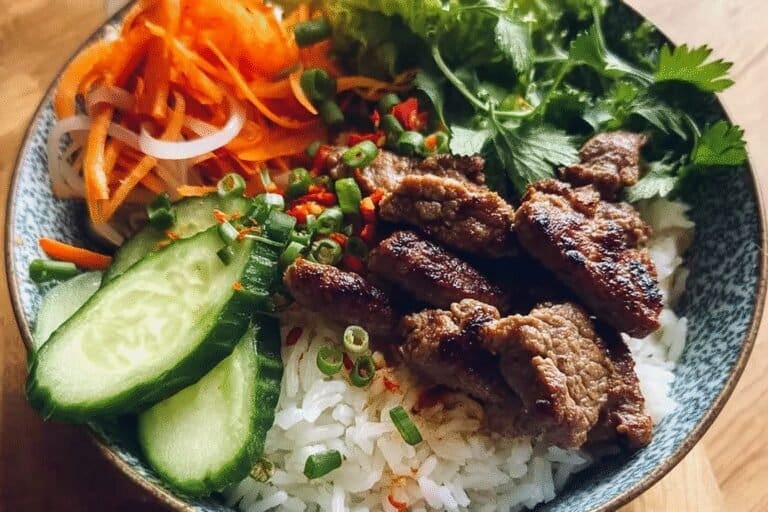
Banh Mi Rice Bowl
🍚 Authentic Vietnamese banh mi flavors transformed into a quick, satisfying rice bowl that’s ready in just 25 minutes
🥒 Fresh herbs, pickled vegetables, and savory protein create a perfectly balanced meal that’s healthier than the traditional sandwich
- Total Time: 25 minutes
- Yield: 4 servings
Ingredients
– 2 cups cooked jasmine rice (or brown rice) Provides the starchy base and soaks up sauces
– 1 lb thinly sliced pork shoulder or chicken thigh Main protein for savory, caramelized flavor
– 14 oz firm tofu (pressed) Vegan protein substitute
– 1 cup shredded carrots Adds crunch, natural sweetness
– 1 cup julienned daikon radish Classic banh mi pickled veg
– 1/4 cup rice vinegar Quick-pickle solution for carrots and daikon
– 2 tbsp sugar Quick-pickle solution for carrots and daikon
– 1 tsp salt Quick-pickle solution for carrots and daikon
– 1/4 cup soy sauce or tamari Umami-rich marinade base
– 2 tbsp fish sauce (or vegan fish sauce substitute) Authentic savory depth
– 2 tbsp vegetable oil or neutral oil For searing protein and toasting aromatics
– 1 small bunch cilantro and 2 scallions Fresh herbs that provide brightness
– 1 cucumber Adds refreshing crunch and cooling contrast
– 3 tbsp mayonnaise Creamy, spicy finish
– 1 2 tsp sriracha Creamy, spicy finish
– 2 cucumbers
– 1 avocado
– 1 cup mixed fresh herbs (cilantro and Thai basil)
– 3 tablespoons lime juice
– 2 tablespoons toasted sesame seeds
– 2 tablespoons roasted peanuts
– 1 serrano pepper (optional, for spice)
– Salt, to taste
Instructions
1-First Step: Mise en place and quick pickles Measure and prep all ingredients before cooking. Cook 2 cups of jasmine or brown rice according to package directions (jasmine: 1.5 cups water per cup rice, simmer 15 minutes then rest 10 minutes; brown rice: 2 cups water per cup rice, simmer 35 40 minutes). While the rice cooks, make quick pickles: combine 1/4 cup rice vinegar, 2 tbsp sugar, 1 tsp salt and 1/4 cup water in a bowl; add 1 cup shredded carrots and 1 cup julienned daikon, toss, and let sit at room temperature for at least 10 15 minutes. For a low-calorie or gluten-free adaptation, use cauliflower rice or omit sugar, replacing with low-calorie sweetener as needed.
2-Second Step: Marinate the protein Thinly slice 1 lb pork shoulder or chicken thigh against the grain, or press and slice 14 oz firm tofu. In a bowl mix 1/4 cup soy sauce or tamari, 1 tbsp fish sauce (or vegan substitute), 1 tbsp sugar or honey, 1 tbsp rice vinegar, 1 tbsp grated ginger, and 1 minced garlic clove. Toss protein in the marinade for 10 30 minutes (tofu benefits from longer marination). For vegetarian bowls, use extra-firm tofu and a splash of sesame oil to enhance flavor.
3-Third Step: Cook the protein Heat a large skillet over medium-high heat and add 1 2 tbsp neutral oil. For pork or chicken, sear in batches for 2 4 minutes per side until caramelized and internal temp reaches 165°F for chicken or 145°F for pork (rest 3 minutes). For tofu, pan-fry 3 5 minutes per side until golden, or bake at 400°F for 20 25 minutes for a crisp exterior. Use high heat and minimal crowding to achieve good browning; if needed finish proteins under a broiler for 1 2 minutes.
4-Fourth Step: Prepare garnishes and sauces While protein cooks, slice cucumbers thinly, chop cilantro and scallions, and whisk sriracha-mayo (3 tbsp mayo + 1 2 tsp sriracha) or mix a lighter nuoc cham: 3 tbsp fish sauce, 2 tbsp lime juice, 1 tbsp sugar, 2 tbsp water, and minced chili. For gluten-free or vegan versions, use tamari and vegan mayo or a chili-lime vinaigrette.
5-Fifth Step: Assemble the banh mi rice bowl Divide warm rice into bowls. Arrange cooked protein or tofu over the rice, drain and spoon pickled carrots and daikon on one side, add cucumber slices, scallions, and cilantro. Drizzle sriracha-mayo or nuoc cham over the protein and sprinkle toasted sesame seeds if desired. For low-carb or Paleo adaptations, swap rice for cauliflower rice and use coconut aminos in the marinade.
6-Sixth Step: Adjust seasoning and serve Taste each bowl and add extra lime, soy/tamari, or fish sauce to balance salty, sweet, sour, and spicy elements. Serve immediately so the protein stays crisp and the pickles remain crunchy. If making ahead, store components separately: rice and proteins in airtight containers, pickles and herbs refrigerated; reheat protein in a skillet at medium heat for 2 4 minutes to restore crispness, and refresh herbs right before serving.
7-Final Step: Time-saving tips and batch prep To speed weekday dinners, cook a double batch of rice and proteins on Sunday and store in separate containers. Quick-pickle additional vegetables to last 3 5 days in the fridge. When reheating leftover protein, a quick pan sear or 1 2 minute broil keeps edges crisp. These prep strategies keep your banh mi rice bowl flavors bright and adaptable for different diets. Swap proteins, reduce oil, or choose cauliflower rice while maintaining the signature Vietnamese-inspired balance.
Last Step:
Please leave a rating and comment letting us know how you liked this recipe! This helps our business to thrive and continue providing free, high-quality recipes for you.Notes
🍚 Use day-old rice or cook rice ahead of time for better texture and faster assembly
🥒 Prepare the quick pickles and cucumber salad while the chicken marinades to save time
🌶️ Adjust the spice level by varying the amount of serrano pepper and sriracha to your preference
- Prep Time: 15 minutes
- Cook Time: 10 minutes
- Category: Main Course
- Method: Stir-frying
- Cuisine: Vietnamese
- Diet: Non-vegetarian
Nutrition
- Serving Size: 1 serving
- Calories: 485
- Sugar: 12
- Sodium: 890
- Fat: 18
- Saturated Fat: 3
- Unsaturated Fat: 14
- Trans Fat: 0.1
- Carbohydrates: 52
- Fiber: 5
- Protein: 32
- Cholesterol: 85


This rice bowl looks absolutely delicious!
I tried a similar recipe last week but added some sriracha mayo drizzle on top which gave it an extra kick of flavor. Definitely saving this to make again this weekend!