Why You’ll Love This Homemade Pie Crust
Homemade Pie Crust is one of those simple skills that pays off every time you bake. Whether you are filling it with smoky apple slices after a long weekend at the grill or making a classic pumpkin pie for friends, this recipe gives you a flaky, buttery base that is forgiving and fast. It focuses on cold butter, minimal handling, and straightforward timing so you can get great results without fuss.
- Ease of preparation: This Homemade Pie Crust comes together in about 10 minutes of active work plus a chill, using a food processor or a bowl and pastry cutter. The steps are simple, repeatable, and great for cooks of any level.
- Health benefits: Made with basic pantry ingredients, the crust is free of additives and artificial fats. You control the salt and type of butter, and the nutrition per serving is modest, making it easy to include in balanced menus.
- Versatility: This dough works for sweet and savory pies, single or double crusts, and adapts to diet swaps like vegan or gluten-free versions.
- Distinctive flavor: All-butter crust delivers a clean, rich flavor and flaky texture you won’t get from store-bought dough. The small butter pieces melt and create steam pockets that give great flakiness.
Author: Wade Lockhart | Blog: HomemadeTasty – a spot where fire, smoke, and perfectly grilled meats meet classic baking for home cooks and weekend grill masters.
Jump To
- 1. Why You’ll Love This Homemade Pie Crust
- 2. Essential Ingredients for Homemade Pie Crust
- 3. How to Prepare the Perfect Homemade Pie Crust: Step-by-Step Guide
- 4. Dietary Substitutions to Customize Your Homemade Pie Crust
- 5. Mastering Homemade Pie Crust: Advanced Tips and Variations
- 6. How to Store Homemade Pie Crust: Best Practices
- 7. FAQs: Frequently Asked Questions About Homemade Pie Crust
- 8. Homemade Pie Crust
Essential Ingredients for Homemade Pie Crust
Below is a clear, structured ingredient list for the recipe used in this article. Each item shows the exact measurement first, followed by the ingredient name and a short note about its role.
- 2 1/2 cups all-purpose flour, plus more for dusting – provides structure and tenderness when handled minimally.
- 1/2 tablespoon sugar – a touch of sweetness that helps browning and balances flavor.
- 1/2 teaspoon salt – seasons the dough and brings out butter flavor.
- 1/2 pound cold unsalted butter (2 sticks), diced into 1/4-inch pieces – the fat that creates flaky layers; keep it cold for best texture.
- 7 tablespoons ice water (7 to 8 tablespoons) – hydrates the dough so it holds together without becoming tough; use ice-cold water.
Special Dietary Options
- Vegan: Substitute plant-based butter of firm consistency, chilled, or use half chilled coconut oil and half vegan butter for flakiness.
- Gluten-free: Use a 1-to-1 gluten-free flour blend formulated for baking and add 1/4 teaspoon xanthan gum if not included in the blend.
- Low-calorie: Swap half the butter for a neutral vegetable shortening for slightly fewer calories and a tender texture; note that flavor will be milder.
How to Prepare the Perfect Homemade Pie Crust: Step-by-Step Guide
This step-by-step section walks you through every action so you end up with a flaky, easy-to-handle Homemade Pie Crust. Timing and temperatures are included where needed.
First Step: Mise en place
Chill your butter and measure all ingredients before starting. If using a food processor, make sure it is dry and ready. Have plastic wrap and a clean work surface nearby. Pre-measuring ice water into tablespoons helps you add it slowly.
Second Step: Combine dry ingredients
Place 2 1/2 cups all-purpose flour, 1/2 tablespoon sugar, and 1/2 teaspoon salt into a food processor and pulse a few times to combine. If you prefer a bowl, whisk the dry ingredients together until even. This evens out sugar and salt and prevents pockets of seasoning.
Third Step: Cut in the butter
Add the cold diced butter (1/2 pound, diced into 1/4-inch pieces) to the flour mixture. Pulse the processor in short bursts until the mixture forms coarse crumbs with some pea-sized pieces. If working by hand, use a pastry cutter and cut until the mixture is coarse and crumbly.
Tip: Avoid overmixing. You want visible bits of butter because they melt in the oven and form the flaky layers pie lovers look for.
Fourth Step: Add water carefully
Add 7 tablespoons ice water and pulse just until moist clumps or small balls form. Test the dough by pressing a small piece between your fingers; if it sticks together, you have enough water. If not, add more water, one teaspoon at a time, until it just holds.
Keep the dough cold at all times. Warm hands or warm butter will make a tough crust.
Fifth Step: Form, divide, and chill
Transfer the dough to a clean surface and gather it into a loose ball. Fold or knead just enough to bring it together; do not overwork. Divide the dough into two disks, wrap each tightly in plastic wrap, and refrigerate for 1 hour before using. Chilling firms the butter and relaxes the gluten.
Sixth Step: Roll and fit
When ready, dust your work surface lightly with flour. Roll one disk from the center outward until you have a 12-inch circle for a 9-inch pie pan. Transfer the rolled dough to the pie pan and gently press it down to line the dish. Tuck excess dough under itself to create a thick edge without wasting dough.
Final Step: Crimping and baking notes
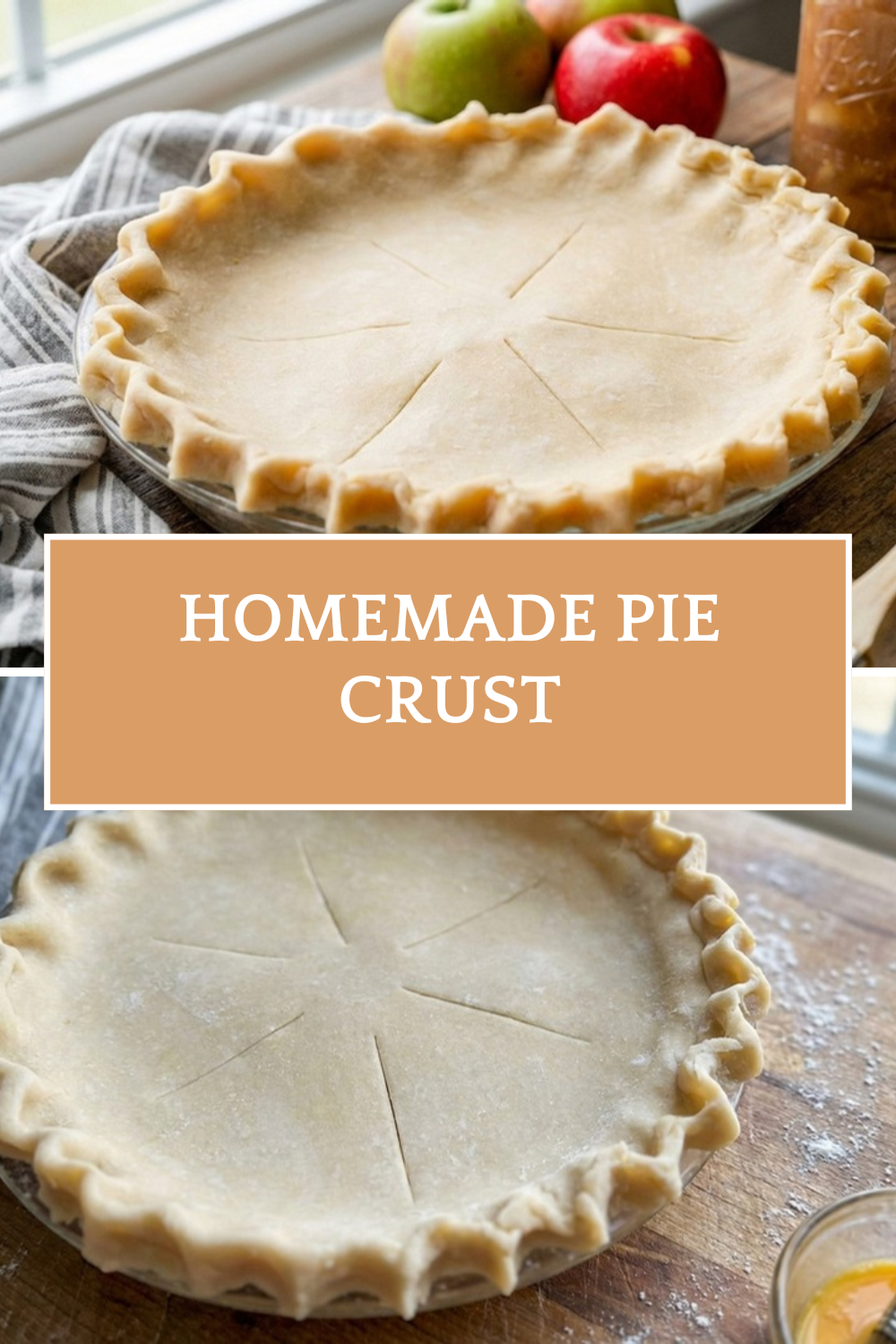
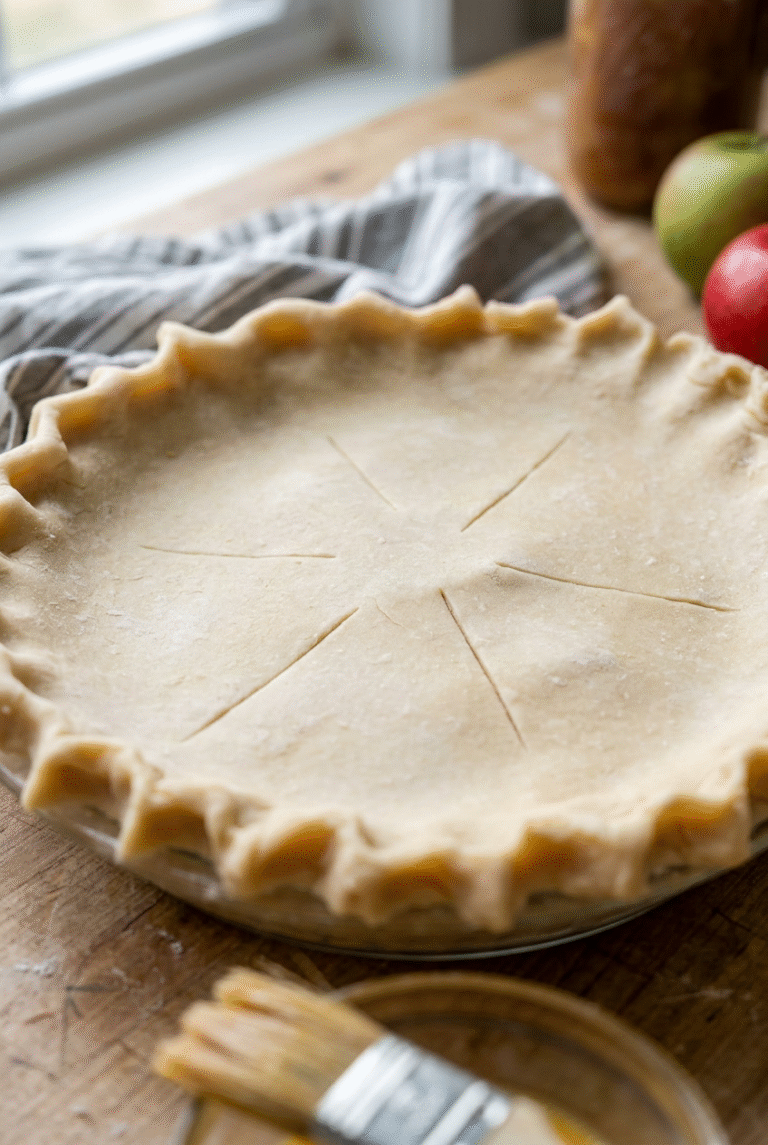
To crimp or flute the edges, pinch between your thumb and index finger about an inch apart, pressing with your other index finger while moving around the crust edge. If you are blind baking, freeze the shaped crust for 30 minutes, then line with parchment paper and fill with pie weights. Bake at 425 degrees Fahrenheit for 17 minutes, remove the weights, and bake another 5 minutes or until golden and dry. For pies with fillings that bake fully, follow your recipe’s fill-and-bake directions.
| Calories | Carbohydrates | Protein | Fat |
|---|---|---|---|
| 232 | 20g | 2g | 15g |
| Saturated Fat | Cholesterol | Sodium | Potassium |
| 9g | 40mg | 99mg | 32mg |
| Vitamin A | Calcium | Iron | |
| 470 IU | 8mg | 1.2mg |
For a practical reference of a similar method, see a trusted recipe guide like Natasha’s Kitchen easy pie crust.

Dietary Substitutions to Customize Your Homemade Pie Crust
Protein and Main Component Alternatives
Pie crusts do not normally contain a protein component like meat or beans, but the main ingredient to think about is the fat. Swapping the fat lets you adapt the crust for different diets:
- All-butter to half-shortening: Replace half the butter with vegetable shortening for a tender, less rich crust that still bakes well. Shortening lowers saturated fat but changes flavor.
- Vegan butter: Use a solid, very cold plant-based butter. Brands vary in water content, so you may need a teaspoon less or more ice water for the right dough texture.
- Coconut oil: Use refined coconut oil chilled until firm. It gives a slightly different aroma; best for fruit pies that pair well with that flavor.
- Olive oil option: For savory pies, swap some butter for a neutral olive oil and use a food processor to make a crumbly mix; results will be less flaky but tender.
Vegetable, Sauce, and Seasoning Modifications
Seasonings and little add-ins can change the crust personality. Here are safe swaps and ideas:
- Herbed savory crust: Add 1 to 2 teaspoons finely chopped fresh herbs or 1/2 teaspoon dried herbs to the dry ingredients for quiches or savory tarts.
- Sweet crust: Increase sugar to 1 tablespoon and add 1/2 teaspoon ground cinnamon or lemon zest for fruit pies.
- Gluten-free binding: Use a blend formulated for pastries; add an extra tablespoon of liquid if the dough seems dry after mixing.
Mastering Homemade Pie Crust: Advanced Tips and Variations
Once you have the basic method down, small technique changes will raise your crust game. Below are advanced methods, flavor ideas, and presentation tips to help the dough look as good as it tastes.
Pro cooking techniques
- Keep everything cold: Chill the bowl, the cutter, and even the flour for extra protection against the butter warming up. Cold ingredients trap steam better and create flakier layers.
- Use chilled tools: When outdoors or in warm kitchens, keep your bowl on a tray of ice to keep butter firm while you work.
- Minimal handling: Fold rather than knead. Bring the dough together with as few motions as possible so gluten does not overdevelop.
Flavor variations
- Brown-butter crust: Brown the butter, cool it completely, and then use in place of cold butter for a nutty flavor; chill very well before mixing.
- Almond crust: Replace 1/4 cup flour with 1/4 cup almond flour for a subtle nutty taste and slightly tender crumb.
- Spiced crust: Add 1/2 teaspoon each of cinnamon and cardamom for warm spice notes that pair with apple or pear fillings.
Presentation tips
For show-stopping pies, try lattice tops, cutout shapes from scraps, or brushed egg wash with a light sprinkle of sugar for sweet pies. For savory tarts, a light olive oil brush and a sprinkle of flaky salt highlight texture.
Make-ahead options
- Refrigerate: Wrapped dough disks last up to 3 days in the fridge, ready to roll when you are.
- Freeze: Flatten into discs, wrap, and freeze up to 3 months. Thaw in the fridge overnight before using.
- Pre-baked shells: Blind bake shells and stash them in the freezer for quick assembly later.
For a look at butter and health information, consider this resource on butter benefits: 7 Reasons Why Butter is Good For You.
How to Store Homemade Pie Crust: Best Practices
Good storage preserves texture and flavor. Below are practical approaches for short- and long-term keeping, reheating, and batch prep.
Refrigeration
Wrap dough disks tightly in plastic and keep them in the refrigerator for up to 3 days. Chilled dough is easier to roll and shape. If you find the dough too firm after long chilling, let rest at room temperature for 10 to 20 minutes before rolling.
Freezing
For longer storage, wrap each disk in plastic, then place inside a freezer bag and freeze up to 3 months. Thaw overnight in the refrigerator, then rest 20 minutes at room temperature before rolling. Avoid refreezing once thawed.
Reheating and baked storage
For blind-baked shells, cool completely and store in an airtight container at room temperature for up to 2 days, or freeze up to 1 month. Reheat briefly in a 350 degrees Fahrenheit oven to refresh crispness.
Meal prep considerations
Divide dough into single-crust portions if you make many pies at once. Label with dates and keep an inventory so frozen dough cycles through first. Prepare pie fillings while shells chill to make assembly fast on baking day.
FAQs: Frequently Asked Questions About Homemade Pie Crust
What ingredients do I need for homemade pie crust dough?
For a basic homemade pie crust that serves 8, gather 2 1/2 cups all-purpose flour, 1 tablespoon granulated sugar, 1 teaspoon salt, 1 cup cold unsalted butter diced into 1/2-inch pieces, and 6-8 tablespoons ice water. The cold butter creates flaky layers when cut into the dry ingredients. Measure flour by spooning it into the cup and leveling with a knife to avoid packing. Use unsalted butter for better flavor control. If substituting, try 1/2 cup butter and 1/2 cup shortening for extra tenderness, but all-butter yields the best taste. Chill all components before mixing. This simple recipe makes a double crust for a 9-inch pie. Mix dry ingredients first, then incorporate butter until pea-sized crumbs form, adding ice water gradually. (98 words)
How do I know when pie dough has enough water?
Test pie dough by pinching a small piece between your fingers—it should hold together without crumbling but not feel sticky. Start with 6 tablespoons ice water for 2 1/2 cups flour, adding 1 tablespoon at a time while pulsing in a food processor or stirring by hand. After each addition, check consistency. If too dry and crumbly, add 1 teaspoon more water and mix briefly. Overworking or excess water makes tough crust, so stop once it clumps when squeezed. Form into a disc, wrap in plastic, and chill 1-2 hours. This method prevents a soggy or dense result. For humid days, reduce water slightly. Always use ice-cold water to keep butter solid. (112 words)
What if my homemade pie dough is too hard to roll out?
If pie dough feels rock-hard after chilling, let it rest at room temperature for 10-20 minutes until pliable but still cool. Over-chilling firms the butter too much. Roll on a lightly floured surface or between parchment paper sheets to prevent sticking—start from center outward to an even 12-inch circle for a 9-inch pie pan. Use a floured rolling pin, rotating dough quarterly. If cracks form at edges, patch with scraps and press gently. Keep dough cold overall for flakiness. Avoid re-rolling scraps multiple times to prevent toughness. For best results, chill rolled dough 15 minutes before transferring to pan. This fixes common issues from rushed prep. (108 words)
How long can I store homemade pie dough in the fridge or freezer?
Refrigerate wrapped pie dough up to 3 days; it stays fresh and easy to roll. For longer storage, freeze airtight up to 3 months—thaw overnight in the fridge before use, then let rest 20 minutes at room temp. Label bags with dates. Freezing works well for make-ahead baking; portion into single crusts. Avoid refreezing thawed dough. When ready, roll directly from chilled state. This preserves butter flavor and texture. Pro tip: Add a splash of vinegar to dough before freezing for extra tenderness post-thaw. Always check for off smells before using. Stock up seasonally for effortless pies year-round. (102 words)
How do I blind bake a homemade pie crust?
For empty pies like custard, blind bake to prevent sogginess. After fitting dough into a 9-inch pan, chill 30 minutes. Line with parchment, fill with pie weights, beans, or rice. Bake at 425°F for 17 minutes until edges brown lightly. Remove liner and weights, then bake 5-10 more minutes at 375°F until bottom is golden and dry. Prick base with a fork pre-bake to release steam. Cool before filling. Use dry beans or rice as cheap substitutes—store for reuse. This step ensures crisp crusts for lemon meringue or pumpkin pies. Dock dough lightly if no weights available. (96 words)
Homemade Pie Crust
🥧 Create perfectly flaky, tender pie crusts that will make your homemade pies taste like they came from a bakery
👩🍳 Master the essential baking skill with this foolproof recipe that works for sweet and savory pies alike
- Total Time: 1 hour 10 minutes
- Yield: 2 pie crusts 1x
Ingredients
2 1/2 cups all-purpose flour for structure and tenderness
1/2 tablespoon sugar for browning and balancing flavor
1/2 teaspoon salt for seasoning and bringing out butter flavor
1/2 pound cold unsalted butter for creating flaky layers
7 tablespoons ice water for hydrating the dough
Instructions
1-First Step: Mise en place Chill your butter and measure all ingredients before starting. If using a food processor, make sure it is dry and ready. Have plastic wrap and a clean work surface nearby. Pre-measuring ice water into tablespoons helps you add it slowly.
2-Second Step: Combine dry ingredients Place 2 1/2 cups all-purpose flour, 1/2 tablespoon sugar, and 1/2 teaspoon salt into a food processor and pulse a few times to combine. If you prefer a bowl, whisk the dry ingredients together until even. This evens out sugar and salt and prevents pockets of seasoning.
3-Third Step: Cut in the butter Add the cold diced butter (1/2 pound, diced into 1/4-inch pieces) to the flour mixture. Pulse the processor in short bursts until the mixture forms coarse crumbs with some pea-sized pieces. If working by hand, use a pastry cutter and cut until the mixture is coarse and crumbly. Tip: Avoid overmixing. You want visible bits of butter because they melt in the oven and form the flaky layers pie lovers look for.
4-Fourth Step: Add water carefully Add 7 tablespoons ice water and pulse just until moist clumps or small balls form. Test the dough by pressing a small piece between your fingers; if it sticks together, you have enough water. If not, add more water, one teaspoon at a time, until it just holds. Keep the dough cold at all times. Warm hands or warm butter will make a tough crust.
5-Fifth Step: Form, divide, and chill Transfer the dough to a clean surface and gather it into a loose ball. Fold or knead just enough to bring it together; do not overwork. Divide the dough into two disks, wrap each tightly in plastic wrap, and refrigerate for 1 hour before using. Chilling firms the butter and relaxes the gluten.
6-Sixth Step: Roll and fit When ready, dust your work surface lightly with flour. Roll one disk from the center outward until you have a 12-inch circle for a 9-inch pie pan. Transfer the rolled dough to the pie pan and gently press it down to line the dish. Tuck excess dough under itself to create a thick edge without wasting dough.
7-Final Step: Crimping and baking notes To crimp or flute the edges, pinch between your thumb and index finger about an inch apart, pressing with your other index finger while moving around the crust edge. If you are blind baking, freeze the shaped crust for 30 minutes, then line with parchment paper and fill with pie weights. Bake at 425 degrees Fahrenheit for 17 minutes, remove the weights, and bake another 5 minutes or until golden and dry. For pies with fillings that bake fully, follow your recipe’s fill-and-bake directions.
Last Step:
Please leave a rating and comment letting us know how you liked this recipe! This helps our business to thrive and continue providing free, high-quality recipes for you.Notes
🧊 Use cold butter straight from the refrigerator to keep dough flaky and avoid handling butter too much
⏰ If pie dough becomes hard after chilling more than an hour, let rest at room temperature for 10-20 minutes before rolling
📏 Overmixing causes gluten development, making crust tough instead of tender – mix just until combined
- Prep Time: 10 minutes
- Chilling time: 1 hour
- Category: Basic Recipe
- Method: No-bake
- Cuisine: American
- Diet: Vegetarian
Nutrition
- Serving Size: 1/8 crust
- Calories: 232
- Sugar: 0g
- Sodium: 99mg
- Fat: 15g
- Saturated Fat: 9g
- Unsaturated Fat: 6g
- Trans Fat: 0g
- Carbohydrates: 20g
- Fiber: 1g
- Protein: 2g
- Cholesterol: 40mg